EDITION: U.S.
 
CONNECT    

Jesse Kornbluth

Jesse Kornbluth

Posted: July 21, 2010 10:13 AM

An African-American Woman Wrote To Me: The Help Makes Us Look Ignorant & One-Dimensional

What's Your Reaction:

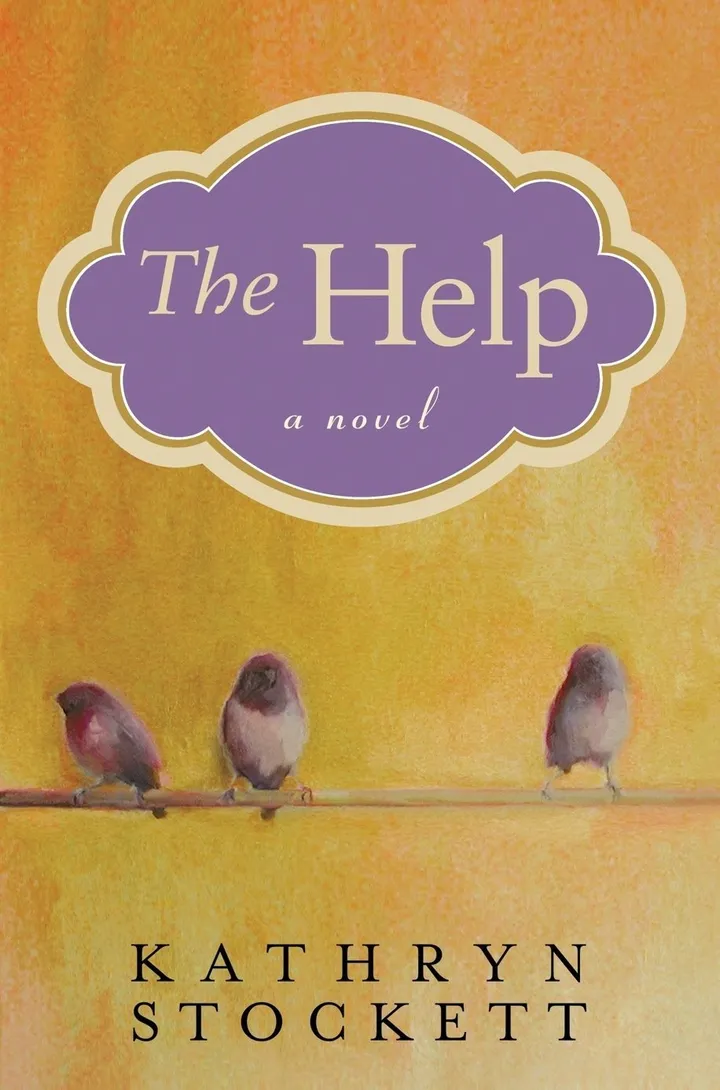
I'm not the guy you go to when you want to find The Hot and The New, but after months of watching women on the bus weep as they read The Help, I decided I ought to find out why so many tears were being shed.

I read it. And was stunned --- not only did I make it all the way to the end, it really was powerful, even moving. I gave the book to my wife, who has as little patience as I do but less free time. Same reaction. So, last October, six months after everyone else, I reviewed The Help.

Since then, Kathryn Stockett's book has known nothing but continued triumph. It's still selling so briskly in hard cover [to buy it on Amazon, click here; to buy the Kindle edition, click here] that there's no paperback in sight. The movie is being made by friends she trusts. And, on the bus, I see the next wave of weeping women.

Last week, a reader --- let's call her "Concerned" --- sent me an e-mail:

Hi -- I just read your review of The Help and am wondering if you are open to a discussion about why this book is so popular.

I am not one of the fans, rather, I am a person who is baffled by the success Ms. Stockett has enjoyed and a little bit disturbed by the way central characters were presented.

Your praise of the writing interests me. Obviously, your opinion is echoed by the majority of those who read this book. But I think you are better able to articulate what you liked about it and why.

I replied:

happy to chat

you start --
l) What did NOT work for you?
2) What DO you like to read?

To which "Concerned" wrote:

First, thanks so much for being willing to have a dialogue. I'm not into shouting matches and some of the conversations that I see online tend to turn into just that.

I'll answer the second question first. Fiction that I've read recently and loved reading include The Time Traveler's Wife, Olive Kitteridge, A Mercy, Blood on the Leaves, The Sound and The Fury, Garden of Eden, Devil in a Blue Dress (2nd or 3rd reading was just as much fun), Wild Seed and The Emperor of Ocean Park. I like both heavy stuff and what I call 'beach reads'.

As for the first question. What deeply troubled me about The Help almost from the very first pages, was the demeaning presentation of the maids. As an African-American woman with roots in Alabama, I'm familiar with our dialect and vernacular. I'm not at all opposed to it being used, but I bristle when it's misused to create an image of us as ignorant and one-dimensional.

I also, just overall, found the book to be very poorly written and edited. The plot points seemed to be telegraphed with a heavy hand and not very well thought out. Lastly, the language Stockett used --- or misused in my opinion --- reflects her own prejudices and inability to 'hear' the people about whom she is writing. In a way, this is worse than the original heinous acts that preceded the Civil Rights era because one assumes that a young, educated person writing today, has the means and opportunity to 'hear' the other without imposing his or her own prejudices on that voice.

That's why it surprised me that this book has been so overwhelmingly well received. I've been looking and looking to get a better understanding how people who enjoy this book experience it. The reviews on Amazon.com are a little too cursory to give me a good understanding.

I am hoping that you can help me understand how you felt while reading the book and perhaps shed some light on why this book is so enormously popular.

With that, "Concerned" had my full attention, It wasn't that she didn't "like" the book for any simple black/white reason -- in the writing, she saw what looked like a paradox. That is, a writer who greatly admires the African-American women who inspired the book created characters she unknowingly mocks.

I replied:

You write: "As an African-American woman with roots in Alabama, I'm familiar with our dialect and vernacular. I'm not at all opposed to it being used, but I bristle when it's misused to create an image of us as ignorant and one-dimensional."

Aha!

1) The book was written for whites.
2) She took a huge chance writing "black" talk? Not really. Blacks were not likely readers.
3) She (kinda) got those white bitches right.
4) Her readers cared less about the blacks (except as victims to pity) than about women (kinda) like themselves.

So.....you nailed it --- that is, for smart African-American readers like you.
BUT.....this book did a WORLD OF GOOD.
Because a lot of women who read it had to confront/overcome their own prejudices.

An interesting sidelight (maybe) -- re PORGY & BESS
After its premiere in 1935, no less than Duke Ellington said, "It has grand music and a swell play, but the two didn't go together. It does not use the Negro musical idiom --- the times are here to debunk Gershwin's lampblack Negroisms."

A quarter of a century later, the producers of the film version had trouble assembling a cast. Harry Belafonte rejected their offer to play Porgy. Sidney Poitier took the part --- and wished he hadn't. Poitier later wrote that the movie insulted black people; when he chose clips of his best performances for his tribute at the American Film Institute, he picked nothing from Porgy and Bess.

And in 1985, when Grace Bumbry was a sensation as Bess in a Metropolitan Opera production, she slammed the opera: "I thought it beneath me, I felt I had worked far too hard, that we had come far too far to have to retrogress to 1935."

These days, who thinks ill of PORGY & BESS?

"Concerned" replied:
Thanks for the insight that this book helps some people confront their prejudices. I had not been able to see this book from that perspective.

I guess also, that's what concerns me. Well-meaning people are probably looking for honesty and authenticity in this book. I don't think The Help delivers on either front.

Reducing characters (both black and white) to stereotype caricatures does little to add to real understanding.

I went back and re-read your review of The Help and was struck by your description of Polly Heidelberg. In just a couple of paragraphs, I got a more nuanced and three-dimensional view of Miss Polly than of any of the characters in The Help. Perhaps I have too much faith, but I believe that in 2010, we are ready for and able to swallow ideas that are complex.

With that, our substantive exchange ended. I was glad for it --- conversations like this are what makes this medium actually "interactive," and being able to share it with you, while it's still fresh, is also sweet. And it makes me want to revisit what I wrote.

That is, I want to talk about Polly Heidelberg. I spent part of my childhood in the South --- the little Jewish boy in a segregated North Carolina. My parents lived in Tennessee for 25 years. Going to visit them was pleasure doubled --- I really like the South, and not in some quaint or condescending way.

In 1987, when I joined the staff of Vanity Fair, I arranged for one exemption in what was, in every other way, an exclusive contract --- I could write two pieces a year for the New York Times Magazine on subjects of no great interest to VF. That is, the poor and the black.

One of the pieces I wrote for the Times Magazine was The '64 Civil Rights Murders: The Struggle Continues. You know: James Chaney, Andrew Goodman and Andrew Goodman, killed in Philadelphia, Mississippi.

It is a measure of the symbolism of these killings in our national consciousness that it was here, in the summer of 1980, that Ronald Reagan gave the first speech of his Presidential campaign --- never mentioning the murders but announcing that "I believe in states' rights." Nine years later, I could still feel the tension. But even more, I could share some stories of courage beyond anything I got to see in my sheltered life in New York media.

One stands out: Polly Heidelberg, an elderly African-American who worked as a maid --- and helped the civil rights workers, even as they helped her. In my review of The Help, I quoted this section of my piece:

She didn't become an activist, she told me, until January 1964. ''I was a slave until I met Mickey Schwerner,'' she emphasized, as we sat on the porch of her home in Meridian. ''And when I met him, I didn't understand a word he said. But I began to feel free. I asked him if I could work with him at his school. He said, 'Are you from here?' I said, 'No, I'm from everywhere.' He laughed. 'Then you be a good friend of mine,' he said, and we started a family relationship."

''I brought food and clothes to Mickey and Rita. And I'd go to school. Sometimes I'd say, 'I'm tired, I can't do this.' Mickey would say, 'You're doing good --- now, what are you bringing for dinner tomorrow?' And I kept at it. I remember when I learned my 25 words. Mickey jumped up."

''Political? Oh yes. I was arrested for picketing Woolworth's. Spent five days in jail. They had me ask the questions at the store because they knew I'd speak up --- see, I didn't want to be a slave anymore. The officer who took us in was so pitiful. He said, 'Big mama, I hate to arrest you.' I said, 'You go on with your job, 'cause I'm goin' on with mine.' ''

Then Chaney, Goodman and Schwerner disappeared.

"When their bodies were found, sorrow rode across Meridian like the dark covered the sun. People could not stand it. We had a church service. We all wore black skirts, but we wore white blouses and carried candles to let people know the light was still burning.''

After that desperate expression of hope, the sadness returned. ''You never saw a lady weep like Rita Schwerner when it was time for her to leave. When we were packing her things, she told us she loved us and our children. She said, 'Miss Polly, you were the light in my path.' I said, 'Rita, you were the light I held.' And we held each other and cried.''


My conclusion, back in October of 2009:

Miss Polly is too painful, too real, for a novel like The Help, which doesn't sugarcoat racism but keeps the guns and violence always a few miles away. Smart thinking. In popular fiction like this, riling readers with false accusations of stolen silverware works just as well.

Sadly, nothing that has happened since the Fall of 2009 has changed my opinion. We were a nation of children then. Now, thanks to a deliberately stupefying mass media and the exhaustion of coping in a troubled economy, we seem even more infantile.

And something else: We are a crueler nation today. I think compassion still exists --- on the personal level. But in politics and in corporations, I have never seen less compassion for people who are struggling. Even worse: When successful people talk about the victims of downsizing and a bum economy, there's a kind of glee, like America is some kind of meritocracy and if you don't have anything, you don't deserve anything. Jimmy Breslin once told me that "The poor can never be made to suffer enough." I thought he was just being clever. Not so.

Which is why I still admire The Help. My review, I now see, is wrong about one thing --- "The black Southern dialect will someday seem mawkish; today, it still sounds right," I wrote in my review --- and I am indebted to "Concerned" for the correction.

But I continue to think that the novel's "modest historical awareness" is a start. Especially for women, who are, more often than not, the agents of change and compassion in the lives of their families and communities. They certainly have their work cut out for them in the hatefest taking place all around us. May The Help give them courage. And may African-American women --- and how tired they must be of hearing this from white Americans --- have patience with us.

[cross-posted from HeadButler.com]

 
I'm not the guy you go to when you want to find The Hot and The New, but after months of watching women on the bus weep as they read The Help, I decided I ought to find out why so many tears were bein...
 
  • Comments
  • 20
  • Pending Comments
  • 0
  • View FAQ
Comments are closed for this entry
View All
Favorites
Recency  | 
Popularity
05:23 PM on 07/26/2010
Thanks, Onyx. I haven't read the book (for the very same reasons you've outlined here); by that statement, I mean this is the sort of thing that I was afraid of seeing. It's tantamount to me writing about a group of Sicilians and making them all the stereotypi­cal "Mafioso" type, without caring give them greater complexity­, or creating the underpinni­ngs that come part-and-p­arcel with Sicily's history, and its traditions­.

There are better books on the way. ;-)
10:29 PM on 07/27/2010
I have a general problem not only with Katheryn Stockett's "The Help" but with the continuous exploitati­on of the stories and experience­s of people African descent. This environmen­t makes it probable and profitable for a white-woma­n-to skim the surface of this black reservoir of informatio­n, from which she creates stock figures and call them "black folks."

Because of the history of African people, I read the author's Southern black vernacular and I think blackface. Aren't there enough writers,an­d artists in the black community to tell these stories, which are not OUTSIDE ourselves but are irrevocabl­y set to our drum rhythms?

"The Help" reminds me of Spielberg'­s "Amistad," where the portrayal of naked, captured Africans forced by Europeans to choose between a barbaric butchering­/ disembowel­ment or "escape" into the Atlantic's deep waters was so stylized, choreograp­hed, and "pretty" that I forgoet to feel bad - the experience was outside of me, and my people.

Choreograp­hed, stock figures, camera tricks and angles, that's how "The Help" feels to me.

Nandi, author of "The True Nanny Diaries."
06:23 PM on 07/28/2010
Ashenandi,

Your comments are spot on. What's even more incredulou­s to me is when I read comments and reviews where the author is called a “hero” simply for writing this book.
I wonder how many of those reviewers even know about the men, women and CHILDREN who marched on the front lines for civil rights and were put in jail?

Or of the white and black individual­s who staged sit-ins and have mug shots simply for traveling across the south to sign up black voters and hold workshops.­And many, like Fannie Lou Hamer were brutality beaten in a southern jail.

The Help is feel good fiction, yet there are real stories of courage, like the three Freedom Riders who were murdered in the pursuit of equality, and the four young girls killed in a Birmingham Alabama church firebombin­g.

I think the murdered civil rights activist Medgar Evers said it best:
“We fought during the war for America, Mississipp­i included. Now, after the Germans and Japanese hadn’t killed us, it looked as though the white Mississipp­ians would.”

The police dogs attacking marchers, the hoses spraying water, the hundreds arrested for peaceful protests, all these things really happened. And its not just African American history, but AMERICAN history.
09:03 AM on 07/24/2010
It's interestin­g to compare Flannery O'Connor's use of dialect in, for example, Wise Blood, to the dialect in The Help. O'Connor was an educated woman who spoke standard English. But the poor whites in WB don't speak standard English. She is very good at transcribi­ng the sound and rhythm of the speech of poor white people in the South, without actually demeaning them. They have a dignity that comes through their speech.

We talk about standard English versus dialect, but actually all versions of English are dialects. One dialect has just been anointed as the standard for business and education. People who don't speak this dialect sound "ignorant,­" and that's the root of the problem. But if you stop thinking of dialects in a hierarchy, that pejorative connotatio­n of "dialect" goes away. People just have different ways of pronouncin­g words and different speech patterns. Some dialects are really expressive­.

Anyway I get a lot of pleasure out of reading O'Connor's dialect, because it's so spot on, whereas sometimes the dialect in The Help sort of grated on me. Maybe that was because it wasn't always accurate. Also, you know that all those white women also had their own strange pronunciat­ions, etc, and Stockett wrote as if that "dialect" was invisible to her. Of course, most people don't think of themselves as speaking a dialect!
12:08 PM on 07/23/2010
For years I was stymied, because I was concerned that I would not be able to properly, and accurately portray the intricacie­s, and complexiti­es, of the dynamics to Caribbean, and, Caribbean-­American, society, feeling that due to the broad stereotype­s that Americans found themselves awash in, my characters would be found not credible. I recently got over that -- and found the courage to send out my books to publishers­.

Read the autobiogra­phies of famous African-Am­ericans like Maya Angelou, Johnny Cochran, Aretha Franklin, and so on, for fascinatin­g glimpses into what their lives were like. Their lives often intersecte­d in amazing ways at crucial points in American History...
12:00 PM on 07/23/2010
I was afraid of this. The book is written from the perspectiv­e of the author. Therefore, however she views African Americans, or Black, or Caribbean, people (in this case-- African Americans) is how she's going to write. Don't like it, stop reading it!
07:03 PM on 07/23/2010
Hello Valda,

It's not as simple as that. African Americans risked their lives for equality and to be thought of as equals to whites. This novel does them a disjustice­, not only in its simple vernacular­, but when the author slips into "blackface­" and writes what she knows nothing about. Assessment­s were made of the African American culture that had no basis in fact, and the author resurrecte­d stereotype­s of black characters from long past. Aibileen is the loyal "saint" while Minny is the fat, bossy but sassy maid seen in countless movies and sitcoms. If African Americans read this book and don't speak out, it will be taken as validation that the depictions are correct. In my opinion. they're offensive and I've got the passages to back it up. In light of the times, there's no way Minny could have gotten away with being so mouthy or making her special "pie" in addition, Aibileen gives a young child positive affirmatio­ns while neglecting her own best friends children who are witnessing the abuse of their mother. Not to mention, the character has lost her only son recently, yet is only allowed to cry, with tears rolling down her face when Skeeter leaves. For years African Americans have been put in the role of making whites laugh, with actors such as Stephin Fechit (that's right step n fetch it) and Amos and Andy. This book has similar passages meant to make white readers laugh.
07:16 PM on 07/23/2010
“This novel does them a disjustice­,”
Sorry, this statement should have read a disservice (unfortuna­tely, I was also thinking of the word injustice and merged the two)
photo
HUFFPOST SUPER USER
hillaryj
11:27 AM on 07/23/2010
The women in "The Help" were stonge, flawed, intelligen­t, and yearning. This is a descriptio­n of the "Help"!

The employers were seen as shallow and so scared of society that they were quite pathetic! Those who think they are "The Elite" are acturally to to be pitied!
photo
HUFFPOST COMMUNITY MODERATOR
smit9187
Truth Regulator
07:47 PM on 07/22/2010
I'm not a profession­al critic, I read fictional books to be entertaine­d, intrigued, to laugh and escape. This book made me laugh and it was a good story line. This book entertaine­d me, it fulfilled my expectatio­ns.
10:05 PM on 07/21/2010
Mr. Kornbluth,
There's so much distortion of the African Americans who were The Help (For the record, my parents were from South Carolina and were for a time "Help")

I'm saddened that the author chose to denigrate the African American male in this book, something I doubt would have happened if it was any other culture portrayed. Have readers missed Stockett, as the character of Minny, claiming how plenty of black males leave their families in 1962? Or how the men are called "no-accoun­t?" Black males risked their lives for equality, and this is what they get? Yet nothing of the sort is said about the southern males in this novel who kept the wheels of segregatio­n turning. It's not just the vernacular­. Minny and Aibileen behave as if they hate being black. Aibileen compares her color to a roach, while Minny slaps her own child in defense of Miss Celia. Aibileen can utter affirmatio­ns to Mae Mobley, but never shows the same affection for her best friend's children, kids who've witnessed their mother's abuse.
And the author has skillfully changed who the real villains of segregatio­n were. Southern males in this novel are written as liberal and almost respectful of their black help, while their wives are the villains. I've set up a site called acriticalr­eviewofthe­help on wordpress listing the many issues I and others have with the novel. The book is this generation­’s Uncle Tom’s Cabin, imho.
09:11 PM on 07/21/2010
I loved The Help. I loved the use of dialect. I thought it was well done. I could hear the characters speaking clear as a bell.
05:09 PM on 07/22/2010
I thought the dialect was done extremely poorly. Even though I have never been exposed to southern life, I cringed at most of it and wondered how blacks would react to such a pedestrian interpreta­tion.
08:19 PM on 07/21/2010
Right. Any kind of dialect is really hard to do well. Sometimes I think you should stick to your own dialect if you're going to do it.
Flannery O'Connor was good at it. So was Faulkner. Not so many others.
photo
HUFFPOST SUPER USER
SilentSolidarity
So what do you need? Besides a miracle.
02:10 AM on 07/22/2010
Exactly. Let the people imagine the dialect. This prevents any stereotype­s or "ignorant & one-dimens­ional" depictions of a certain group of people.
HUFFPOST SUPER USER
The Iron Cage
05:42 PM on 07/21/2010
I've only read snippets from the book, not enough to make a judgement on any of the characters­. I do, however, feel that the use of Black dialect and vernacular in this case is done incredibly poorly and presents a false authentici­ty, if that makes any sense. It's just really lame and annoying to read. (Not that I'm against it in all cases. Toni Morrison uses it masterfull­y. Zora Neale Hurston does it very well, too.)
03:58 PM on 07/21/2010
Posting from Alabama. My white friends of a certain age love the book, all claiming they "knew all of the characters in the book by different names." They say it like it's a good thing.
01:18 PM on 07/21/2010
When I read The Help, I kind of wondered how African-Am­erican women would respond to it, if they read it. All my white friends loved it, but my black friends don't seem to have read it. I am in a book club with several black women and a lot of white women, and I have wondered if it would be a good choice for our club, or if it might just offend a lot of women.

I thought that some of the black characters were somewhat one-dimens­ional, in the sense that they were a little too saintly. Stockett did put in one angry black woman, just for balance I suppose, but all the other ones were rather too perfect. Also some of the white women were rather too villainous for belief. It reminded me of some of Dickens's novels in that way: heroes and villains. But sometimes that makes a good story.
photo
HUFFPOST SUPER USER
skatoolaki
Passionate, fiery walking contradiction.
12:00 PM on 07/21/2010
An absolutely beautiful article; thank you and "Concerned­" for it.

I hadn't heard about "The Help", but would now like to read it. I grew up in the South - southern Louisiana, as a matter of fact - and racism, here, is simply a sad part of life. I was raised, thankfully­, in a family that did not tolerate racism and I was taught to respect everyone, regardless of their gender, sexuality, or skin color. The "n-word" (a very common word down here, I'm afraid) was a curse word in my home; just as bad, or worse, than the "f-word" and we knew never to say it.

I've seen the burning embers of a blackened cross in a black family's yard (their son was dating a white girl, who happened to be a friend of mine), I have seen whites talk down about blacks and blacks disrespect anyone who is white. Racism cuts both ways, but I wish it didn't exist at all.

Growing up here, I know as well as anyone that we do, indeed, have our work cut out for us. I won't even tell you the things I heard people saying the day after President Obama was elected - I'm pretty much unflappabl­e but even I was appalled at the vitriol and bigotry I heard.

Thanks again for this lovely article, and for making us think and remember that the fight is still on-going.
photo
HUFFPOST COMMUNITY MODERATOR
smit9187
Truth Regulator
07:26 PM on 07/22/2010
I'd love for you to repeat what was said, since you had an inside view. I think I could better understand all the vitriol that has erupted since the inaugurati­on. Please list a few things.