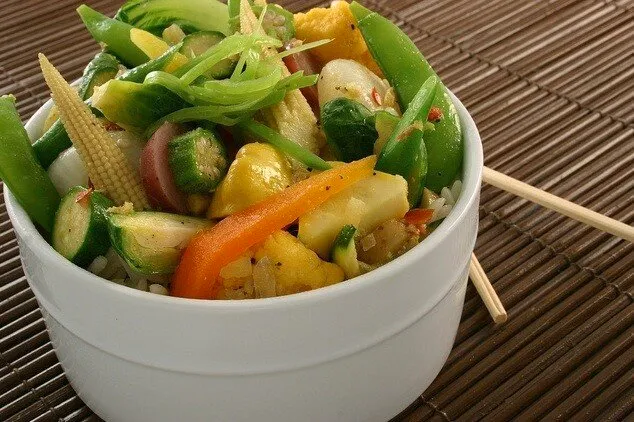
If I offered you a plate of steaming low-sodium food, chances are your taste buds would quickly retreat, imagining boiled potatoes, steamed broccoli, and a flavorless meal. For one. That's because salt has become synonymous with good taste, good food and, as a result, a full life. Which is why so many people who are told to cut back for health reasons resist the charge. But after living on a salt-free, low-sodium diet for almost a decade, I can guarantee that low-sodium does not have to mean a life of making colorless meals at the kitchen stove by yourself.
Whether you've been told to cut the salt, wheat, nuts, or any other ingredient, the misconception remains the same: If you have dietary limitations, your culinary life will suffer. And that might be because most information on how to approach a special diet focuses on the "cannots" rather than the "cans." Which, no wonder, leaves patients feeling deflated versus inspired.
But let's replace each no with a resounding yes. And since May is Hypertension Month, let's rewrite the 10 commandments of keeping a low-sodium diet (or any special diet for that matter) and focus on how to keep the foods and activities you love while putting your health first.
Loading Slideshow
1. No Flavor
Have you checked out the spice aisle lately? Sure, there are a myriad of salts available -- sea, kosher, truffle and lavender. But it's not the only jar on the shelf. Spices, seeds, herbs, and saffron threads -- there's a rainbow of flavor beyond the white stuff. And removing the salt will not limit your choices; it can actually expand your flavor profile. It gives new cuisines and spices a chance to shine. Because when you remove one ingredient from your list, you're forced to discover the other options you never thought to explore.
<br><br>
<em>Flickr photo by <a href="http://www.flickr.com/photos/bossco/34970689/" target="_hplink">bossco</a></em>
2. No Convenience Foods
It's true that packaged and prepared foods constitute <a href="http://newsroom.heart.org/pr/aha/1316.aspx" target="_hplink">75 percent of the sodium</a> that Americans consume -- which, on average, adds up to a daily overintake of 3,436 mg. But here's the good news: A number of no-salt added and low-sodium products can be found in markets and online. And more are coming every day. Roasted tomato purees, curry and BBQ sauces, pickles, individual microwave rice bowls, and even pizza-making kits already exist, making low-sodium breakfast, lunches, and dinners easier to prepare.
<br><br>
<em>Flickr photo by <a href="http://www.flickr.com/photos/icanchangethisright/3706242212/" target="_hplink">bradleygee</a></em>
3. No Snacking
Although we all would love to cut back on aimless eating, it's nice to have treats on hand for a midday snack attack, beyond just fruit and vegetables. And with salt-free chips, rice crackers, pickles, and individual peanut butter packets in the market, it's easy to fuel up while keeping to your low-sodium diet.
<br><br>
<em>Flickr photo by <a href="http://www.flickr.com/photos/juliryan/3529332021/" target="_hplink">juli ryan</a></em>
4. No Dining Out... Well
Of course you can always order steamed vegetables and grilled meat and know that you're eating a safe, low-sodium meal. But that's not why you made the reservation, put on your "good" shirt, and headed out on the town. So first, get over the notion that your needs are a nuisance to the restaurant. Then, give the kitchen staff a call ahead of time to let them know about your needs. And be sure to bring a chef's card with you, which lists all the things you can and cannot eat, so the server may pass it back to the person creating your meal. That way, they'll feel ready and inspired to make a picture-worthy plate of food. And don't forget a thank you note. Loyalty, flattery, and gratitude go a long way.
<br><br>
<em>Flickr photo by <a href="http://www.flickr.com/photos/gloryfoods/6243726762/" target="_hplink">Glory Foods</a></em>
5. No Take-Out Or Cheap Eats
It's definitely more difficult to find low-sodium options when the food is "fast." But it isn't impossible. What it requires is relationship building. Is there a burger or a pizza joint you wish you could eat at? Then go make a special visit to talk to the manager and tell them about your restrictions. See if, together, you can come up with a plan, like calling a day ahead or storing your own special sauce in their refrigerator, that works for their production line and your diet needs.
<br><br>
<em>Flickr photo by <a href="http://www.flickr.com/photos/nicksherman/2694358933/" target="_hplink">Nick Sherman</a></em>
6. No Quick Fixes
You can make almost anything, without salt, from scratch. Which, depending on the dish, may take some time. But low-sodium cooking does not have to mean hours in your kitchen. As long as you have the tools (immersion blender, rice cooker, cuisinart, slow cooker) you can make 30-minute meals, one pot dinners, and dishes that practically cook themselves.
<br><br>
<em>Flickr photo by <a href="http://www.flickr.com/photos/foodthinkers/4165013899/" target="_hplink">Food Thinkers</a></em>
7. No Potlucks, Dinner Parties Or "Shareable" Dishes
Low-sodium food doesn't need excuses; it can be brag-worthy. That's because cooking "without" requires creativity and the use of ingredients and food combinations that may be unfamiliar to many of your family and friends. It inspires you to use color, texture, and to break the rules in traditional recipes. Which, together, are the elements that make any meal impressive and memorable.
<br><br>
<em>Flickr photo by <a href="http://www.flickr.com/photos/rlcasey/2880944003/" target="_hplink">rlcasey</a></em>
8. No Eating On-The-Go
It's easy to grab a fulfilling lunch with coworkers, a snack at the airport, or a bite while moving from point A to point B, all while keeping to your low-sodium needs. The trick? Keep things like salt-free spice blends, nuts and seeds, dried fruit, and even individual packets of tahini or peanut butter with you at all times. That way, if you're stuck with limited choices of a simple salad or steamed bowl of rice, you have everything you need to bump up the flavor and McGuiver a more interesting meal.
<br><br>
<em>Flickr photo by <a href="http://www.flickr.com/photos/edtechie/5558073843/" target="_hplink">edtechie99</a></em>
9. No Eating Abroad
You may think that a language barrier means one low-sodium challenge that's impossible to cross. But by applying the same creativity and proactive attitude to your eating in foreign countries, you can still dine safely and well. Do your research ahead of time and search blogs for restaurant recommendations and tips that relate to the country you plan to visit. Whether it is a tour guide, a friend, or the hotel concierge, enlist a local to help you navigate the food options. And as added backup, have that chef's card translated so that, just like back at home, you can ensure the kitchen gets all the information they need to prepare a healthy meal for you.
<br><br>
<em>Flickr photo by <a href="http://www.flickr.com/photos/syasara/94117020/" target="_hplink">syasara</a></em>
10. No Bacon
Did I get your attention? Well, salt-free bacon may not exist... yet. But the point is, with creativity and savvy substitutions, anything is possible. Sushi, soy sauce, shellfish -- even if you have to skip the real thing, it doesn't mean there aren't really satisfying and impressive ways to mimic the foods and flavors you love. Or do the things you love. Or live the life you love. And to turn those dietary restrictions into something special.<br><br>
<em>Flickr photo by <a href="http://www.flickr.com/photos/sxld/3439651256/" target="_hplink">sxld</a></em>
For more by Jessica Goldman Foung, click here.
For more on diet and nutrition, click here.
Follow Jessica Goldman Foung on Twitter:
www.twitter.com/sodiumgirl
"For thirty years, people have believed salt should be avoided at all costs. It's time to put that myth to rest.... "Indeed, the controversy over the benefits, if any, of salt reduction now constitutes one of the longest running, most vitriolic, and surreal disputes in all of medicine," wrote Gary Taubes in Science."
http://www.esquire.com/the-side/MARIANI/mariani-salt-essay
Taubes. The (Political) Science of Salt. Science. 1998. 281: 898-907
http://garytaubes.com/wp-content/uploads/2011/08/science-political-science-of-salt.pdf
All these studies show that salt is bad for you, but one study (mentioned below) showed that salt was good for you. But IT WAS FLAWED. It assumed that the more salt that you consume, the more salt in your urine. It only measured salt in the urine, not how much was consumed. The salt in your body is bad for you, not the salt in your urine.
If they would have tested this assumption, then they would have learned that the more potassium you consume, the more sodium in your urine. It is actually the ratio of sodium/potassium that affects health. The higher it is, the worse for health. Every cell in the body has a sodium-potassium pump. Salt is not a food like all the other spices are. Salt causes people to eat more. http://bit.ly/mZ18RQ Also salt has no calories but makes you overweight due to water retention.
Now of course i'm not advocating going to extremes on either side of the equation however a large study on webmd shows that a salty diet is good for you. To quote the study "Their finding: People with the highest sodium levels had a significantly lower risk of dying from heart disease than did people with the lowest sodium levels."
http://www.webmd.com/heart-disease/news/20110504/study-shows-salty-diet-good-heart-group-disagrees
With low potassium, the body holds on to a lot of sodium so the body needs to retain a lot of water, making one fat and sick. Increase potassium and there is more sodium in the urine and less sodium in the body. Note that when someone fasts on pure water with no minerals, they have huge amounts of sodium in their urine. This is why they can lose 15 pounds in 4 days. They lose the excess sodium and then they lose the excess water (2 gallons of water weighs 14 pounds).
This is how Beyonce lost 20 pounds in 10 days on the lemonade diet. It has lots of calories but no salt so she could lose the water weight. This is why they used to say that it appeared the less water people drank, the more they would retain and the more they drank, the less they would retain. This is how I got 2,494 fans!
My two main issues is trying to replace flavor. I don't eat out so that's not an issue. I don't handle the taste of fake salt (potassium chloride types) but the real problem is I have yet to find the no salt, premade mixes that don't have black pepper. Chile peppers I can handle within reason but not black pepper. The other problem is a husband who hates any kind of spice or herb. The list doesn't stop there of what he won't eat. So plain food isn't a problem to him if extremely limited, but it fully means I have to fix two completely different meals and I get all the left overs because he won't eat those either, of course.
http://thedietsolutionprogram.site88.net/
And have you ever checked the nutrition label on Zatarain's (1st pic) last time I looked, pretty high in sodium
And speaking of keeping eyes open, as for the pictures, those were pulled from the web. But your keen eye and good catch is a great example of knowing which products are low-sodium and which aren't -- just by sight! Which will help you make good decisions while shopping and even eating on the go. So thank you for that!
Costco also has a BIG 14.5 oz Organic seasoning that LASTS a long time and has a good variety of seasoning taste, for under $9...... that's a good deal!
http://tony-baja-health-resort.blogspot.com/
But for those of us who must cut back on the salt and sodium for health reasons, it is also important to remember that sodium occurs naturally in food. Like a 1/4 pound of ground beef (75mg of sodium), a single egg (70mg of sodium), not to mention a large carrot (50mg of sodium), or a single beet (64mg of sodium). So even without the shaker, one still consumes a good amount of natural sodium throughout the day -- which is why, when you add in the processed and super salted stuff, Americans tend to go way over the recommended daily limits.
Depending on people's needs, it's best to be educated. Know where the salt and sodium is.And then add the shaker at the table, depending on your health needs.
Then of course celery one cup chopped which is standard for recipes has 81 mg of sodium. So by the time you make the standard mix of celery, carrots and onions (mirepoix (sp) or sofrito in other cultures) for taste you're adding in quite a bit really before getting to the main ingredients.
It's not just highly refined foods either. You really have to check individual brands of frozen vegetables too. Peas are one example of that. One brand of plain English peas can have no salt added and the next have a lot.