
Every time I watch Blade Runner I want to zoom in on the newspaper Deckard is reading as he waits for a seat to open up at the noodle stand. The headline is "Farming the Oceans, the Moon and Antarctica". I imagine it's printed on a paper-like substance grown in vats in a warehouse a few blocks away. The City Desk would report sightings of mutant replicant animals, a descendant of New York's Urban Hawks blog that would run next to classified ads for local tradespeople who can bioengineer anything out of scavenged DNA.
I lived in Los Angeles throughout the dot-com boom and bust, where I wrote on technology research for international design publications. But I became more interested in the limits of technology than its promise, the Blade Runner vision of urban collapse. The turning point for me were the blackouts caused by Enron's disputes with California power companies. It was bizarre shopping in the dim half-light generated by a supermarket's backup generator. It felt like the end of something, not a beginning. The goofiest aspect of the dot-com boom was the marketing that suggested it was going to be a new Industrial Revolution, a new slant on dominion over nature, transforming everything physical into electrons.
William Gibson's novel All Tomorrow's Parties, published in 1999, was a great piece of city desk reporting announcing the arrival of the Anthropocene Epoch. An earthquake had destroyed San Francisco and a refugee community spontaneously sprang up on the Golden Gate Bridge. The novel is a chronicle of human ingenuity, harnessed at a community level, to create power and water and waste management systems and re-engineer obsolete and broken technologies to build housing and grow food. We'd had a personal consumer electronics revolution, a personal computer revolution and William Gibson's book suggested we may be headed into a personal civil engineering revolution.
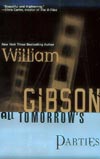
I returned to Australia in 2002. I live in Sydney. I arrived at the peak of a catastrophic drought. Government officials were calculating how many months of drinking water Sydney had left. The city's infrastructure is crumbling, public transport is unreliable and there have been power blackouts in the summer. I flashed back to the California blackouts of the 1990's. In Sydney the first blackout caught me unprepared: the batteries in my iPhone and computer and were low. I didn't have a radio or a flashlight. This ended my desire for bright, shiny new technological toys. I wanted to take my computer and iPhone to one of William Gibson's Gomi Non Sensei ("masters of junk") like Skinner in All Tomorrow's Parties, who jury-rigged the communications systems for the Bridge Community, and have him hook up some kind of solar powered generator for my electronic devices.
Australia is a secondary market. Products go on sale months or even years after they're launched in America, Europe and Japan. I started wishing for cool legacy products whose lives would be extended way past their marketing cycle, that would be created in response to community needs: sturdy mobile phones that provide reliable service for people in Australia's sparsely populated rural areas, for instance.
Rachel Botsman, who moved to Sydney from New York a year ago, has been chronicling the rise of "Collaborative Consumption" programs people have set up to share, trade and barter goods and services. Today she tweeted a link to the adaptive path blog that discussed how the development and design of products might change in response to products being evaluated by how well they work and how long they last.
Maybe a new generation of Australian designers will make civic and social responsibility the hippest thing. The Walkman of this era might be a personal solar power storage unit that can be carried around and snapped into power grid anywhere in the city. Liam Ferguson, the Australian winner of this year's James Dyson International Design Award for students, was caught in a bushfire with his family last year. They escaped unharmed but he was inspired to devise a more efficient fire truck that uses the newest fire-retardant materials and finishes, can be operated by two rather than five or six crew members and its 2,200 litres of water is almost five times greater than the amount carried by the current trucks. It's fitted with a geothermal imaging system so that the drivers can judge how the fire is moving. It's a sharp, coool design.

James Dyson was inspired by Isambard Kingdom Brunel, an early 19th century British civil engineer who created bridges and tunnels and steamships. "I have tried in my own way, to draw on Brunel's dream of applying emerging technology in ways as yet unimagined," he wrote in his autobiography. "He was never afraid to be different or shocking. The Dyson products are all more efficient ways of solving modest problems: a vacuum cleaner whose dual cyclone provides more reliable and powerful suction and does away with the need for dust bags, the Airblade hand-dryer which uses less power than regular hand dryers and doesn't need paper towels, and is more hygenic, and fans which cool a room more effienciently by making air flow more smoothly than fans with blades.
"Successful manufacturing is born of pioneering engineers and inventors," James Dyson wrote in the Guardian in February of 2009. Maybe the next generation of engineers and inventors will manufacture products in small, neighbourhood factories. Dan Hill from Sydney's Arup office has a new vision for manufacturing that breaks the old Industrial Revolution mould of massive factories in far flung places. He envisages local manufacturing in energy efficient, quiet and environmentally responsible factories folded back into the fabric of the community. He wrote a series of scenarios for Australian cities in the style of Italo Calvino's Invisible Cities.
In an ironic twist, former warehouses and factories are being partially converted from apartments back into warehouses and factories. Yet the domestic scale of the technologies means they can coexist with living spaces, actually suggesting a return to the craftsman's studio model of the Middle Ages. The 'faber' movement -- faber, to make --spread through most Australian cities, with the 're-industrial city' as the result, a genuinely mixed-use productive place -- with an identity.