
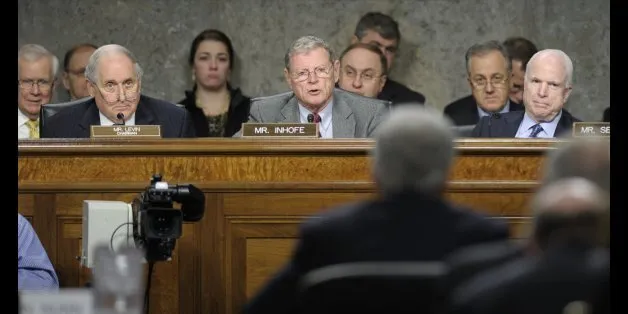
John McCain angrily insisted on "right" and "wrong" answers to his questions of Chuck Hagel yesterday. As a theologian and a religious leader, I want to say that John McCain is "wrong."
I watched the hostile questions that Sen. McCain asked Hagel in the hearings on his nomination for Secretary of Defense. The angry attacks from McCain were about the Iraq War, for which McCain was one of America's leading advocates. Hagel had previously called the war in Iraq the biggest American foreign policy mistake since Vietnam. Obviously furious, McCain tried to force Hagel to say the last "surge" in Iraq, which McCain had made his cause, was right after all. Despite the aggressive and disrespectful questioning from his former "friend," Hagel wouldn't submit to McCain's demands and said these questions would be subject to history -- and to theological morality, to which John McCain has never submitted his views. In fact, his repeated desire to invade other people's countries is offensive moral hubris.
Let me state some clear convictions from many of us in the faith community. The war in Vietnam was morally wrong. The war in Iraq was morally wrong. And John McCain has been morally wrong on both of them. Christian judgments of war should always run a narrow spectrum -- from the peacemaking ethic of Jesus, which rejects war to the just war theology of Augustine and Aquinas. But even in the just war tradition, conflicts have to pass a number of moral tests and be the option of "last resort." The burden of proof is always on those who support war to justify the taking of life.
Both Vietnam and Iraq failed those tests and were unnecessary wars of choice. Those wars were unnecessary, the terrible deaths from those wars were unnecessary, the enormous casualties were unnecessary, the painful family losses were unnecessary and all the horrible costs were unnecessary.
And yesterday, we saw a politician who has based his entire political career on war furiously trying to force a potential Secretary of Defense to say that he has been right all along.
But McCain hasn't been right in his endless promotion of war as the primary solution to our national conflicts. He has been consistently wrong and America has paid a very high price because of the ideological zealots of war that McCain represents.
After yesterday, I wished that the coming vote on confirmation could be the other way around; that America could somehow vote John McCain out of office and off the American political stage. The cost of McCain's theology of war has been far too high.
The important discussions yesterday should have been about other critical issues, like how quickly and responsibly we can leave the endless war in Afghanistan, how we can address the real threats of terrorism in better ways than failed wars of occupation and what we should do about the real problem of Iran. They should have been a very serious strategic and moral examination of our growing reliance on drones as a primary instrument of our foreign policy.
Instead, we saw old men defending their old wars. That was both very sad and morally objectionable. In the future, I would suggest the Senate Armed Service Committee call some religious leaders to their hearings to raise the questions that they need to hear.
Jim Wallis is the author of Rediscovering Values: A Guide for Economic and Moral Recovery, and CEO of Sojourners. His forthcoming book, On God's Side: What Religion Forgets and Politics Hasn't Learned about Serving the Common Good, is set to release in April. Follow Jim on Twitter @JimWallis.