
How will this economic crisis change us?
Could there be good news in, through, and even because of this Great Recession?
What is our role in creating a moral recovery?
Some banks say they are "too big to fail." So should we make them smaller?
What are the "moral exercises" each of us can perform?
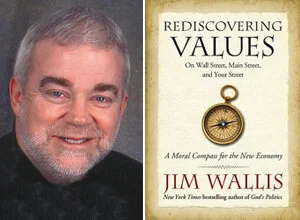
These questions and many others are explored and discussed in a new book I have written -- one I didn't expect or plan to write, but one that simply emerged as we were seeking to respond to the economic crisis that has gripped the nation and the world. I wrote it as a tract for the times, and it's titled "Rediscovering Values: On Wall Street, Main Street, and Your Street -- A Moral Compass for the New Economy". It was released earlier this month.
This recession presents us with an enormous opportunity to rediscover our values -- as people, as families, as communities of faith, and as a nation. It is a moment of decision we dare not pass by. We have forgotten some very important things, and it's time to remember them again. Yes, we do need an economic recovery, but we also need a moral recovery -- on Wall Street, Main Street, and Your Street. And we will need a moral compass for the new economy that is emerging.
The Great Recession that has gripped the world, defined the moment, and captured all of our attention has also revealed a profound values crisis. Just beneath the surface of the economics debate, a deep national reflection is begging to take place and, indeed, has already begun in people's heads, hearts, and conversations. The questions it raises concern our personal, family, and national priorities; our habits of the heart; our measures of success; the values of our families and our children; our spiritual well-being; and the ultimate goals and purposes of life -- including our economic life.
Underneath the public discourse, another conversation is emerging about who and what we want to be -- as individuals, as a nation, and as a human community. By and large, the media has missed the deeper discussion and continues to focus only upon the surface of the crisis. And most of our politicians just want to tell us how soon the crisis can be over. But there are deeper questions here and some fundamental choices to make. That's why this could be a transformational moment -- one of those times that comes around only very occasionally. We don't want to miss this opportunity.
The economic tide going out has not only shown us who was "swimming naked," as Warren Buffett put it, but it has also revealed that no invisible hand behind the curtain is guiding our economy to inevitable success. It is a sobering moment in our lives when we can see our own thoughtlessness, greed, and impatience writ large across the global sky. And it is a good time to start asking better questions.
The book suggests we have been asking the wrong question: "When will this crisis end?" It seeks to replace that with the right question: "How will this crisis change us?" The book is about the moral recovery which must accompany the economic recovery, and suggests that we must not go back to business as usual; rather, we need a new normal. The new book is about the values questions that are at the heart of how we got into this crisis, and are critical to getting us out of it. It describes the maxims that overtook us -- Greed is Good, It's All About Me, and I Want it Now - values that wreck economies, cultures, families, and even our souls. Instead it calls for a return to new/old virtues like Enough is Enough, We're In It Together, and evaluating our decisions by their impact on the Seventh Generation out.
It also calls for a conversion of our habits of the heart such as a clean energy economy and a new meaning for both work and service. It suggests that the market had become god-like, and that restoring a proper perspective means recognizing, spiritually, the limits of the market. The book describes how our many religious traditions contain many valuable correctives to this economic crisis that has spun out of control. It describes how the recent narrative of banks, bailouts, and bonuses has all the makings of a bad morality play. And it ends with 20 "moral exercises" that offer a values audit of our personal, family, community, financial, and social life.
Could there be some good news in, through, and even because of this Great Recession? Maybe so, if it becomes the opportunity to rediscover some important things that we somehow lost, but now might find again.