More

Featuring fresh takes and real-time analysis from HuffPost's signature lineup of contributors
Joe Lauria

GET UPDATES FROM Joe Lauria
 

Why Palestine Is Already a State (Part One)

Posted: 10/04/11 07:41 PM ET

A combination of mistakes -- whether through ignorance or design -- and significant omissions of fact have left the American public misinformed about why the Palestinians have gone to the United Nations and what they are trying to achieve.

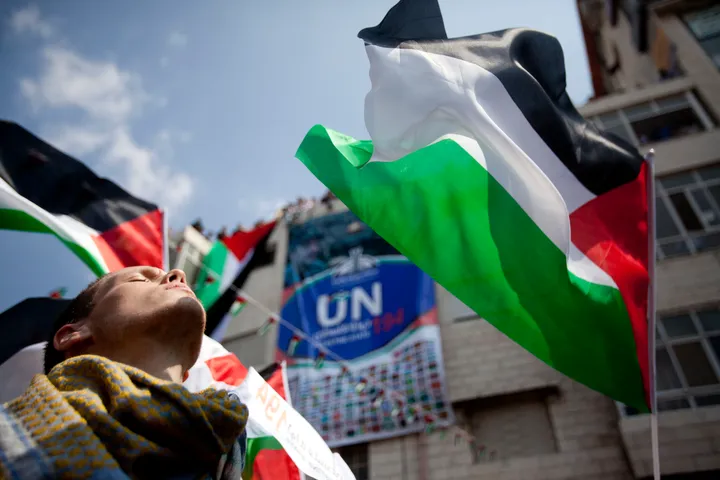
The biggest error repeated across the media in hundreds of headlines and stories is that the Palestinians are seeking statehood at the U.N. In fact, Palestine is already legally a sovereign state and is seeking membership of the United Nations, not statehood. The United Nations does not grant or recognize statehood. Only states can recognize other states bilaterally. The U.N. can only confer membership or "non-member, observer state" status to already-existing states. The U.N. Charter is clear. Article 4 says that only existing states may apply for U.N. membership.

Secretary-General Ban Ki-moon accepted an application for U.N. membership from PLO Chairman and Palestinian Authority President Mahmoud Abbas on September 23. Secretary-General Ban Ki-moon sent the application to the Security Council, which began deliberating on it three days later.

The very act of the secretary-general accepting the membership application is an acknowledgement from the U.N. that Palestine is already a state, since only states can apply.

The Montevideo Convention of 1933 lays out the requirements for statehood: a population living on a defined territory with a government that can enter into relations with other governments. The Palestinians have all three. Though its borders with Israel are not set, other countries with border disputes have been admitted as U.N. members, such as Pakistan and India. Trygve Lie, the first U.N. secretary-general, also wrote a 1950 memo that states do not need universal recognition to apply.

Palestine declared its independence on November 15, 1988, a fact found nowhere in the American mainstream reporting of the past week. A Palestinian walked out of the Al Asqa Mosque that day in Al Quds/Jerusalem and read the declaration aloud, much as someone read the American Declaration of Independence to a crowd in the courtyard of the Philadelphia State House on July 4, 1776.

Almost immediately 100 nations recognized an independent Palestinian state. Since then 30 more nations have recognized Palestine, some having opened Palestinian embassies in their capitals. This crucial fact too was not reported in the U.S. media. For Palestinians and those countries that recognize them, Israeli troops are occupying a sovereign nation.

It was the same as when Morocco and then France and other nations recognized an independent United States years before the war against Britain was won. For Americans and those nations recognizing America, British troops became an occupation force, not an army defending British territory.

The problem for the Americans then and for the Palestinians now is that the occupying nation and the world's biggest power are not among the 130 who've recognized them.

If there were a United Nations in 1777 the Americans could have applied for membership. And if Britain had a veto on the Security Council then as it does now, it would have blocked that membership.

Today neither the occupying power, Israel, nor the world's biggest power, the U.S., recognizes Palestinian statehood. Thus the U.S. has vowed to veto the Palestinians' membership resolution in the Security Council.

The U.S. had furiously lobbied to prevent the Palestinians from coming to the U.N. at all, including Congress threatening to cut off all aid. Having failed, Washington is now trying to delay a vote as long as possible while lobbying the several non-permanent members of the Security Council to abstain, or vote against.

But the Palestinians knew from the start the U.N. process would take weeks and have so far not backtracked on their plan one inch.

Membership in the U.N. requires a recommendation from the 15-member Security Council, secured with nine votes in favor and no vetoes. If the recommendation passes, the 193-seat General Assembly must approve with a two-thirds majority. Eight votes in favor or less would kill the Security Council membership resolution, sparing the U.S. from a veto that would cost them dearly on the Arab street.

Brazil, Russia, India, China, South Africa and Lebanon are among the Security Council members who have formally recognized Palestine and are firm about voting in favor. The U.S. isn't bothering with them. But Nigeria, Bosnia-Herzegovina, Colombia and Gabon have also recognized Palestine and are under extreme American, and in the case of Gabon, French pressure to at least abstain.

Falling short of eight votes would be an embarrassment for the Palestinians, but the Security Council route is only the first step. After a sure defeat in the Security Council, two options in the General Assembly remain.

This is the first part of a two-part series. Continue to Part Two here. A full version of this piece was previously published on BoilingFrogsPost.com.


  • Comments
  • 16
  • Pending Comments
  • 0
  • View FAQ
Comments are closed for this entry
View All
Favorites
Bloggers
Recency  | 
Popularity
12:05 PM on 10/10/2011
First I would like to thank HuffPost for posting this article.

Secondly, as an American I am slightly amused by the level of panic America is illustrating with their take on this issue. They have also threatened UNESCO with cutting funding.

The fact of the matter is Palestine has been playing this game for years. Always promises if they step back to the negotiating tables, and each time Israel's position is intransigent. It is about time they took matters into their own hands. I am a US, non mulsim, white, citizen and I find my governments continued support of Israel's occupation horrible.

I voted Obama last election, but with his position on this subject he has lost my vote.
photo
Marcus047
inter arma enim silent leges
01:33 PM on 10/05/2011
"Palestine declared its independence on November 15, 1988, a fact found nowhere in the American mainstream reporting of the past week"

More like no one cared and no one believed them. Republika Srpska and Republika Sprska Krajina declared their statehood in 1992 and 1991, respectively, and no one cared or believed their declarations either.

As the Simpsons said: just because you keep saying it doesn't make it true.
photo
HUFFPOST BLOGGER
Joe Lauria
01:20 PM on 10/06/2011
I think the fact that 100 countries immediately recognized Palestinian independence in 1988 and 30 other countries have since disproves that "no one cared and no one believed them." When you mean "no one" perhaps you mean the U.S. and Israel? They aren't everyone.
photo
HUFFPOST BLOGGER
messy
artist, writer, adventurer
05:41 PM on 10/06/2011
There are lots of countries that have acceded to treaties that they don't enforce, so what?

Pretending to support the Palestinians in the camps is a way for tyrannies to pretend to be pro-human rights.
02:59 PM on 11/04/2011
Great article, I am constantly amazed by the lack of facts in the media regarding this whole issue, it's about time somebody clarified the situation.
I'm amazed the the President is labeled anti isreali, trying to stop this and cutting much needed aid doesn't sound to anti isreali especially while more settlements are built.
We need more facts less emotional right wing unwavering support that was based on a strategy from the cold war.
11:51 AM on 10/05/2011
OK, poof, they're a state. so what's different?
photo
HUFFPOST BLOGGER
messy
artist, writer, adventurer
08:32 AM on 10/05/2011
"Palestine declared its independence on November 15, 1988, a fact found nowhere in the American mainstream reporting of the past week."

Texas declared it's independence in 1994, groups, even widely recognized ones, declare independence all the time and no one really cares.
03:57 AM on 10/05/2011
Well, Palestine isn't a country. Before 1967, Syria and Jordan occupied the Golan Heights and the West Bank, respectively. After suffering multiple attacks, Israel took over those territories in order to establish a more defensible position, and to discourage future attacks. There was the Yom Kippur war in 1973, which was an attempt to reclaim those territories, and since then no more wars with those countries.

So if I understand, because the Palestinians have embassies, they have a country. But I ask you--where is their land? What are the borders? If you tell me Gaza, I'll agree. But not the West Bank. And until they negotiate a peace, they will not have a country.

Oh, and nice article. Very creative. Have you considered writing fiction?
05:26 AM on 10/05/2011
with all that information you are still in denial about Palestine . . wow . . hasbara propaganda is really heavy . .and totally beyond all rational and logical and factual arguments . . . you are writing fiction . . get over yourself
photo
HUFFPOST BLOGGER
messy
artist, writer, adventurer
08:33 AM on 10/05/2011
You said the magic word "hasbara" and therefore lose the argument.
photo
HUFFPOST SUPER USER
Fireslayer
08:14 PM on 10/04/2011
Glad we have straightened out the terminology. So 130 nations to date recognize the Palestinian State and what is issue is UN membership.

So now that the Palestinians have a worldwide consensus in support of their statehood, what logical reason could there be for not allowing them into the UN?
photo
HUFFPOST BLOGGER
messy
artist, writer, adventurer
08:34 AM on 10/05/2011
They have even less reason than Somaliland, which has been a stable democracy for years. Same with Taiwan.
photo
Marcus047
inter arma enim silent leges
01:36 PM on 10/05/2011
the question is, if thy already have statehood, what need do they have of UN recognition? Will UN recognition make any difference that statehood since 1988 hasn't? Will the UN fight their war on their behalf?

Hey, I think I'll declare statehood in my apartment and seek UN recognition.
08:08 PM on 10/04/2011
The"heroic" efforts by the US on behalf of Israel have long since blown away any pretensions to impartiality. Without American involvement, the matter might have been resolved long ago. What difference will yet another veto make to its reputation as Israel's cup bearer?