Teenagers screaming “Snow Day!” from the top of their lungs at 6:30 AM is a rare occurrence for two reasons: 1) snow days are few and far between in Boulder, CO and 2) the 13+ crowd are scarce in the pre-dawn hours. When I suggest that getting up so early seems to negate the benefit of school cancellation, I’m told, “Every minute counts on a snow day!”
As young tribe members from the neighborhood and beyond enter the scene, I observe my household’s prodigious energy footprint: natural gas cooking stacks of pancakes, heating a drafty old home and providing hot water for showers and dishes; coal lighting a Risk game, powering multiple laptops and longingly beating whipping cream with one beater. The cars stay in place denying oil the opportunity to join our “high energy users” portfolio on this day. The scene might have gone unnoticed had I not just attended the World Energy Justice Conference presented by The Center for Energy and Environmental Security (CEES) at The University of Colorado Law School.
Dr. Kandeh K. Yumkella, Director-General of the United Nations Industrial Development Organization (UNIDO), opens the conference with the three F’s: food, fuel, and financial crisis. As a result of these F’s, 100 million people have been pushed back to living on $1 a day, causing food riots that are rapidly spreading to a “full scale, full world crisis.” Dr Yumkella speaks of living his own personal dichotomy, having come from a small village in Sierra Leone―the third poorest country―and currently living in Vienna with the best of everything. When he travels back to his village, he brings a generator and bottled water, because there is no electricity or potable drinking water. His passionate work for energy justice is grounded in his personal experience of this extreme energy disparity.
I can relate. While I’m living the “make every minute count” lifestyle, nearly one third of my fellow global family members―the energy oppressed poor, or EOP―rely primarily on biomass-based fire to meet all their energy needs. Biomass in this context refers to wood scraps, plant debris, animal dung and just about any material that will burn. Adequate for cooking and heating, this ancient energy source causes serious indoor air pollution (black soot) resulting in 1.5 million premature deaths every year, primarily women and children. When the black soot enters the atmosphere, it becomes the second most significant cause of climate change. Additionally, women and children walk miles every day to collect the debris, thereby denying children of basic educational opportunities.
To address these energy access dilemmas, international and U.S. decision-makers spent three full days together generating solutions that address indoor and atmospheric pollution, create sustainable energy with appropriate technologies, promote economic growth that will break the poverty cycle and create new markets. Proven products, like $20 cook stoves that burn more efficiently and produce minimal pollution, call for a full-scale implementation plan, including funding, distribution, education, and community buy-in.
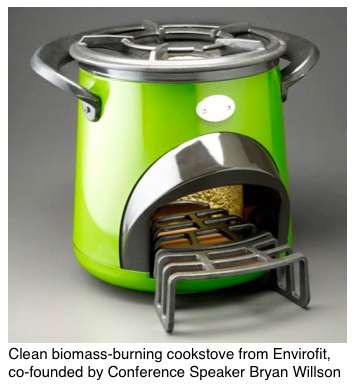
This buy-in, from men and women, is vital to the success of development projects and introducing new technology requires overcoming cultural barriers. Dr. Beth Osnes, assistant professor of theatre at the University of Colorado and co-founder of Mothers Acting Up, shares her recent trip to Guatemala, where she specifically engaged women, who are most heavily impacted but rarely included in discussions about energy. At the conference, lawyers and engineers watch attentively as Dr. Osnes and troupe re-enact interactive skits previously preformed in the Guatemalan villages to address the barriers, as well as the risks of doing nothing.
While the conference presented an impressive line-up of speakers, I was most drawn to the words of Dr. Bernard Amadei, Engineers Without Borders founder and CU professor, "When you have no light, you can make babies, but you can't read, you can't work, you can't learn." As he relays images of children studying under street-lights on a recent trip to Kabul, Afghanistan, he shares with intense passion, “The desire to learn is fierce!” He also points out that technology must be appropriate as well as sustainable; no more “cradle to grave” solutions.
All of this leads me to snow day #2. My partner in all things, reads a bit of this post and cautiously asks, “What do you want me to do?” Sitting in our toasty home fragrant with the scent of cheesy eggs and toast, and lively with movie trailers singing out from the family computer, I realize it serves no one to shamefully denigrate my abundant life. However, I need to acknowledge that one third (my third) of the planet is literally consuming huge amounts of energy, while one third is deprived of the most basic energy needed to live a productive life.
What can my third and I do? 1) Take action to reduce our energy appetites, visit the Global Footprint Network to find out how. 2) Support non-profits like the Darfur Stoves Project and Trees, Water & People in their work to provide desperately needed solutions to the energy oppressed poor. 3) Most importantly, as Dr. Lakshman Guruswamy―the man behind the conference―points out, it’s time to bring this conversation into the international climate action arena. The talks in Copenhagen can, and must, address the energy oppressed poor in the effort to reduce global CO2 emissions.
Recognizing that the conversation is just beginning, I make for the trail with my snowshoes and dog hoping I made my minutes count during these much appreciated snow days.
Read more about the World Energy Justice Conference, program presenters and CEES.