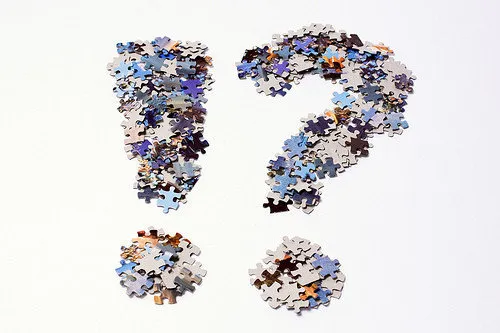
Having just finished correcting (or, to be politically correct, I should say "reviewing") undergraduate written examinations, I was again struck -- as I have been for years -- by the inability of students, including the best among them, to use apostrophes "correctly." Among numerous examples: Nazi's, when referring to this word in the plural; parents, when writing about what is loved by parents (including children; e.g., "my parents college bill is low"); and, a recurrent mistake, improperly using "it's" (contraction for "it is") instead of "its" (possessive pronoun).
The one, admittedly minor, Apostrophe Catastrophe (AC) "tipping point" that tempted me to throw all of the final exams out of the window (if not to jump out of the window myself): September 11'th. How, I asked myself, could he, a student who was quite diligent, have put an apostrophe between "11" and "th"?
Just kidding about the defenestration, but patience for the young does have its limits.
In a society that prides itself on its accuracy, I have long tried to understand this failure on the part of the U.S. younger generation to use the apostrophe "correctly." I've come up with the following reasons, of course more hunches than the result of serious research:
Perhaps it is a deep-rooted, subliminal suspicion, in an American culture still formed to a considerable extent by Anglo-Saxon linguistic traditions, toward French grammatical tendencies: "The apostrophe," Wikipedia tells us in a footnoted assertion, "was introduced into English in the sixteenth century in imitation of French practice ... [,] used in place of a vowel letter to indicate elision (as in l'heure in place of la heure)."
"By the 18th century, apostrophe plus s was regularly used for all possessive singular forms, even when the letter e was not omitted (as in the gate's height)," Wikipedia goes on to say.
And I recall, from my pleasurable reading some forty years ago of original manuscripts penned by Thomas Jefferson stored at the National Archives (I was then an editor on a documentary volume on early Russian-American relations, which included writings by Jefferson), that he would use "it's" and "its" interchangeably (I hope Jefferson scholars will correct me if my memory has failed me).
So, Jefferson may have been a francophile, but his lack of concern regarding the use of the apostrophe, as a Founding Father, suggests that there is a long tradition in the United States regarding the tyrannical imposition of a "regulated" apostrophe. Let the apostrophe blow freely in the wind (need I cite the song?), rather than being officially placed "where it belongs" on a page. Is that not in the "American" spirit?
It's quite clear to me, after years of "teaching" college students, that "proper punctuation" (not to speak of grammar) is not systematically, if at all, taught in many grade schools/high schools in the United States. I suspect, perhaps unfairly, that all too many English composition teachers, no matter how dedicated they are, themselves can't really explain why "its" is not "it's" to their fifth-grade students (or have simply given up why, God bless their souls). The emphasis in our schools seems to be "creativity of expression," rather than accuracy in grammar, with the result that when an 18-year-old goes to college, he/she has never been taught how to use the apostrophe correctly.
Is that the end of the world? No, except when a "teacher" has to read final exams for people who supposedly aspire to a "college" degree. And, in our competitive society a misplaced apostrophe may not be helpful on a résumé -- assuming those reading it care about such a matter. Indeed, most don't.
So, ultimately, "What me worry?" But beware, dear young people, of anal Human Resources specialists who'll justify your not making the grade for a job because you can't spell as a college graduate is expected to.
But not to get too solemn: as anyone who reads American publications can attest, the "correct" use of the apostrophe in the United States remains problematical. Why, for example, do so many media, when referring to a decade, put an apostrophe between the last digit and an "s"? (e.g., 1990's). Does not sanity suggest that it should be 1990s?
And then, of course, we have the Internet and the new social media, where the apostrophe has been lost in a sea of what some consider illiteracy rather than a new form of communication. When you text message or even send an email (some people still do send an email; and some still even write letters), why worry about apostrophes? You should want to send your message, no matter how unclear or incomprehensible, subito! (instant gratification takes too long!). It's the message itself, not its content (and least of all a free-wheeling apostrophe) that counts. Narrative, not accuracy...
Not to speak of spell check. Students have become dependent on (should I say addicted to?) this program (I was amazed to see the difference between two forms of the written work of students -- between an in-classroom exam where they were to write their answers by hand, sans computer, and the final, which was a take-home to be sent by email to their instructor. There were far fewer spelling mistakes on the final, although one student -- and spell check -- evidently could not tell the difference between "boarders" and "borders.") Maybe a computer genius can find a way to avoid the AC syndrome through the Perfect Spell Check Program. If one in fact does exist, please let me know.
Long live technology, if it can abolish illiteracy!
Indeed, in the process of writing this apostrophe-caused outburst (aggravated by seeing yet another "its" rather than "it's" on an exam -- I simply couldn't take it anymore), I found sites/articles in cyberspace dealing with the apostrophe "issue" (an intriguing linguistic development, by the way: today we don't have problems -- which may suggest something is actually going wrong -- but we simply have "issues" -- which suggests that no one is actually doing anything wrong). See, for example: "Apostrophe Catastrophes"; "Apostrophe catastrophe"; "Apostrophe catastrophe! The rogue apostrophe is spreading like measles. It's time to fight back..." and "Avoid an apostrophe catastrophe!"