Why You Should Read Mahmoud Darwish

digg Share this on Facebook Huffpost - stumble reddit del.ico.us RSS

Posted August 24, 2008 | 07:18 AM (EST)


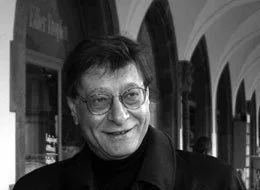
When renowned novelist Ahdaf Soueif said that the Palestinian poet Mahmoud Darwish was "the last poet who could fill a football stadium," it wasn't hyperbole. A Darwish reading in Beirut earlier this year drew more than 25,000 people. His funeral two weeks ago, which garnered little attention here in the U.S., drew thousands more.

Who was Mahmoud Darwish? Many considered him to be the national poet of Palestine and saw his poetry as an expression of the struggle of the Palestinian people. He grew up as a refugee, his village was destroyed, and between 1961 and 1967 he was arrested by the Israelis five times, once for writing "Identity Card," a poem which became a rallying cry for the Palestinian movement. Here's an excerpt from the poem, which he aimed at an Israeli policeman:

Record!
I am an Arab
You have stolen the orchards
of my ancestors
And the land
which I cultivated
Along with my children
And you left nothing for us
Except for these rocks...

Record on the top of the first page:
I do not hate people
Nor do I encroach
But if I become hungry
The usurper's flesh will be my food
Beware..
Beware..
Of my hunger

And my anger!

You can understand how this sort of poetry wouldn't sit well with Israelis. The former Israeli Prime Minister, Yitzhak Shamir, in fact, once quoted from another of Darwish's poems, "Those Who Pass Between Fleeting Words", to the Israeli Parliament as proof that Palestinians were not willing to compromise. The poem reads: "Live anywhere but do not live among us... and do not die among us."

It would be a great disservice to Darwish, though, to remember him only at his most impassioned and (as he himself admitted) at his most angry. In reality, while he championed the Palestinian cause, he also spent much of his life trying to make sense of the conflict between Israel and the Arab world. He was hopeful that the two sides could be made to understand one another. Sasson Sommekh, an Israeli scholar at Tel Aviv university, said of Darwish's work: "it aims at dialogue: it's not talking about Israelis as criminals, but saying, 'why shouldn't they understand?' There's no sense that this man hates us." You can see this sentiment in an excerpt from his poem, "State of Seige":

"You there, by the threshold of our door
Come in, and sip with us our Arabic coffee
(you may even feel that you are human, just as we are)
you there, by the threshold of our door
take your rockets away from our mornings.
We may then feel secure
(and almost human)."

Darwish really shines when seeking to find reason in what could be easily dismissed as madness. He decried terrorism, but said of suicide bombing, "We have to understand - not justify - what gives rise to this tragedy. It's not because they're looking for beautiful virgins in heaven, as Orientalists portray it. Palestinian people are in love with life. If we give them hope - a political solution - they'll stop killing themselves." You can see that viewpoint played out in this painful excerpt from his poem, "The Martyr":

I love life
On earth, among the pines and the fig trees
But I can't reach it, so I took aim
With the last thing that belonged to me.

Darwish once said: "Poetry and beauty are always making peace. When you read something beautiful you find coexistence; it breaks walls down... I always humanize the other," and, poignantly, "I will continue to humanize even the enemy."

Darwish's poetry has been translated into more than twenty languages, but he hasn't received much acclaim here in the states (most of his work has yet to be translated into English). Thankfully, it looks like that may be starting to change. Shortly before his death, Darwish received the Lannan Foundation Prize for Cultural Freedom, a $350,000 award here in the states, and the University of California Press will be publishing Darwish's new collection entitled Unfortunately, It Was Paradise this fall.

Mahmoud Darwish died on August 9th due to complications from heart surgery. You can read more of his poems here.

When renowned novelist Ahdaf Soueif said that the Palestinian poet Mahmoud Darwish was "the last poet who could fill a football stadium," it wasn't hyperbole. A Darwish reading in Beirut earlier this...
 
Comments
9
Pending Comments
0
iPhone App Promo

Want to reply to a comment? Hint: Click "Reply" at the bottom of the comment; after being approved your comment will appear directly underneath the comment you replied to

View Comments:

Darwish's most recent book in English (bilingual, actually) is a wonderful trilogy, The Butterfly's Burden, impeccably translated by the Palestinian-American doctor, Fady Joudah, who was at his bedside when the poet died in a Houston hospital. The translator is also a brilliant poet who recently won the Yale Younger Poet's Award.

In "Nothing but Light" Darwish says:

I am what I become tomorrow
and I only stopped my horse
to pick a red rose from
the garden of a Canaanite who had seduced my horse
then I went searching for my place
higher and farther,
then higher and farther,
than my time.

Mahmoud Darwish was a great and gentle man who believed that peace could be made only through the establishment of two states tolerating one another. The burden he bore is almost unimaginable to poets of the west, and in his hope and pain he created poems of great beauty and dignity. He will be sorely missed.

    Favorite    Flag as abusive Posted 06:27 AM on 08/25/2008

I'm just an ordinary guy and have only become aware of Darwish from comments on the radio after his death.

But I'm also a poetry loving kind of a guy, and I have sympathy for the Palestinians, I object to the suppression of their human rights by Israel, and I will keep an eye out for translations of his work, and I will read them.

    Favorite    Flag as abusive Posted 03:02 AM on 08/25/2008
photo

Based on other comments the power of his gift is lessened in translation (makes me want to learn the original language). From the little I have read thus far, his brilliance still shines through. His poem about suicide bombers resembles my own thoughts and the following directly speaks to what I have said and written concerning when victims become tired of being victims:

I do not hate people
Nor do I encroach
But if I become hungry
The usurper's flesh will be my food
Beware..
Beware..
Of my hunger
And my anger!


There are lessons for Americans to learn from this man. If I get the chance I will get the book. I love poetry and as one who writes a lot of it as a way to vent or simply to work out my thoughts, I appreciate reading the work of masters.

I hope the people in that part of the world can one day sit down at the table of love, unity, and peace.

    Favorite    Flag as abusive Posted 06:42 PM on 08/24/2008

John Lundberg: At least your readers have mentioned translation. If, as this one says, Darwish's brilliance "shines through," it is thanks to translators. You quoted Darwish as if he had written in English. I doubt you would quote a poet without crediting the poet by name; so why do you quote translators without crediting them by name? This is not just a question of respecting the translators' "moral rights"; it is also a service to readers who might like to know which translations to read. If you can recommend the work of particular translators, please do; if not, properly attributed quotations may enable readers to decide for themselves.

    Favorite    Flag as abusive Posted 02:18 AM on 08/25/2008

Unfortunately, It Was Paradise is already out, several years ago. Do you mean a new translation?

    Favorite    Flag as abusive Posted 04:46 PM on 08/24/2008
- Zeje I'm a Fan of Zeje permalink

Read his book Unfortunately, It Was Paradise -- a beautiful book of poems-- but very upsetting at the same time. I love him and wish he were still with us.

    Favorite    Flag as abusive Posted 03:58 PM on 08/24/2008

Inspiring.

    Favorite    Flag as abusive Posted 03:53 PM on 08/24/2008

Last weekend at the Edinburgh Festival I saw Jidariyya, a play written by Darwish while on his deathbed, performed by the Palestinian National Theatre. It was very beautiful, although I'm afraid that Darwish's poetry is most magical in arabic (which I don't speak). In any case, it was an excellent homage to Darwish, who passed only a week or so before.

    Favorite    Flag as abusive Posted 01:15 PM on 08/24/2008
photo

He was a great man , a great intellectual and his poems were wonderful , i tried to read them in French and English but i could ONLY appreciate them in Arabic , the meaning is more powerful and impressive . . he will be missed .

    Favorite    Flag as abusive Posted 12:27 PM on 08/24/2008
Comments are closed for this entry

You must be logged in to reply to this comment. Log in  or  Connect