More

Jon Soltz

Jon Soltz

Posted: October 8, 2009 12:32 PM

How General McChrystal May Have Hurt Himself

What's Your Reaction?

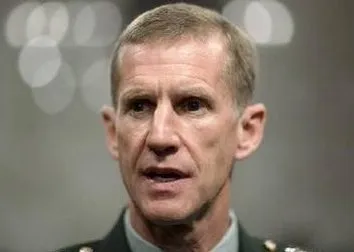
In the debate about the internal White House debate on which way to go in Afghanistan, one piece has been seldom talked about - did General Stanley McChrystal hurt his own cause?

There is absolutely no doubt where McChrystal stands: He wants a massive influx of troops, to execute a counter-insurgency strategy, which includes securing the people, taking and holding of areas, and rooting out al Qaeda and the Taliban. The strategy would very much mirror what was done in Iraq. Now, leaving aside for the moment whether this strategy would work in Afghanistan, the way the General made his case may have done more harm to his opinion than good.

From his speech in England, to his interview with 60 Minutes, to the piece by Bob Woodward that detailed his fight, the General has been incredibly public, taking the debate out from closed doors. It's hard for me to criticize that in and of itself. After all, the many veterans I represent, and I, stood up for General Shinseki when he took his criticism public of the Bush/Rumsfeld strategy to invade Iraq. VoteVets.org gave voice to Generals Eaton and Batiste, who resigned from the military so they could speak out.

But therein lies the rub - from Generals MacArthur to Shinseki, history has taught us that trying to pressure your Commander in Chief from the outside almost never results in a change of opinion from the President. In fact, it breeds tension that could lose the debate, if not your job.

For all the criticism from the left and right about President Obama, no one can argue that, so far, he hasn't deferred to military leaders on most issues. From the early days of his administration when he approved a troop increase for Afghanistan, to his ordering a study rather than a quick repeal of Don't Ask, Don't Tell, to keeping pictures of Abu Ghraib under wraps, the President has heeded the advice of military minds, and has been backed up by the most senior retired officer in his inner circle, General James L. Jones.

On this occasion, however, Jones' response to McChrystal has been telling. Jones hasn't taken the General's side, or gone out of his way to defend him. In fact, on CNN, Jones bluntly said of McChrystal's public stance, "It is better for military advice to come up through the chain of command."

Ouch.

If I had to make a gut call right now, I'd say McChrystal won't get what he was asking for, but more of a hybrid strategy that focuses mainly on counter-terrorism - quick strikes against al Qaeda and some Taliban, yet some more troops to help the Afghan Army in some areas, and train them. Coming from President Obama, who is notoriously non-confrontational, that compromise strategy would mark the first time he's really said "no" to the military to any real degree, and some of that may have to do with how McChrystal handled all of this. It basically puts McChrystal on warning that he doesn't call the shots.

During the campaign, the President made a constant point of saying he wanted vigorous debate within the White House, and wanted to be told when he may be wrong. All indications are that he's getting his wish. That the debate has spilled outside the confines of the situation room, however, might not be the change he was looking for, or something he'll stand for much longer.

Crossposted at VetVoice.com

Follow Jon Soltz on Twitter: www.twitter.com/jonsoltz

In the debate about the internal White House debate on which way to go in Afghanistan, one piece has been seldom talked about - did General Stanley McChrystal hurt his own cause? There is absolutely ...
 
 
  • Comments
  • 186
  • Pending Comments
  • 0
  • View FAQ
Comments are closed for this entry
View All
Favorites
Recency  | 
Popularity
Page: 1 2 3 4 5  Next ›  Last »  (5 total)
01:21 PM on 10/10/2009
Ah, now we're talking. Talking about AfPAk and our broader interests in Central Asia begins to approach a strategy. The basic point in A'stan is that the insurgency is essentially a Pashtun insurgency. Any work here must consider both sides of the Durand Line where Pashtuns reside. As you say, a stable, nuclear Pak is in our national interest. Keep in mind though that Pak's nukes are in the "core" functional areas of Pak along the Indus where the Punjabis dominate and don't agree with the Pashtuns/Taliban in the NWFP/FATA areas. There are no nukes in those areas, but they can destabilize other parts of Pak.

It will be interesting to see which approach wins out - COIN? CT? Hybrid? COIN has two weaknesses as a campaign plan - larger numbers of troops and time. We've squandered too much time here already. I'm sure the debates are intense.

Still baffled as to calling COIN a strategy/grand strategy. COIN is to counter, well, an insurgency - a tactic in support of an end. That makes COIN, at most, a tactic/operational method.

A grand strategy would be something like the U.S.'s implementation of Alfred Thayer Mahan's thesis to develop its Navy to control the sea lanes to become a world power; the WWII Europe First/Pacific Second strategy; or the containment/deterence/MAD strategy against the USSR. COIN is too narrowly focused to rise to those levels. To see a lively discussion on this go to www.smallwarsjournal.com
01:43 PM on 10/10/2009
oops, this was meant as a reply to a post below and not a stand alone post. My apologies
03:37 PM on 10/09/2009
The more General McChrystal beats up on President Obama, the more likely he will do as he says. However, the troop increase request will come in installments to show who is boss. But, in my view, when all is said and done, the troop increase of 40,000 will be in place much before this time next year. And, it would be mistaken to think that that would be the last request for additional troops. The arguments soon become, we need more troops to protect the troops already deployed. We hear talk of reviews and strategies, but a public peak at the budget over ten years (just as for health care) is not allowed. If presented as three trillion for ten years along with financing (of course, not revenue neutral) such as in year one we will borrow another 200 billion from China, year two, we will print up another 200 billion and then we will institute an Afghan surtax, of one percent on wages over $50,000, two percent over $75,000, and onward to 20 percent over one million. Suddenly, Afghanistan will not be such a critical national security issue, would be my guess. By the way, I believe General Shineski offered his opinion before a congressional committee--which is not insubordinate as with McChrystal's lobbying in London.
photo
HUFFPOST SUPER USER
kimk3
12:49 PM on 10/09/2009
So I don't get it... there's only about 100 Al Quaeda "operatives" in Afghanistan and another 100 in Pakistan. What are we doing there again??? And Obama is certainly not getting counsel from any people with ideas for peace it seems.
11:31 AM on 10/09/2009
Agreed with many of the comments herein, that McChrystal was insubordinate and should go immediately. However, I have a hard time imagining Obama having the coj()nes to fire him.
10:30 AM on 10/09/2009
The General should be standing before the Joint Chiefs of staff and explain himself to that body.
01:19 PM on 10/09/2009
This may come as a shock to most, but the JCS are not in the chain of command, They are an advisory group to the POTUS and SECDEF. So it would be inappropriate for them to do so. The chain of command for Gen McChrystal as COMISAF/USFOR-A runs through CENTCOM (GEN Petraeus) to the SECDEF (Mr. Robert Gates) to the POTUS. GEN Petraeus has endorsed his recommendations. And so has ADM Mullen (Chairman of the Joint Chiefs). Mr. Gates is the one who appears to be skeptical, along with the National Security Advisor GEN (ret) James Jones. So the POTUS is getting a good dose of pros and cons within his advisory groups and his SECDEF.

The JCS has no operational command authority.
photo
HUFFPOST SUPER USER
TrekBear
09:50 AM on 10/09/2009
Active duty military personnel, no matter the rank held, have no business criticising the President or SecDef in public. It breeches the chain of command and is harmful to morale.
01:29 PM on 10/09/2009
This is true in matters related to insubordination or presonal criticism. But in this case, no criticism or insubordination was made. However, all members of the military have the ability to express their opinions in the proper forums. This is done all the time. Check out any service/trade magazine or publication such as Parameters, Proceedings, Joint Forces Quarterly, smallwarsjournal.com, Marine Gazette, etc. Service members routinely discuss/debate current issues, strategies, and doctrine. The discussions sometimes get heated. And frequently service members give speeches to discuss their viewpoints. Serving in the military doesn't mean taking a vow of silence. Though I don't agree with GEN McChrystal's recommendations, he has not breached any protocol. Ref my previous comments below for further discussion.
01:40 PM on 10/09/2009
But you think it is find for politicians to undermine generals before they even have an opportunity to present their assessment? This is more about Levin's interference than opposition to Obama.
photo
HUFFPOST SUPER USER
TrekBear
03:33 PM on 10/09/2009
In a civilian-controlled military like ours, whatever the civil authorities decide is the final word and they have to bear responsibility for the outcomes.
photo
HUFFPOST SUPER USER
MalleusMaleficarum
Global nomad.
09:39 AM on 10/09/2009
McChrystal was insubordinate. He should go immediately. Unsupportive of the forthcoming hybrid or reoriented strategy, McChrystal is not the man for command of ISAF. Petraeus has done little to justify his position in an administration attempting to reshape America's relations with the Muslim World as the first and foremost phase of strategy to strengthen American national security. Petraeus should prepare to write his memoirs just like McChrystal.
HUFFPOST SUPER USER
PitBull6
10:00 AM on 10/09/2009
Wait a second...You're saying he's insubordinate because not supportive. (1) To whom was he insubordinate? (2) What forthcoming hybrid? Do you work for Obama? How can say with such certitude what he going to decide? Actually, you're kind of saying a decision has already been made.
photo
HUFFPOST SUPER USER
wallyone
09:15 AM on 10/09/2009
I thought Shenseki spoke in public only to a congressional committee, and only in response to a direct question. Of course he was proven correct in his assessment of the number of troops needed in Iraq, and the situation there might be very different had his advice been heeded.
07:21 AM on 10/09/2009
Jon Soltz states: "But therein lies the rub - from Generals MacArthur to Shinseki, history has taught us that trying to pressure your Commander in Chief " . I do remember McChrystal like MacArther offering an opinion in public and outside of chain of command. I do not recall Shinseki offering any opinion to the public. So, Mr Soltz, "history" would suggest you are incorrect in attempt label Shinseki as violating UCMJ in the same manner as occurred with MacArthur and McChrystal. McChrystal , like MacArthur should be gone tomorrow.
photo
HUFFPOST PUNDIT
Godweiser
The eyes have it.
08:38 AM on 10/09/2009
MacArthur did way more than merely advise publicly -- he openly tried to derail the start of truce negotiations. McChrystal did something I find inadvisable, but MacArthur was anathemic -- he was Caesaring it on his own. Truman said he he intended to do something and MacArthur tried to undermine it.

Shinseki and McChrystal don't stack up the same way. And in reality, they both said the same thing -- you need these assets to do this job if you want to do it. It's the policymaking decision on the president's part whether or not he wants to pursue Afghanistan, if the cost is worth the benefit and so forth and so on.

This isn't endorsing McChrystal, except that he's correct on the military strategy. The question Obama has to wrestle with is whether or not this war in Afghanistan is beneficial to the overall counterterror strategy.

Me? I don't think so. I think we need to reduce our military presence and let the Afghanis take over the reigns, similar to what's been going on with the Pakistanis -- much of the problem in Afghanistan is that the Pakistanis are pushing hard and doing well, and the Taliban isn't operating as freely there as in Afghanistan now. Yet, Afghanistan's government needs to have a stake in success here, which they never will if we continue to coddle them. We have to prod them into standing on their own, and increasing our presence there merenly adds to their dependency.
01:57 PM on 10/09/2009
I don't believe Mr. Soltz ever stated that GEN Shinseki violated the UCMJ. He states that voicing your opinion has consequences, even when you're right.

In case you missed it, GEN Shinseki, as the Army Cheif of Staff, testified before the Senate Armed Services Committee on the eve of the Iraq operation. He was asked his opinion of the troop strength needed and gave an honest assessment that turned out to be true - that the operation was under resourced. This did not align with Sec Rumsfeld's viewpoint and Shinseki was soon thereafter no longer the Chief of Staff of the Army. Shinseki was not insubordinate nor critical. He offered his analysis as the Army's leader and paid a price, which I think is the point of Mr. Soltz's article.
07:13 AM on 10/09/2009
Generals always want more troops. It began with George Washington, on through Lincoln and the Little Napoleon and now this guy. Too bad he had to go to the press, in England to do this. He should be canned of course, or caned as the british prefer these things.

Note that a top British General is currently doing his best to rip his government apart. But he waited to resign first, then maliciously appropriated his insider knowledge to attack his democracy. Sigh. Generals.
06:50 AM on 10/09/2009
You know that Shinseki is not the same. When the CSA prepares a Staff Package the supporting information is obtained from all the relevant commands and organizations in the process of staffing. The proposed decision is then staffed around again so everyone knows the outcome. It is then staffed to the office that will get the decision package. If they don't like the outcome it is restaffed to factor in any changes from the top. This is the method developed by LTC D. Eisenhower before WWII. The staffed package then represents the best and brightest information to be submitted to the chief. It is not the OPINION of the CSA.

When the Leadership stomped on Shinseki they were stomping on the best and brightest of the Army and the Fighting Commands not the opinion of one general and the kiss ups around him.
02:05 AM on 10/09/2009
This controversy would likely have never happened if Senator Carl Levin had not tried to backdoor his recommendation to VP Biden and the White House before GEN McChrystal even had the chance to present his assessment. If I were McChrystal, I would be a little peeved at Levin.
02:28 AM on 10/09/2009
I'm not sure I agree with this assessment of McChrystal's "dilemma." He has direct access to Obama's ear if he wanted to counteract a backdoor push by Levin. He does not have to go public. Going public seems more like trying force Obama's hand.
01:34 PM on 10/09/2009
The chain of command doesnt provide direct access for McChrystal to Obama.
HUFFPOST SUPER USER
Manx
02:29 AM on 10/09/2009
FYI, the "leaked" report is only part of the picture. What about McChrystal's implicit criticism of Obama in his London speech - on foreign soil. That just isn't done. I don't think Sen Levin had anything to do with that.
04:20 AM on 10/09/2009
What implicit criticism? Did you read the speech? It was actually pretty good. He stated nothing that was counter to any policy of the current administration. Don't rely on press sound bites to form the basis of an opinion. What the General criticized was a couterterrorism approach vs a counterinsurgency approach. And you can see that debate happen daily in military circles on www.smallwarsjournal.com. Sadly, none of our elected leaders are very much engaged in that debate. Note, I use the term "approach" vs "strategy" when referring to CT and COIN. Neither CT nor COIN are strategies. They are operational methods or tactics in support of a strategy, which no one seems to know what that is in A'stan right now. Only our political leaders can set our strategy. We here in A'stan eagerly await their guidance.
04:22 AM on 10/09/2009
(cont)

McChrystal plainly states in the "leaked" report that a strategy must proceed any increase in resources to be successful. Sen Levin backs that assertion. The current accepted doctrine in right now is COIN. The POTUS had previously bought off on it in his campaign, by appointing McChrystal, sending 21,000 additional troops, and calling this a "war of necessity" and stating he would support it with the appropriate resources. BTW, CT was the approach used by the Bush administration. So arguing for it is sort of like a "back to the future" approach. It's espoused by the VEEP and a few others. The POTUS has sided with the COIN folks up to now. He seems to be carefully weighing all the options now given the results of the recent fraudulent elections in A'stan. That was a game changer. McChrystal is doing his job and awaiting his bosses' direction based on his recommendations in the "leaked" report. Plus, I am not sure why the guy above is knocking Levin. Levin is on the General's side and has pretty much recommended the same COIN approach with a primary focus on developing the Afghani National Security Forces (ANSF).

http://www.newsmax.com/insidecover/levin_afghanistan_troops_/2009/09/21/262859.html

For the record, I am deployed to A'stan and I do not agree with the General's approach. I freely offer my opinions and recommendations to my chain of command without any hesitation or fear of reprisal. I am not a COIN-danista.
01:57 AM on 10/09/2009
Excuse me, but I don't think Gen. Shinseki "went public" with his disagreement with Rumsfeld on Iraq. He was testifying before Congress, and as such had to answer frankly and honestly even if he was not under oath. McChrystal is entirely different. He was giving his opinions in the media and venues outside of a Congressional inquiry.
photo
HUFFPOST SUPER USER
mommadona
I paint. I blog. Therefore, I am.
12:26 AM on 10/09/2009
Let's just say the culture that brought you Haig of the "I'm in charge here" appearance in still embedded in the military/particularly the army/airforce.

And to that the sprinkling of CStreetCult/OnwardChristianSoldier paradigm that many of the upper eschelon were picked for and U have a mess for US.

Here's the perfect picture worth a thousand words:

http://www.youtube.com/watch?v=N1KvgtEnABY
11:31 PM on 10/08/2009
Chasing Al Qaida is like playing whack-a-mole. Chase them out of Afghanistan, they go to Pakistan. If we could pry them out of there, they'd go somewhere else (I hear some are already in Somalia). We need a small strike force to hunt them down as the criminals they are and forget about attacking the countries they hide in. I'd rather not see the Taliban ruling Afghanistan, but that's ultimately up to the Afghan people. We don't have the troops or money to conquer and occupy them.