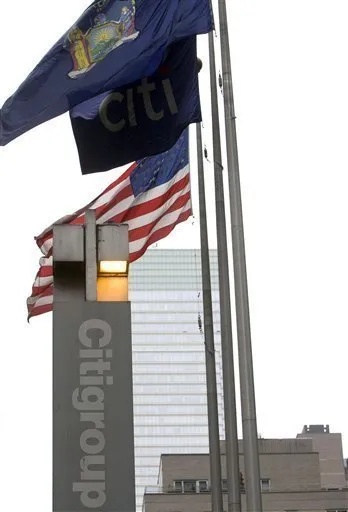
The inevitable is happening: the people who lead us over a cliff and helped spark the collapse of our financial system are running for cover. They want to avoid responsibility for the debacle. And among those running to hide is Robert Rubin.
In an extraordinary interview published today in The Wall Street Journal, Rubin basically says: I was not responsible and/or I didn't know. Either he is lying or he is a coward who simply does not have the moral backbone to say: I screwed up, I was wrong.
The only positive aspect of the interview comes in the first paragraph:
Under fire for his role in the near-collapse of Citigroup Inc., Robert Rubin said its problems were due to the buckling financial system, not its own mistakes, and that his role was peripheral to the bank's main operations even though he was one of its highest-paid officials.
In other words, Rubin is speaking up because of the extraordinary criticism his role is attracting given the bailout of Citibank, and the fact, as the article points out, that Rubin made $115 million at Citibank--not including stock options!!!--since 1999. That's a lot of money for someone to earn who claims, as you will see, that he was...only following orders.
His lies start here:
"Nobody was prepared for this," Mr. Rubin said in an interview. He cited former Federal Reserve Chairman Alan Greenspan as another example of someone whose reputation has been unfairly damaged by the crisis.
Mr. Rubin, senior counselor and a director at Citigroup, acknowledged that he was involved in a board decision to ramp up risk-taking in 2004 and 2005, even though he was warning publicly that investors were taking too much risk. He said if executives had executed the plan properly, the bank's losses would have been less.
That is just false. First, I challenge Rubin, or anyone, to find one -- one -- public pronouncement that he made about investors taking on too much risk in the past few years that led up to the financial crisis of 2008. In fact, what is extraordinary is that, when he was Treasury Secretary, he knew about the dangers of leverage and either tried to downplay them or, actually, encouraged people to look the other way. Here is what he said in January 1999 at the World Economic Forum in Davos, in a talk that addressed the Asian financial crisis which, ironically given today's crisis, he called "the most serious financial crisis of the last 50 years":
Leverage throughout the international financial system has been substantially reduced over recent months, and that probably makes the financial system safer today than it was last summer. Without prejudging anything, it does seem to me that this whole question of leverage merits further examination. As a related matter, while I do not believe that hedge funds have been a significant factor in the financial crisis, their activities may well have amplified market movements in some cases for some period of time. I think questions about hedge funds should be addressed, but as part of a broader review of financial institutions generally with respect to leverage, the appropriate scope of prudential regulation, risk management and disclosure.
With the acknowledgment that leverage had been reduced and that it, by inference, was a significant factor in the crisis at the time, you would think that bells and loud sirens would have gone off in the past few years. But, no, not a peep. Again, there are no public warnings to be found that Rubin claims he made. He is not telling the truth.
Second, the fact is a number of people were very prepared to see this crisis -- if the "wise men" had bothered to listen. In fact, a few people were warning about it. Dean Baker, the co-director of the Center for Economic and Policy Research, for example, was warning about the housing bubble as far back as August of 2002. Others tried to sound the alarm, as well.
But, unlike Rubin, Baker and others were not considered the "wise men" by the politicians, pundits and economic "experts" who sat on their asses while we hurtled towards disaster. The opposite: they mocked people like Baker or dismissed them as economic Cassandras who were just spoiling the pursuit of the American Dream and raining on the parade of a debt-fueled stock market boom and consumer-spending spree. The "wise" economic people would regularly marvel at the American economy's ability to weather mild recessions -- recessions that were not more severe largely because the "wise" men did not stop and say, "Whoa, wait a minute, something is wrong here. Wages are not going up but people are still spending like crazy. That ain't good."
In fact, if Rubin had learned anything from the Asian crisis, then why did he let Citibank effectively go down the same leveraged road again? Why? It was someone else's fault, he says in the Journal article:
Mr. Rubin said it is a company's risk-management executives who are responsible for avoiding problems like the ones Citigroup faces. "The board can't run the risk book of a company," he said. "The board as a whole is not going to have a granular knowledge" of operations.
Still, Mr. Rubin was deeply involved in a decision in late 2004 and early 2005 to take on more risk to boost flagging profit growth, according to people familiar with the discussions. They say he would comment that Citigroup's competitors were taking more risks, leading to higher profits. Colleagues deferred to him, as the only board member with experience as a trader or risk manager. "I knew what a CDO was," Mr. Rubin said, referring to collateralized debt obligations, instruments tied to mortgages and other debt that led to many of Citigroup's losses.
Mr. Rubin said the decision to increase risk followed a presentation to the board by a consultant who said the bank had committed less of the capital on its balance sheet, on a risk-adjusted basis, than competitors. "It gave room to do more, assuming you're doing intelligent risk-reward decisions," Mr. Rubin said. He said success would have been based on having "the right people, the right oversight, the right technology."
So, it wasn't the board's fault -- a board he sat on at quite a large expense to the company. It was a consultant's fault. Despite his status as an economic leader, he was incapable of seeing the obvious -- and, in fact, endorsed the position Citibank put itself in, a position that we, the taxpayers, are now paying for.
Here is what is going on and why his defense is so important to challenge and refute. People like Rubin thrive on power and trade on their reputation. It is a reputation that, once made, is almost never challenged. It's the Rubin-Greenspan syndrome: they come before Congress and testify and, palms sweating, very few members of Congress have the spine to challenge their conventional wisdom. In fact, when Rubin was pushing for the deregulation of the financial industry, it was largely his larger-than-life reputation that helped usher through the undoing of the protections that might have triggered alarms and saved us from the current debacle.
He has been able to trade on a lingering -- and, I would argue, phony -- perception that the Clinton "good" economic times were a result of his "calm stewardship" (those are my quotation marks to connote an accepted meme). (Phony, in brief, because I believe that, while next to what we have now the Clinton years look rosy, we "benefited", then, from an asset bubble and debt-driven consumer spending and an irrationally high dollar that masked deepening long-term problems).
Rubin understands this. The Journal interview, and an interview he was willing to do for a piece in the new issue of Newsweek (a piece worth reading because it is quite critical of Rubin, in a Newsweek kind of way), are part of a public relations blitz. His reputation is on the line.
Here is the saddest part of Rubin's defense: he would do so much more for himself and, more important, for the country if he simply said, "I screwed up". By virtue of his exalted status, he could, in fact, move us away from a failed economic vision.
But, he can't do that. It's not in his DNA.
So, he cannot be allowed to skate and cover his tracks. His vision -- the embrace of leverage, of the so-called "free market", of so-called "free trade" -- has caused pain to millions of people, here and around the world.
It's Judgment Day. Rubin needs to get a pink slip and stand on the unemployment line with the vast sea of people he helped put there.