In Waterproof, a small northern Louisiana town near Natchez, Mississippi, the African American mayor and police chief assert that they have been forced from office and arrested as part of an illegal coup carried out by an alliance of white politicians and their followers. In a lawsuit filed last week, Police Chief Miles Jenkins asserts a wide-ranging conspiracy involving the area's district attorney and parish sheriff, along with several other members of the region's entrenched political power structure. These events come at a time of widespread and high-profile racist attacks against the US President and Black members of Congress nationwide, and in a state where white political corruption and violence have been and continue to be used as tools to suppress Black political representation.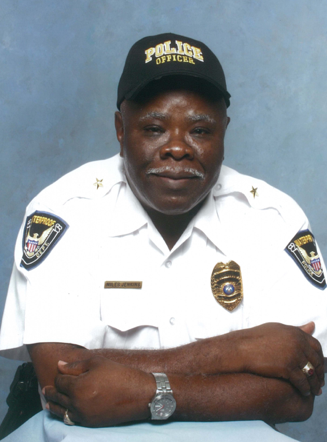
Chief Miles Jenkins
About 800 people live in Waterproof, a rural community in Tensas Parish. Tensas has just over 6,000 residents, making it both the smallest parish in the state, and the parish with the state's fastest declining population. The regional schools remain mostly segregated, with nearly all the Black students attending public schools, and nearly all the white students attending private schools. With a median household income of $10,250, Waterproof is also one of the poorest communities in the US. The only jobs for Black people in town involve working for white farmers, according to Chief Jenkins. "Unless you go out of town to work," he says, "You're going to ride the white man's tractor. That's it."
Bobby Higginbotham was elected mayor of Waterproof in September of 2006. The next year, he appointed Miles Jenkins as chief of police. Jenkins, who served in the US military for 30 years and earned a master's degree in public administration from Troy University in Alabama, immediately began the work of professionalizing a small town police department that had previously been mostly inactive. "You called the Waterproof police for help before," says Chief Jenkins, "He would say, wait 'til tomorrow, it's too hot to come out today." The new mayor also sought to reform the town's financial practices, which Chief Jenkins says were in disorder and consumed by debt.
Ms. Annie Watson, a Black school board member in her 60s who was born and raised in Waterproof, worked as a volunteer for the mayor. She says that the mayor and chief, who had both lived in New Orleans, brought a new attitude that Parish officials didn't like. "The Mayor and the Chief said you can't treat people this way, and the Sheriff and DA said you got to know your place. If you're educated and intelligent and know your rights in this parish, you are in trouble," she says. "They are determined to let you know you have a place and if you don't jump when they say jump you are in trouble."
Ms. Watson explains that Parish Sheriff Rickey Jones and District Attorney James Paxton were threatened by Chief Jenkins' efforts to professionalize the town's police force. Aside from representing a challenge to Sheriff Jones' political power, this also took away a source of his funding. "Before Mayor Higginbotham, all traffic tickets went to St. Joseph," she says, referring to the Parish seat, where Sheriff Jones is based. "So he cut their income by having a police department."
Jack McMillan, an African American deputy sheriff who works with Sheriff Jones, says he tried to warn Chief Jenkins to back down. "You've got to adapt to your environment," he says. "You can't come to a small town and do things the same way you might in a big city. Like the song says, you got to know when to hold 'em, and know when to fold 'em."
Chief Jenkins asserts that a white political infrastructure, led by the Sheriff Jones and DA Paxton, were threatened by their actions. This group immediately sought to orchestrate a coup against the two Black men, including clandestine meetings, false arrests, harassment, and even physical violence. Court documents describe how Paxton, Jones, and their allies formed an alliance "designed to harass intimidate, arrest, imprison, prosecute, illegally remove plaintiff from his position of police chief, prevent plaintiff from performing his law duties as police chief and/or force plaintiff to leave the town of Waterproof."
Tensas Parish
Prior to the registration of 15 voters in 1964, there was not a single Black voter registered in Tensas, despite having more than 7,000 African American residents (and about 4,000 white residents), making it the last Parish in Louisiana to allow African Americans to register. Tensas and the nearby parishes of Madison and East Carroll all share the sixth judicial district - currently represented by District Attorney Paxton. Buddy Caldwell, DA for the sixth judicial district from 1979 to 2008, is now Attorney General for the state of Louisiana. The sixth district parishes all have majority Black populations and mostly white elected officials, which Chief Jenkins and Ms. Watson attribute to political corruption and disenfranchisement of Black voters.
Waterproof is "reminiscent of the bygone days of southern politics," with a white power structure maintaining political power over a Black majority, according to veteran civil rights attorney Ron Wilson, who is representing Jenkins in his civil rights lawsuit. "At any and all costs, even jeopardizing the life and freedom of my client, they will ruin him to maintain power. This case is ultimately about whether an African-American can be guaranteed the rights that are assured to him in the constitution." According to court papers, this Jim Crow alliance dominates elected power in the area, and "even on the local level, where the office holders tend to be African American, they are powerless to control their own destiny." According to Chief Jenkins, the District Attorney once boasted that he controlled the votes of Waterproof's Black aldermen.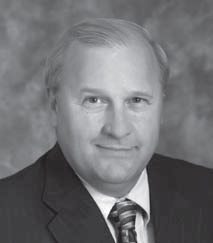
Sheriff Rickey Jones
Chief Jenkins says he faced an immediate campaign of harassment. "They just wanted this town to be white-controlled," explained Chief Jenkins. The police chief described being arrested multiple times under the order of DA Paxton and Sheriff Jones. The charges, says Jenkins, range from charges of theft for a pay raise he received from the town's board of Aldermen to criminal trespass for going to the home of a citizen who had been stopped for speeding without a valid driver's license, to disturbing the peace for an incident where individuals threatened the police chief with violence for issuing traffic citations. Ms. Watson says the charges were invented out of thin air. "It was a sad case of lies," she says, adding that, "The majority of the town of Waterproof supports the chief and supports the mayor."
Chief Jenkins says he was arrested and declared a flight risk by District Attorney Paxton, despite living and owning property in the Parish. "In all my years," says attorney Ron Wilson, "I've never seen a police officer, and certainly not a police chief, charged for something like this." Chief Jenkins alleges he was attacked and choked by a deputy sheriff, who he says shouted, "Shut up...We are in charge...We are the sheriff and the sheriff controls Tensas Parish. The sooner you all learn this the better off you will be," an action that Ms. Watson says she also witnessed.
Chief Jenkins says his police car was shoved in a ditch, and when he arrested the people who had committed the act, the DA refused to press charges. In fact, he says the DA refused almost all charges he presented and released anyone he arrested. The chief was even charged with kidnapping for one incident in which he arrested the former town clerk for illegal entry. "That's the most ludicrous notion I've ever come across," says Wilson. "That a police chief can be arrested for kidnapping, because he placed someone under arrest who was breaking the law."
A grand jury has returned indictments of Chief Jenkins and Mayor Higginbotham, and Higginbotham's trial is scheduled to begin this Monday. The mayor faces 44 charges, including multiple counts of malfeasance in office and felony theft. The charges appear to be based on the results of a state audit of Waterproof that found irregularities in the town's record keeping going back to before the election of Higginbotham - irregularities that the mayor and police chief say they had repaired.
Patterns of Violence
Mayor Higginbotham was elected at the same time as two other Black mayors of small Louisiana towns, both of whom also received threats based on race. In December of 2006, shortly after Higginbotham was elected mayor of Waterproof, Gerald Washington was killed three days before he was to become the first Black mayor of the small southwest Louisiana town of Westlake. An official investigation called his death a suicide, but family members call it an assassination. Less than two weeks after that, shots were fired into the house of Earnest Lampkins, the first Black mayor of the northwest Louisiana town of Greenwood. Lampkins reported that he continued to receive threats throughout his term, including a "for sale" sign that someone planted outside his house.
Waterproof was Klan country from the reconstruction era until well into the 20th century, and violence frequently broke out in the region. Eight Black men in Madison Parish were lynched over a period of three days in 1894 for the charge of "insurrection," apparently because one man refused to follow an order from a sheriff. "The Klan was very active here," says Ms. Watson, recalling her childhood in Waterproof. "We had crosses burned on people's lawns. The school principal had a cross burned on his lawn. A man named Sun Turner was shot and killed on the streets by the Klan."
Waterproof is an hour south of Tallulah, the site of a notoriously abusive youth prison, and a little more than hour east of Jena, where accusations of systemic racism brought 50,000 people from around the country, including many civil rights leaders, to a 2007 march. Like Jena, Waterproof is also home to a prison that contracts to hold federal immigration prisoners.
When asked for comment on Chief Jenkins' lawsuit, Tensas Parish Sheriff Rickey Jones denied that race was a factor, claiming that Jenkins had abused his office and that many of the local citizens who filed complaints against him were Black. "I'm not going to support any type of corruption," said Jones. "Certainly not from him." District Attorney Paxton, also named as a defendant in the lawsuit, disputed all accusations from Jenkins, suggesting that he had tried to help Jenkins when he was first elected. "A lot of this will become clear when the case against Mayor Higginbotham goes to trial on Monday," he added.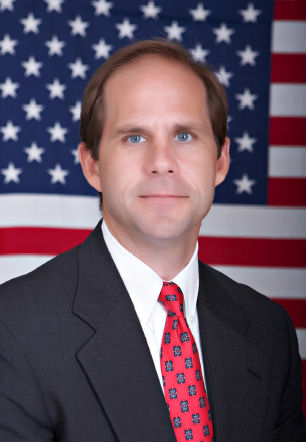
District Attorney James Paxton
Flood Caldwell, one of the town's aldermen, is currently serving as the town's mayor. Jenkins points to Caldwell's appointment as further evidence of a coup, saying that the town aldermen, under the direction of DA Paxton, illegally voted to remove Mayor Higginbotham. "No one recognizes Caldwell as mayor except the DA and his friends," says Chief Jenkins. The office of the Louisiana Secretary of State confirms that they still have Higginbotham listed as mayor, adding that they cannot comment further because of pending litigation.
Wilson says this case is ultimately about the repression of Black political and civil rights. "I think this has been going on in Tensas for a while," he says. "I think they've gone too far in this case, and someone finally has come along and says they won't go along." Wilson hopes this lawsuit will bring federal attention. "We hope the justice department will look into this and bring some much-needed reform to this part of the world," he says.
Chief Jenkins says he took the Sheriff's job to serve the community, "You've given this country the best years of your life and you get treated like an unwanted stepchild," he says. "I didn't realize there was so much politics to just doing your job."
Ms. Watson believes that this is a struggle for self-determination and basic civil rights. "I was born in 1948," she says. "Ever since I was born, Blacks never had a say in this parish, until Chief Jenkins and Mayor Higginbotham. They spoke up, and tried to change things. That's why the parish is going after them."
Jacques Morial of the Louisiana Justice Institute contributed to this story.