iPhone app iPad app Android phone app Android tablet app More

Featuring fresh takes and real-time analysis from HuffPost's signature lineup of contributors
Jose Antonio Vargas

GET UPDATES FROM Jose Antonio Vargas
 

Egypt, the Age of Disruption and the "Me"-in-Media

Posted: 02/07/2011 8:33 am

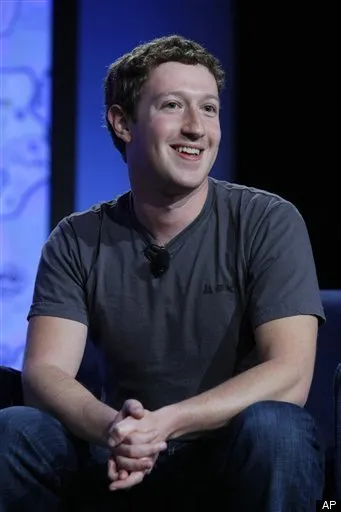
A few months and seemingly a lifetime ago -- before the Oscar bait "The Social Network" hit theaters, before Time declared the Facebook cofounder and CEO "Person of the Year," before the Middle East and the Arab world were turned upside-down in a matter of weeks -- I asked Mark Zuckerberg what role he plays in what he's called "the Facebook movement." When he introduced Facebook as a platform in the spring of 2007, addressing a gathering of geeks and techheads in Silicon Valley, that was his pitch: Facebook was a movement.

"How do you see yourself in this movement?" I asked last fall. "Are you the leader of this movement?"

"No, I am not," he answered quickly. As is often the case, Zuckerberg spoke less of himself and more of the company he runs. "I think Facebook has taken on a leadership role to some extent," he said. "But we always think about it in the context of what's going on with the Internet and society in general."

I asked Zuckerberg how Facebook will iterate as cultural nuances get trickier.

"Well, I think an idea needs to be fairly simple in order to resonate at a large scale," he said. "But I think that the single reason why [Facebook] was able to go from being just a college thing at the beginning to now spreading to rural villages in India is because of like the common humanity there, and that, like, people share just the same basic thing, which is that they all have friends and family and they want to stay connected."

"Common humanity."

In other words, it's not the tools, it's the people.

Here in the America, where "freedom of the press" and "freedom of speech" are not just printed in the U.S. Constitution but ingrained deep in the psyche -- so much so that we often mock them, or worse, take them for granted -- there's something that can seem downright trite about all of this hyper-communication. Americans already over-communicate. And the irony is, the more ways we communicate, the less it seems we understand each other. Facebook? Twitter? What a waste, the general line of criticism goes -- nothing but Narcissism 2.0!

Zadie Smith, writing in The New York Review of Books, speaks for the gang of social media naysayers and doubters when she wonders if "the whole Internet will simply become like Facebook: falsely jolly, fake-friendly, self-promoting, slickly disingenuous." The first time I read those words, I thought perhaps Smith was using Facebook in a "falsely jolly, fake-friendly, self-promoting, slickly disingenuous way." Facebook, after all, is what you make it out to be. If your relationships on the social networking site seem trivial and superfluous, maybe it's because they are. Facebook merely exposed it.

Since Tunisia's uprising unfolded in real-time -- and as the people-powered, grassroots-oriented upheaval spread to Egypt -- many have struggled to contextualize technology's impact on the events of recent weeks. Overall, much of the discourse have fallen on two sides of the same proverbial coin, symptomatic of the kind of right-versus-left, black-or-white false equivalency that passes for much of the political analysis in our discourse.

On one side are those who hail, in varying degrees, "The Twitter Effect!" or "The Facebook Revolution!" (though, curiously, the folks at Twitter and Facebook know better than to make those kinds of simplistic arguments themselves). "Cyber-utopians," they are called. And on the other side are those who continue to understate and devalue the role of social media and mobile technology as communication and organizing tools. They are the "cyber-skeptics" whose writings are accompanied by head-scratching headlines such as "What's Fueling Mideast Protests? It's More Than Twitter" (Wired's David Kravets) to "Does Egypt Need Twitter?" (New Yorker's Malcolm Gladwell, who last year wrote about social media, activism and "weak ties." Turns out, what was weakly tied -- and I write this as a certified Gladwell fan -- was his 4,453-word essay).

The most lauded cyber-skeptic of them all -- and one whom Gladwell quoted in his much-discussed and much-maligned essay, at least in the Twittersphere -- is Evgeny Morozov, a blogger for Foreign Policy and author of newly published "The Net Delusion: The Dark Side of Internet Freedom." It's tempting but unfair to say that it's a contrarian book written for the sake of being contrarian; Morozov, a visiting scholar at Stanford University, is too smart and too well-read for that. But it's a sign of our rapidly evolving times that even a previous skeptic like the New York Times' Roger Cohen -- who less than two years ago published columns headlined "A Journalist's 'Actual Responsibility'" and "New Tweets, Old Needs" -- recently called Morozov's book "dead wrong." What's accurate and insightful, of course, lie somewhere in the middle.

"Wildly overdrawn claims about social media, often made with weaselly question marks (like: 'Tunisia's Twitter revolution?') and the derisive debunking that follows from those claims ('It's not that simple!') only appear to be opposite perspectives. In fact, they are two modes in which the same weightless discourse is conducted," Jay Rosen, the noted media critic and professor at New York University, wrote me in an email recently. "Revolutionary hype is social change analysis on the cheap. Debunking is techno-realism on the cheap. Neither one tells us much about our world."

Rosen continued: "Almost everyone knows it's not as simple as saying Twitter or Facebook 'cause' revolutions. Almost everyone knows it's foolish to discount social media and peer to peer communication as new and potentially disruptive forces. Grown-ups trying to puzzle through what is actually happening will have to leave the sandbox in which the debunkers and their straw man playmates throw headlines at each other."

A key driving force in this new equilibrium is the role of the media -- and, more specifically, the rise of the "me" in media, allowing any educated and literate global citizen with an Internet connection or mobile phone to tell his or her own story, in many instances bypassing traditional journalists and in other ways deliberately aiding them. It's difficult to imagine Al Jazeera's invaluable coverage of the Eygptian protests without social media, for example. But in addition to Al Jazeera, CitizenTube -- YouTube's well-curated politics and news page -- is posting raw and visceral footage from people on the ground in Egypt.


Follow Jose Antonio Vargas on Twitter: www.twitter.com/joseiswriting

FOLLOW TECH
A few months and seemingly a lifetime ago -- before the Oscar bait "The Social Network" hit theaters, before Time declared the Facebook cofounder and CEO "Person of the Year," before the Middle East a...
 
 
  • Comments
  • 31
  • Pending Comments
  • 0
  • View FAQ
Comments are closed for this entry
View All
Favorites
Bloggers
Recency  | 
Popularity
Page: 1 2  Next ›  Last »  (2 total)
11:22 PM on 02/18/2011
Phenomenally written, Jose. Indeed, social media platforms function as what it's intended to be - medium to connect with a network, your own or peers. It's the social dynamics, influenced by various factors - social, economic, political, cultural, etc. - that will determine how they are used to achieve a particular end result. What we saw in Tunisia and Cairo, and what we have seen in our home country - the Philippines - is but a glimpse of the social transformation capacity these tools offer.
04:37 AM on 02/13/2011
Jose,

Thanks for a good overview. I've actually experienced a revolution (the Orange Revolution in Ukraine) and it seems clear to me that social media is making a difference. If you're interested, I wrote about it here: http://www.digitaltonto.com/2011/social-media-and-revolution/

- Greg
09:37 PM on 02/10/2011
Jose, Great summary. There are just a few items I’d like to offer a slightly different approach on.
You said, "Facebook and Twitter do not a revolution a make.”
I think we need to give Facebook and Twitter more credit. There are many components to a revolution: ‘the pen is mightier than the sword’ etc. So, I think Facebook and Twitter, as tools, are mightier than the pen. Why? Because they are faster and cheaper. But these are just two factors that they contribute.

Continuing your point, “Years, if not decades, of repression, economic instability and individual frustration are the root of the dissatisfaction and outrage that spilled over the streets of Tunisia and Cairo...”
Now Facebook and Twitter enter the picture again. Repression and frustration existed for ages. People wanted to strike out, but couldn’t find a way. What was missing? Three additional factors that Facebook has enabled: the ability to EASILY find and connect with like minded people; a format that automatically organizes information; an information depository that allows easy searching and recall of information. I think the combination of these factors has clearly created revolution ENABLING tools in our time.
08:55 PM on 02/08/2011
Great article. Might use it in my class on social media and advocacy. For more info. on how social media is being used to organize community support and influence congress and other powerful folks in DC checkout Alan Rosenfeld and Josh Koster's c-span video presentation at American University. Social Media advocacy has become an academic subject.
08:33 PM on 02/08/2011
I agree with Mr. Al-Atraqchi. Furthermore, I believe Twitter also played a pivotal role in the hostage standoff at the Taj Mahal hotel in India a few years ago. Even more important, it played a large part in exposing the youth uprising in Iran a couple of years ago.
photo
HUFFPOST COMMUNITY MODERATOR
DrObvious
No more business as usual
02:46 PM on 02/08/2011
Surprised at anybody who pretends to predict a technological dominance of any device for 50 years going forward.  
 
I predict this article will seem quaint, if misguided, when viewed from that lofty 50 year mark at 2050.
HUFFPOST SUPER USER
ftkl1234
02:20 PM on 02/08/2011
Will we call our times (The Age of Reset), (The Age of Tweaks; messaging and rethinking)
photo
HUFFPOST BLOGGER
Firas Al-Atraqchi
Journalist, assoc professor, musician; sci-fi geek
02:11 PM on 02/08/2011
From what I read above, it appears to me that Zuckerberg has no real grasp of what social media, Facebook in particular, has unleashed on the most disenfranchised societies in the world.

Testament to that is the appearance of Wael Ghonim, a young Google executive who was detained by the authorities for participating in the Egypt protests. Ghonim is also the administrator of the Khaled Said solidarity page on Facebook. Khaled Said was a young Egyptian man beaten to death by police in Alexandria for failing to give them money.

It was this Facebook page that played an instrumental role in mobilizing and galvanizing Egyptians to protest. There are about 5 million Egyptians on Facebook today - and that number is now growing rapidly.

Egypt, like Tunisia, have socio-economic denominators that fueled dissent and anger at repression of all kinds. Social media did not cause these societies to take to the streets in open defiance of curfews and rubber bullets. But social media did help get the word out and served as a vehicle, a catalyst which increased the speed and ferocity with which these things happened.

This year is going to be pivotal in the Middle East - http://www.huffingtonpost.com/firas-alatraqchi/middle-east-in-2011-socia_b_803037.html
photo
HUFFPOST COMMUNITY MODERATOR
DrObvious
No more business as usual
02:49 PM on 02/08/2011
would point out that nothing is different in Egypt yet.    civil unrest there is not unusual.   and Mubarack is still holding power, despite his assurances of stepping down.
 
why not give credit to those gutsy Egyptians, rather than one of the methods they used to spread information?  whether it was a mimeograph in a basement, or a facebook page, protest movements find a way to get the word out
photo
JohnnyKong
Loyalty only to reason and logic.
08:17 PM on 02/08/2011
The larger point, as this is a discussion of society and technology is that without these communication mediums, this uprising would not have gained the momentum and sheer numbers it has and could have likely fizzled out in a matter of days or weeks. I don't think anyone doubts the gutsiness of Egyptians. That's a different discussion.
photo
HUFFPOST BLOGGER
Firas Al-Atraqchi
Journalist, assoc professor, musician; sci-fi geek
09:13 PM on 02/08/2011
No one is trying to take credit away from these brave young men and women. In fact, if you are able to watch a subtitled version of Wael Ghonim's interview which appeared on Dream 2 in Cairo, you will hear him talk about the value of social media. In fact, a number of protesters have talked about how social media since 2005 has been gathering momentum in spreading dissent.

Another point. EVERYTHING in Egypt is different. In previous years, protests were limited to a few hundred and organized by opposition groups like April 6 or Kefata, or opposition parties. This January 25 protest which has swelled to encompass all of Egypt has been historic and unprecedented because it was grassroots, involved all walks of life and has included more than 3 million people nationwide. Furthermore, we are hearing of several resignations from state owned media.

And for Egyptians to carry banners saying "Mubarak leave, you filth" well no one would have ever imagined that happening.

Mubarak is a figurehead, even people within the NDP agree that he is on his way out. Suleiman is the power at the moment. In any case, the fear that Egyptians once had has been broken forever. The dynamic between the people and the unelected government has changed.

No, this is very different. Do not measure it by the results or lack thereof at this point. This regime has been in power for 30 years. It won't go overnight.
12:42 PM on 02/08/2011
Thanks for the great article.
12:37 PM on 02/08/2011
Twitter and Facebook undoubtedly are playing a role in Tunisia and Egypt. But just how many Egyptians, one of the Middle East's poorest countries, have cell phones and computers? The stats you cite in the article are VERY carefully worded to give the impression that Egyptians are wired up and plugged in. But they're not. Most are too busy surviving day to day.

I would love to see a true people's revolution sweep across the world. Elites have caused too many problems for too many people for too long. But I think we're seeing upper-middle-class, out-of-power elites overthrowing upper-middle-class, in-power elites. Meet the new Boss? God I hope not; I'm just an incurable curmudgeon.
photo
HUFFPOST SUPER USER
Daniel Carr
01:08 PM on 02/09/2011
Well said. The hype runs away with the truth. That could be another name for this era - The Age of Unrestrained Hype.

It's easy for the MEdia (including the new boundless social networks) to conflate being an accessory with being a cause or lynchpin in processes such as what is happening in Egypt.

Billions of people on the planet are NOT wired in, but that does not diminish their needs or intelligence. In some ways it means they haven't been as thoroughly suck(er)ed into the techno-fantasy. So many people are opting for the blue pill...
photo
Bob Ellal
Diogenes man; qigong guy, cancer survivor
12:03 PM on 02/08/2011
Social media is great for getting in touch with old friends and meeting new ones. But it lacks the important facet of face-to-face communication, in which one can deduce a person's meaning by body language and how something is being said. Many people develop online personas that don't reflect their true thoughts--and natures. They may appear positive and "warm-and-fuzzy" online, taking time to respond to posts and comments and couch them in the way they wish to be perceived. Thus on the personal level social media functions in two dimensions. But then again, a lot of people function this way in person, too.
photo
JohnnyKong
Loyalty only to reason and logic.
08:21 PM on 02/08/2011
That's not entirely true. Facebook allows posting of videos and can embed videos of said persona's speaking. It's just that most people don't bother doing that or don't have the means to. In a political or social movement, it's the exchange of ideas and consensus that matters, not so much the non-verbal stuff.
photo
HUFFPOST SUPER USER
Daniel Carr
01:11 PM on 02/09/2011
It also lacks critical discernment and reflection. It tends to call for the instant, spontaneous reaction instead. Reasoned dialog too easily - not always and not necessarily - becomes .cacophany.
photo
FloaterBall
The future ain't what it used to be
09:52 AM on 02/08/2011
Not so sure I agree with the "decentralized" nature of the rebellion theme. Yes, it's decentralized, but Facebook is the the reason? If anything, it seems to me that social networking would make it more likely for a movement to find its leaders. I think there are other factors at play here.
photo
HUFFPOST BLOGGER
Alison Rose Levy
Connect the Dots www.healthjournalist.com
09:44 AM on 02/08/2011
Fabulous blog-- one of a kind. Thank you! I've been a Huffington blogger since 2007 and with the recent acquisition, a whole lot of people have chatted with me about the sale. It's easy to get caught up in one individual's personality. It's easy to forget the deep sleep the US was in under the Bush administration. It's easy to take for granted the conversation we're all in because of HP and social media. Thank you for reminding us.

Alison
www.healthjournalistblog.com
07:13 AM on 02/08/2011
Great article and great quote by Mr. Raseij. As we watch the events in Egypt unfold, I have to say I keep thinking about education. As the people of Egypt use social media to unite and fight for change, it is wonderful that the middle class is well- educated and knows what change they want. Egyptians have always had a love affair with books. In fact, I read that there are "library warriors" these days who are keeping watch over libraries so that books don't get damaged. It makes me realize that the time to get books in people's hands in the developing world is now! Please check out worldreader.org, where I volunteer, and their work in bringing e-books to the developing world. Education is going to be a crucial driver going forward as the world changes so quickly.
04:52 AM on 02/08/2011
Growing up in the 1940s & 50s, I can remember when there was only one home on our block that owned a TV. Often half the folks in the 'hood' would be gathered at that house to watch TV & suddenly that had a profound effect on the social climate. Media, in any of it's forms will always trigger change & I believe the world is always better for it. Especially now when there is a revival in the press for Truth, it becomes ever more impossible to maintain deception. Surely that is a good thing!!