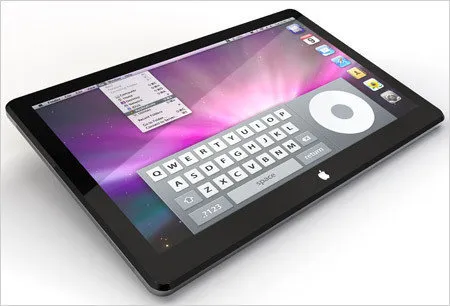
That's the thinking behind a new HuffPost section that launches next Monday. HuffPostTech will cover how technology in general -- and the Internet in particular -- is changing the way we live our lives, from politics, education to entertainment. The iPhone 3GS and new Nokia N96 aren't just cell phones or communications devices; for many, they are primary sources of entertainment. Facebook is no mere social networking site; with more than 250 million users, it's a democracy of its own, with a population that rivals some of the world's biggest countries. Indeed, the new section's overlaying concern -- what will connect all the blogs and aggregated news stories in it -- is the thinking that technology is anthropology. It's not the gear, it's the people. Sure, HuffPostTech will feature the biggest stories and storied rivalries in tech, in addition to rising start-ups and new, gotta-have-'em gadgets. But it will always keep in mind that the gadgets we use, the apps we download, the social networking sites we belong to, tell us something about who we are.
Are new technologies pushing our politicians and official Washington -- the White House, Capitol Hill and K Street -- to be more transparent in their actions?
In a world under Facebook, Google and YouTube, what does privacy mean?
How is the bottom-up, "here-comes-everybody," Wikipedia-oriented nature of the social Web upending our traditional model of education? How is it changing the way our kids learn?
We've reached a tipping point in the history of technology. Last year, Americans sent 1 trillion -- yep, trillion -- text messages. Technology is mainstream. We're all techies now and we're all trying to figure out what that means -- the very mission of HuffPostTech. So be a part of the HuffPostTech community. Follow us on Twitter. Become a fan of our Facebook page.
And send us your ideas. What stories should we cover? Which bloggers should we feature? Discuss!
Ellen Miller: Congress' Tech-Oriented Growth Spurt
Three years ago, those using the Web for transparency likely registered around zero. But in the intervening years, Congress has adapted to the Internet at incredible speed.
Want to reply to a comment? Hint: Click "Reply" at the bottom of the comment; after being approved your comment will appear directly underneath the comment you replied to
I'd like to see someone do an article on embracing the the inevitability of change, as oppose to simply wringing hands and asking whether it's a good thing.
A good focus might be, why new technologies with the potential to radically change society, and our world are purposelessly prevented from being implemented for reasons of profit loss and the simple paranoia of new things.
This is primarily the case here in the U.S., where the Regressives have been able to establish an infrastructure that effectively precludes change and maintains the status quo.
May I suggest a guiding principle for this exciting new project? I call it "Gibson's Law" after the novelist William Gibson, who said in a 2004 New York Times essay:
"In the age of the leak and the blog, of evidence extraction and link discovery, truths will either out or be outed, later if not sooner. This is something I would bring to the attention of every diplomat, politician and corporate leader: the future, eventually, will find you out. The future, wielding unimaginable tools of transparency, will have its way with you. In the end, you will be seen to have done that which you did."
http://www.osborneink.com/2009/07/passing-oceania.html
“How is it changing the way our kids learn?”
1/ What you will be learning is but a single set of explanations.
That can be refined most readily, by a mind that is open to possibility.
2/ Ensuring that you are here to ponder that, is the primary purpose of learning it.
Interesting.A section to promote the latest technology .Sounds like advertisements to me.We will see.I expect to see articles analyzing how the lastest iphone features compare to the older models ,etc etc. Mmm hmm.
To focus on the the specifics of the communications revolution that technology has brought us seems to me to be as if we were going to discuss how optics work but talk about how useful mirrors are for grooming.
Technology such as fusion, space based solar, materials and architectural among others are offering pathways to get us through these times to a point where we willl look back at this and wonder why we waited so long. I suspect the media gets better ad-rates by repeating the same dire story. instead of examining the state of technology to help us understand our potentials we worry needlessly. Just guess how good at math and science those who report on technology were in school. Not very, I'd bet, so intstead we get opinion polls on whether nukes are safe and not the hard science and engineering that have brought tus advancement. Instead of burrying nuclear waste in safe places such as subduction zones we're fed horror stories of irradiating oceans and then squander the money that could be better spent developing clean soot-free space energy on that useless Yucca Mountain. We focus on the danger to astronauts and the fussiness of computing the carbon footprint in my tube of toothpaste. It's raining soup and we're contemplating the problems of created in tyring to tie our shoelaces. I remain optimistic and hope some can see the future beyond in spite of the dystopic visions that keep us glued to the toob.
Technology is sociology, watch how the language is changing "you is u", "BTW" texting will naturally evolve the language to a new level.
The same with e-books, watch the change from hard copy books, same with the change from news papers. Video over T.V.
What else?
The revolution will be Online.
You know, this would be a good topic for the section. I used to thing that Gill Scott Heron was wrong, the revolution is televised. But I'm coming to feel that all that is on the screen is smoke and mirrors covering up the ruse being perpetrated on society while a very few are making off with all our wealth and resources. Of course, I've come to believe this from what I learned "online" but if anything, what I've learned is the sorry state of the revolution. Our pockets have been picked while we are being "entertained".
New technology-oldest trick in the book.
Why weren't we allowed to have the internet during the 1960s?
Friend, computers were about as big as refrigerators back then, didn't have screens or keyboards, you entered data with punch cards. Punch cards were.... never mind.
Allowed? It had to be invented before we could be allowed to have it.
If I told you a story about a guy who worked for the government and computers back during that time and asked the same question, would you be interested?
"for many, they are primary sources of entertainment."
This is really a sad thing to read.
I feel sorry for people who weren't given the atmosphere
of an enormous array of entertaining delicacies just outside
their door.
I'm looking forward to the section but this introduction is a mishmash of buzz words and mixed metaphors.
Anthropology is a science, technology is an application. We definitely now have huge online communities, but democracies? How so?
What does "a world under Facebook, Google and YouTube" mean?
Hopefully the section will take up the confusion about space, time, information, and physical reality that this blog illustrates.
I hope one of the bloggers is the ghost of Marshall MacLuhan. We could use some perspective.
Agree. In fact, one of the best things such a section could do is maintain a list of books and articles that readers can go to for a deeper understanding of the issues. (Yes: a bibliography!) You might even consider taking the radical step of asking those who write for the section to prepare themselves by reading some of the listed material. (Yes: homework!) Here's a starter: Franklin, Ursula M. The Real World of Technology, revised edition. Toronto: House of Anansi Press, 1999.
The fundamentals never really change. Only speed and amplification.
One problem with communications technology today is that so many people are being so public about their lives, inviting the world in to areas that heretofore would never have been done even 10 yrs ago. It's as though fantasy online has taken the place of real living; technology in the handheld forms is constantly interrupting human to human contact, and creating busyness as a substitute for learning and activities that actually might benefit not only oneself, but others as well.
Look at the internet, for instance, and tell me exactly how much it's used for actual education, and how much it's used to take up valuable time in gossiping, inane conversations, half truths, etc.? I don't have a cell phone or any other handheld device, or use any of the "social" networking sites. I merely check news sites like this, google certain areas of interest for info, and if I find something that compels me to post an opinion, well--
If everyone is wired and constantly using, who does most of the physical day to day work?
Very much so looking for to these!
Great news.. I think this will be very valuable... looking forward to it
You must be logged in to comment. Log in or connect with