
The following blog is based on my upcoming documentary film, Fields of Fuel, (www.fieldsoffuel.com) which premieres in theaters this September.
For many families in Mexico, the poverty line is an all too familiar tightrope. It's easy to fall off.
Both because of its low cost and regional tradition, tortillas are a staple food in Mexico. During the past year, the price of corn tortillas increased by anywhere from 20% to almost 400% in various regions of Mexico (4). For millions of Mexicans, the rapid and unexpected price increase means starvation.
So, who is to blame for the increasing cost of corn?
Many fingers point to biofuels, especially ethanol, the alcohol fuel predominantly made from corn in the US. Ethanol is generally sold blended into gasoline. It is blended in ratios as low as 5% but recently, there has been a national push for more "E85" or 85% ethanol blended with 15% gasoline. Unlike other biofuels such as butanol or biodiesel, ethanol is derived from the food portion of the crop. As corn prices have skyrocketed, the wisdom of making fuel from food has been put under an increasingly unforgiving microscope.
So how does this "wonder crop" really stack up?
Corn is a low-yielding crop requiring an extraordinary amount of pesticides and fertilizer. The National Corn Growers Association estimates that 597,388 gallons of water are required per year to grow an acre of corn (7). In addition, three to four gallons of water are required to make a single gallon of ethanol, once the crop has been harvested (1). And then there is the pollution. According to a University of Minnesota study, "when you look at the entire life-cycle of ethanol -- from growing to harvest to processing to combustion -- burning E85 (85 percent ethanol) as fuel actually produces more carbon monoxide, volatile organics, particulates, and oxides of sulfur and nitrogen than an energy-equivalent amount of gasoline (2) [...]". However you cut it: ethanol from corn is wasteful. Many claim that corn ethanol is energy negative: that means that for each unit of energy you put into making the fuel, you get only one unit or less back in the final product. (This is not true for other fuels, such as biodiesel from soy, which is energy positive and requires significantly less input.)
The exorbitant amount of pesticides used in corn production has lead to a "dead zone" in the Gulf of Mexico. Nitrogen and phosphate-based (read: petroleum-based) pesticides and fertilizers are used to stimulate growth in the corn plants. The compounds that are not absorbed subsequently trickle to neighboring creeks, rivers, and ultimately into the Mississippi River and into the Gulf. Just as fertilizers promote growth in plants, they also promote growth of algae in this region. The algal blooms deplete the oxygen supply, making it impossible for any other plants or species to exist there. In 2005, National Geographic reported that the lifeless span of water in the Gulf of Mexico was almost the size of New Jersey, ranging 5,000 - 8,000-plus square miles (10).
Corn may be environmentally detrimental, but it is difficult to pin the systemic problems in our international markets solely on biofuels. One need only look at the escalating costs of the world's other staple commodities, such as cement, steel, and coffee to reveal that escalating costs are not restricted to corn or corn-based products. By far the largest commodity price increase is not in corn or wheat or soy or housing -- but rather in oil.
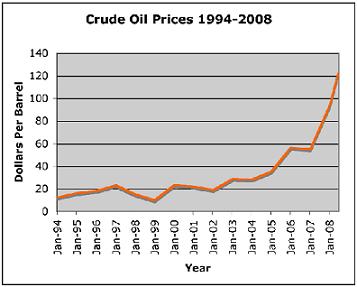
Ironically, every step of the ethanol process relies on the very fossil fuel it claims to depart from, from driving tractors to making fertilizers to transporting corn to turning it into fuel. According to Vinod Khosla, former head of Sun Microsystems turned green fuel investor, 75% of the price increase in food is due to the increase in the price of oil.
Due to a complex, globalized commodity chain, food in other countries is also dependent on oil. The more steps and middlemen between a product and the oil that it relies upon, the more expensive the product. This is what happens when Middle Eastern oil fuels U.S. corn production, which supplies the Mexican diet. Thanks to corn overproduction in the states, the U.S. exports more and more corn to its southern neighbor at artificially cheap prices, far below the price that Mexican producers could offer. Mexico now imports over 25% of its corn from the U.S., (12) even though it has the capacity to produce enough corn to fulfill its needs domestically. Thus, a spike in U.S. oil prices takes dinner off of Mexican tables.
Now, shall we begin the food vs. food debate?
The understanding that forces within the food sector are altering corn prices reveals another overlooked point -- corn is in an overwhelming portion of what we eat. Corn feeds not just cows, but poultry and even farmed fish. Further, 55% of sweeteners are corn-based. Based on a study conducted by the Corn Refiners Association, the average grocery store contains 4,000 products that contain corn in some form, not including poultry, dairy, and beef products (3). Corn is even used in paint, paper products, cosmetics, tires, and plastics (9). The makers of the documentary King Corn found out that 55% of the carbon content of their hair is from corn's family of plants (8). Corn subsidies encourage overproduction and ensure the sweet crop is dumped into every possible product.
The overabundance of corn has enhanced our ability to respond to increasing demands for meat. Now that corn prices are up, however, meat producers are feeling the economic pinch. In turn, meat demands also influence corn prices. Demand for crops like corn is rapidly rising as developing nations are consuming increasing quantities of meat, pushing prices up and increasing competition for basic carbohydrates and sugars. Food for thought: it takes 2.6 pounds of corn to produce one pound of beef and 3.6 to produce a pound of pork (11).
The effects of the oil-corn supply chain are heightened in Mexico (and many developing nations). This is because both local and foreign distributors have a near monopoly in the corn market and because the U.S. cost of corn is set by non-Mexican market forces. Two companies in Mexico control 90% of corn flour production, enabling them to set the prices of corn and tortillas (12). Before the corn even reaches the hands of these giant distributors, outside speculators determine the price of corn, much like they do with oil. While foreign countries lack basic foods, thousands of tons of surplus corn sit in grain elevators in the U.S. There is no shortage of corn, but rather a worldwide supply system in a failed state.
From your steak dinner to the sweetener in your soda to the ethanol in your tank, corn is almost as omnipresent in our society as oil. The two commodities are inextricably linked. The scrutiny of corn has exposed larger issues in American infrastructure. But just as starvation and economic crisis cannot be attributed to a single crop, we cannot solve these problems with a single crop or fuel.
Some hope may lie in combining and balancing sustainable energy alternatives. Meanwhile, as climate instability and oil price volatility continue, both food and fuel will get more expensive and further from the reach of many who can no longer walk the line.
Up next: Do biofuels destroy rainforests?
This blog is based on Fields of Fuel, an upcoming documentary on the future of energy. More info at www.fieldsoffuel.com.
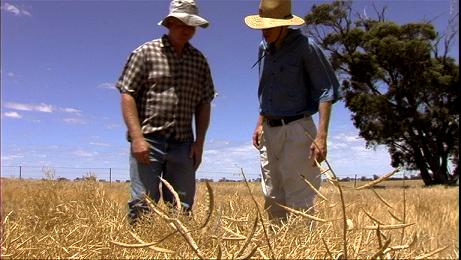
Photo still from the filmFields of Fuel. Josh Tickell (left) discussing alternative sources of energy, such as canola.
Works Cited
1) Aden, Andy. "Water Usage for Current and Future Ethanol Production." National Renewable Energy Laboratory. Southwest Hydrology, 2007.
2) Breining, Greg. "Five Reasons Corn Ethanol Won't Save the Planet."
3) "Frequently Asked Questions about Corn in Iowa." Iowa Corn Growers Association.
4) Gonzalez, Susana et al. "Caos en el precio de la tortilla." La Jornada 11 Jan. 2007.
5) Mercola, Joseph. "How High Fructose Corn Syrup Damages Your Body." Organic Consumers Association. 10 July 2007.
6) Nalley, Lanier, and Darren Hudson. "The Potential Viability of Biomass Ethanol as a Renewable Fuel Source: a Discussion." Dept of Agricultural Economics, Mississippi State University. 2003.
7) "NCGA Talking Points." National Corn Growers Association. 2007.
8) O'Donnel, Kim. "United States of Corn." The Washington Post. 19 Oct. 2007.
9) "One Kernel, A Thousand Uses: Products Made from Corn. Kentucky Corn Growers Association.
10) Roach, Justin. "Gulf of Mexico "Dead Zone" Is Size of New Jersey." National Geographic News. 25 May 2005.
11) "Understanding the Impact of Higher Corn Prices on Consumer Food Prices." National Corn Growers Association. 26 March 2007.
Crude oil price statistics: Energy Information Administration