
California's sea otters are dying, and their deaths have a message for the rest of us:
The oceans, and otters, need our help.
While other animals have flourished under the Marine Mammal Protection Act, the sea otter recovery has been puzzlingly slow. Hunted nearly to extinction by fur traders in the 18th and 19th centuries, they were first protected in 1911. Even then, it was thought that they -- like the grizzly bear that survives only on the state flag -- had been eliminated in California.
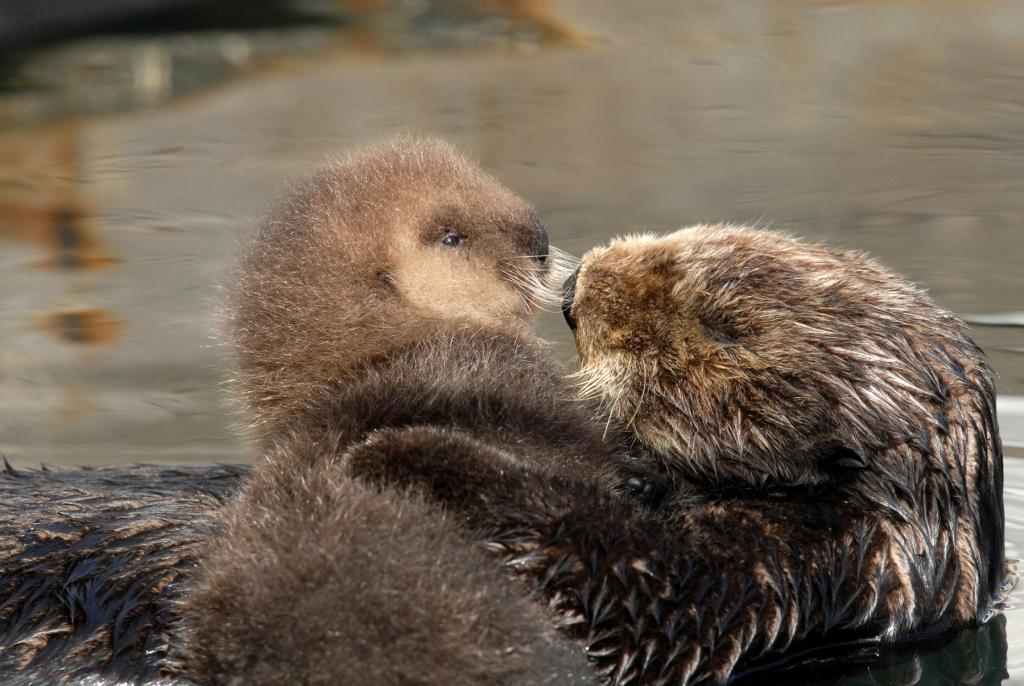
A small colony was rediscovered off the Big Sur coast in the 1930s, and their numbers -- and range -- expanded gradually into the 1970s, when they first were listed as a federally threatened species.
A member of the same family as minks, skunks and badgers, it was assumed that their numbers would rise fairly quickly, and that they would recolonize a range that once stretched from the southern tip of Baja California to the Canadian border.
Based on the estimated carrying capacity of the California coast, their numbers should have grown to 13,000 animals or more by now -- well above the threshold of 3,090 to consider moving them off the threatened species list. There are currently around 2,700 animals off the coast.
While sea lions, elephant seals and even gray whales have rebounded in numbers, the sea otter population has not. There has been slow growth, followed by periods of stagnation and decline. The latest three-year average confirms that the population is trending downward -- the first downturn in the population since the late 1990s.
What's troubling is that many of the dead otters washing ashore on California beaches are adult females of breeding age. These animals should be in the prime of life.
Some of the deaths are the result of predators. For many others, the causes of death are infectious diseases, including illnesses that may be connected to pollutants washing into the ocean from the land. Some otters suffer from protozoal infections of the brain, illnesses linked to parasites. Others are affected by toxic ocean algae blooms, which could be fueled by fertilizer runoff from coastal farms.
Like all top predators, sea otters accumulate pollutants from the tissues of shellfish and other foods they eat -- things like PCBs and heavy metals, which stress their health as well.
A new study published this summer identified yet another culprit: blue-green algae that grow in freshwater lakes, then find their way to the ocean. Warming temperatures, fueled by a changing climate, could lie behind this new source of danger.
All of these warning signs add up to an unhealthy coastal ocean. That should be a cause of concern for everyone -- not just for sea otter fans. We all depend on healthy oceans. Sea otters are simply our canaries in the coalmine, alerting us to danger before we, too, fall victim.
Before the Monterey Bay Aquarium opened in 1984, we were already involved in helping the recovery of California's sea otters through our Sea Otter Research and Conservation program. In 1989, we sent a team to Alaska to help with rescue efforts following the Exxon Valdez oil spill.
Today, we're part of a research collaboration involving scientists from universities, and state and federal wildlife agencies -- all devoted to figuring out how to bring sea otters back from the brink.
For all the discouraging news from the ocean, there's also hope. California enacted a law (inspired by a legislator's family visit to our sea otter exhibit) that allows taxpayers to make voluntary contributions to sea otter research. Over the past four years, people have given more than $1 million through their state income tax returns. And,we're working to secure more federal funding for sea otter research, though legislation is currently stalled in the U.S. Senate.
Once we pinpoint the causes of sea otters' slow recovery, we can take the steps needed to protect this charismatic animal, in turn showing that we are capable of doing the right thing to protect California's remarkable ocean ecosystems and wildlife heritage.
When you think about it, it's really quite amazing that California's ocean wildlife continues to make its way alongside a state population of 38 million people and growing. Our state has led the nation in environmental protection in so many ways. It's surely within our reach to ensure that our sea otters survive and thrive.