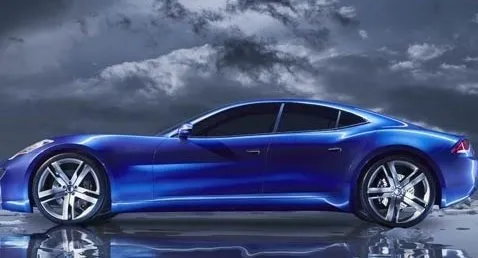
Okay, we admit it, we were kind of intoxicated too at first. Shai Agassi, of Project Better Place, had a new vision for the way electric cars can be built, sold and refueled. The handsome, charismatic businessman took that vision to investors who followed. Today, with Renault-Nissan signed on to build the first prototype (it was released a couple of weeks ago), it seems that Israel could be the world's first to pilot test the electric car on a national scale.
Similar to the way the cellular phone business works (you buy minutes instead of the device), Agassi proposes that drivers pay for how often the batteries are replaced (charged at special stations around the country) and not for the car itself. Today with Israelis paying about $2 a liter for fuel, and about 90% tax when buying a car, everyone jumped to embrace Agassi's idea.
Or at least that's how things seemed. Of course there is the attractive benefit of using an electric car to reduce one's carbon dioxide emissions, for decreasing air pollution, and curbing the need for foreign oil, but we think most of all, Israelis were quick to join the electric car hype of Project Better Place because Israelis love being entrepreneurial. Shai Agassi's idea was crazy enough for Israelis to believe it would work.
We have to state that we have not studied auto mechanics in high school nor have we have been following the Agassi project on a steady basis, but a few major concerns come to mind:
The Way of the Sony Betamax
Agassi's electric car is not a hybrid car, but fueled by an electric battery only. Like the Beta machine, that could only play Beta movies or Kodak's Advantix camera that takes only Advantix film, Agassi's car batteries will work only in Agassi cars. (We grew up in a Beta machine house and suffered immensely).
Infrastructure
In order for Agassi's electric cars to refuel, new battery-replacement stations equipped to automatically transfer and replace the battery (which wears out quickly), must be in place and be as ubiquitous as gas stations are today -- a problem in a small country with no more elbow room to develop the urban sprawl.
Accessibility
Agassi's electric car could potentially be so affordable that every person will want one. Unlike in America, or Canada where we grew up, it is more common for Israeli households to be either a one or a zero car household. Fuel is about double the price in North America, and the government taxes, repairs, car parking fines, yearly standards tests, lack of parking, and traffic headaches, make owning one a huge liability. With Agassi's plan, the first four problems will go away, but not the last ones. More people will be on the roads, more roads will need to be built, and there will be more accidents.
Highly Questionable Clean Fuel
Electric cars in Israel won't be green cars, at least not for the next 20 years. The country derives 70 percent of its power from burning coal, very polluting for air quality and very bad for greenhouse gas emissions.
Sorry to be a bummer to all those who are rooting for Agassi, but we have to listen to our inner activist on this one. Our voice is not alone. Take for example, Yael Cohen Paran, director of Israel's Energy Forum. In an op-ed on ISRAEL21c, she writes:
Electric cars - what about pedal power?
Two million electric cars flooding the streets and highways of Israel using not even a single drop of gasoline? This prospect of an oil-free and seemingly green future has recently excited many journalists and Israeli politicians. First raised by a young Israeli high-tech entrepreneur, Shai Agassi, the concept was immediately embraced by the Israeli Government and President Shimon Peres.
However, as the smoke surrounding the idea clears, it becomes apparent that Israel's great potential as an innovator for a greener future should follow a more sustainable path...A cleaner solution for electricity production is urgently needed, and maybe this should be resolved first, before converting all the cars into electric ones, she writes.

This TreeHugger would rather see Israel's Infrastructure Minister (confronted by Greenpeace at the Renewable Energy and Beyond conference in Tel Aviv last month), join hands with Shai Agassi and Shimon Peres and put their minds together on building a light rail train that effectively connects Israeli cities and byways. That and encouraging Israelis to ride their bikes, walk to work where possible, work from home or ride share where possible, and lastly, to teach one another that Israel cannot support the white picket fence dreams of America. There is just not enough space.
TreeHugger has been following this story. The post, Israel Says Shalom To The Electric Car, is a good start and leads to a number of links electric car lovers will enjoy.
Follow Karin Kloosterman on Twitter: www.twitter.com/http://twitter.
Want to reply to a comment? Hint: Click "Reply" at the bottom of the comment; after being approved your comment will appear directly underneath the comment you replied to
“Electric cars - what about pedal power?”
Insert platitude here: The perfect is the enemy of the good.
So replacing dirty, oil and gas guzzling noisy cars are with clean electric cars is bad because riding a bike is better?
Yes promote cycling and walking. Yes rideshare, work from home and spend money (the extra cash you make by solving the "too cheap car" problem") on Maglev Rail lines etc. Also, replace dirty cars with clean ones. Generate clean power. Do all these things. And do them all at the same time. There’s nothing that says they are exclusive.
“Accessibility” opulation.
The idea of not producing something because it is "too" good is hard to address on one hand because it there is no basis of fact it’s just a griefer making waves. If cars are too affordable then prices could be raised or taxes could be applied for incetivizing other programs like renewable power. Some countries incentivize fewer children in families. The same could be done to stay over-autop
“Highly Questionable Clean Fuel”
Others have already mentioned that cars powered by electricity from dirty coal plants still run cleaner than gasoline powered cars so replacing all the carbon producing cars with EVs will clean the air, quiet the streets and reduce the need to import foreign oil, but it should also be mentioned that India is putting a lot of money into solar with a 500mw system going online in 2012. The thing to remember about this ambitious plan is that it will take time. As the years go by the cars will be for sale and slowly they will begin driving the streets. The charging infrastructure will be built in thousands of places. It will be everywhere. Community leaders and activists will all look at grid power with a new renewable perspective and new power generating construction will reflect that. Construction costs could be raised by slowing increasing taxes on gasoline over this time.
Continued next post:
If you don’t know about autos and have not followed the project then why blog on it and why would you title it so negatively?
“The Way of the Sony Betamax”
It does not matter that Agassi's car batteries will work only in Agassi cars and there are a few reasons why.
1.Most all brands of cell phones and cameras use different batteries. They all use a charger that plugs into any power source 110 or 220 volts. All you need is an adapter and you can charge anywhere in the world. Already with very few EVs on the road, there are charger adapters for the few standards that the different manufactures have created. The "betamax" comparison does not work because there are no tape format adapters.
2. With the standard being government-backed and 500,000 chargers available the system becomes THE standard to build to. Similar National codes exist in every country that keeps all your light bulbs screwing into the same sockets (and vise versa). Why would anyone try to compete?
“Infrastructure”
The battery swap stations are not meant for every street corner. They are for people taking long trips. Since the idea is to have hundred of thousands of chargers in parking lots and on streets and in homes, that means everywhere you park you are always charging and only long distance drivers need swaps. Those sites can be along major highways and can easily replace or augment the existing gas stations.
Continued next post:
To be clear, EVs using grid electricity are virtually ALWAYS cleaner than gas cars, even when coal is the main source of the electricity. See http://www .sherrybos chert.com/ Downloads/ Emissions. pdf.
This doesn't mean we shouldn't be concerned with cleaning up the grid, but a dirty grid is not a reason for delaying the implementation of EVs, it's a reason to clean the grid.
Besides, if you don't like dirty electricity, then you should not be running your house on that same dirty power. Demand that your utility offer a green power option so you can use wind or solar power to run your house. Once you've done this, then when the EV becomes available to buy, you'll be running your house and car on zero emission electricity. Many of us in California have been doing that for years and we can attest to its viability.
Agassi's concept is flawed due to the difficulty of getting all car makers to standardize battery packs, and I think that will become apparent soon enough when other car makers begin shipping EVs next year that serve the needs of most people's daily driving. Ultimately, Anyone needing to travel more than 150 miles in a day will merely buy one of the many plug-in hybrids that offer enough EV range for daily driving, but have a range extender for those occasional long trips.
Soon, we will see a combination of pure EVs and PHEVs. Nothing else will be able to compete.
My issue with Agassi's program is one of control. We are at the mercy of commodity traders and energy companies at the moment. Agassi's venture may appear benevolent on the surface, but ultimately it's another ploy to keep control of our energy future and another scheme to extract profits from the lower classes in service of the rich.
My personal plan is to purchase a Chevy Volt and install a solar system to offset the additional energy load. I've talked to others who have the same plan, so the issue of electric cars being less green is moot, especially as we move away from coal.
Just like we are constantly vigilant in protecting the internet from being totally controlled by a few companies we need to be vigilant in making sure giant corporations are kept from monopolizing our energy independence.
I have been waiting for an electric car since I was a kid and all the talk was about the "car of the future". I don't know if Agassi's car is the answer though. In America, of course, we own our cars. We only rent out of town. So electrics that can go 200 miles is ideal for everything but long road trips.
As for where to get the energy, solar power, wind power, nuclear energy (I don't think there would be many "China Syndromes" with today's technology) all of these things and probably more or available now. Our government just doesn't want to sponsor it as much as they want to give money to the Oil Industry. Wake up and smell the clean air people.
You hit the core, where do you get the electricity? Factoring efficiencies of generating and transmitting the electricity, conversion to battery, conversion to motive power, electric cars are LESS green than gasoline.
It has been reported in the MSM that there is enough excess electrical power in the U.S., at night, to charge up almost every car currently in the nation, if they were to suddenly become plug-in hybrids.
Sounds pretty green, no?
I don't know what this is supposed to mean, but if you want the energy to charge the battery, you have to generate it, there is no 'surplus' dripping out of the power lines.
And for the forseeable future that energy is coming from coal.
You must be logged in to comment. Log in or connect with