iPhone app iPad app Android phone app Android tablet app More

Featuring fresh takes and real-time analysis from HuffPost's signature lineup of contributors
Krista Tippett

GET UPDATES FROM Krista Tippett
 

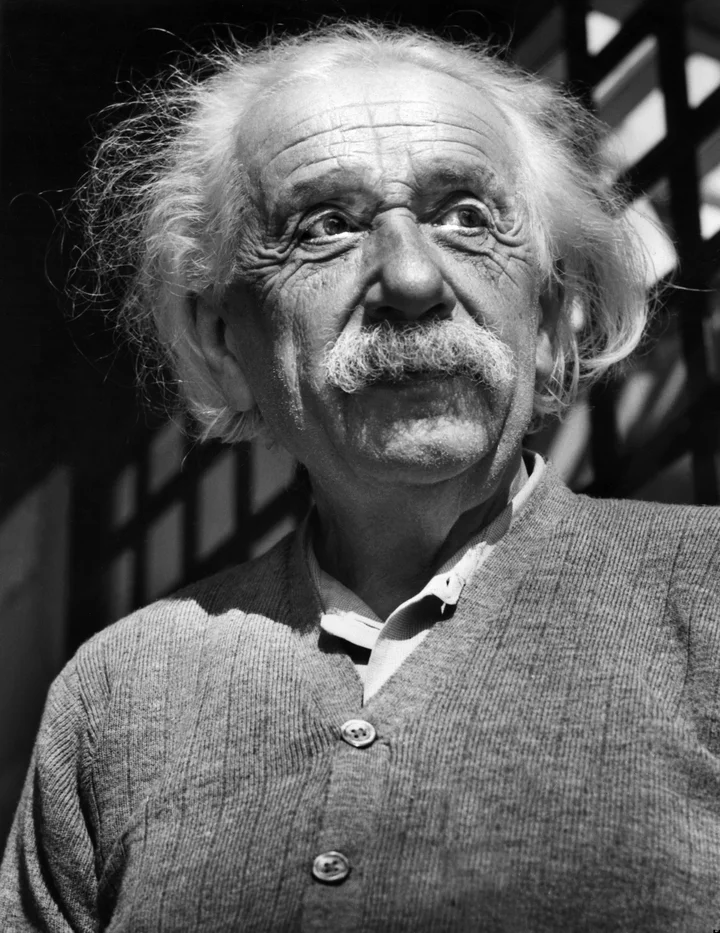
Albert Einstein's Faith: Was the Great Physicist Spiritual?

Posted: 07/23/10 08:38 AM ET

Albert Einstein's famous equation, E=mc2, remains difficult for me to grasp fully. But I feel I have come to understand something of the man -- his expansive spirit, his relentless curiosity, and his reverence for the beauty and order of nature and thought. I was daunted as I began, but delving into Einstein was a delight.

And there is a logic of sorts to that, as humor was an aspect of Einstein's genius. Freeman Dyson suggests that his ability to make light and to laugh, even at himself, was one key to the magnitude of his scientific accomplishment. Science is often about failure. Einstein himself proposed that he made so many discoveries because he was not afraid to be proven wrong, repeatedly, on his way to all of them. But Einstein also employed humor to philosophical and ethical effect, weighing in trenchantly on mankind's foibles.

Einstein held a deep and nuanced, if not a traditional, faith. I did not assume this at the outset. I've always been suspicious of the way Einstein's famous line, "God does not play dice with the universe," gets quoted for vastly different purposes. I wanted to understand what Einstein meant as a physicist when he said that. As it turns out, that particular quip had more to do with physics than with God, as Freeman Dyson and Paul Davies illuminate.

Einstein did, however, leave behind a rich body of reflection on the "mind" and the "superior spirit" behind the cosmos that has never made its way into popular consciousness. He didn't believe in a personal God who would interfere with the laws of physics. But he was fascinated with the ingenuity of those laws and expressed awe at the very fact of their existence. Throughout his life, he thrilled to all he could not yet understand. He was more than content with what he called a "cosmic religious sense" -- animated by "inklings" and "wondering," rather than by answers and conclusions. Here is a passage that comes close, I think, to a concise description by Einstein of his quintessential "faith":

A knowledge of the existence of something we cannot penetrate, of the manifestations of the profoundest reason and the most radiant beauty -- it is this knowledge and this emotion that constitute the truly religious attitude; in this sense, and in this alone, I am a deeply religious man. I cannot conceive of a God who rewards and punishes his creatures, or has a will of the type of which we are conscious in ourselves ... Enough for me the mystery of the eternity of life, and the inkling of the marvelous structure of reality, together with the single-hearted endeavor to comprehend a portion, be it ever so tiny, of the reason that manifests itself in nature.

With Paul Davies, I was able to pursue how Einstein changed our view of space and especially time, a subject that has always intrigued me. Before Einstein, as Davies describes it, human beings thought of space and time as fixed and immutable, the backdrop to the great show of life. But we now know they are elastic and intertwined, part of the show themselves. Einstein described our perception of time as an arrow -- traversing linear and compartmentalized past, present, and future -- as a "stubbornly persistent illusion." Such language is evocative from a religious standpoint. As Davies discusses, it echoes insights that run throughout Eastern and Western religions and ancient indigenous cultures. Davies finds an affinity between Einstein's view of time and the religious notion of a reality "beyond time," and of "the eternal." And because he speaks as a person conversant in current advancements of Einstein's science -- cosmology and the Big Bang, black holes, even the search for life beyond this galaxy -- his insights carry for me a special weight of authority and, yes, wonder.

I came across many wise and touching pieces of writing by the spiritual Einstein while preparing for these conversations. Einstein was a passionate letter writer. He wrote to fellow scientists, friends, and strangers. He loved responding to the letters of schoolchildren. One of his correspondents for a time was Queen Elisabeth of Belgium. He had struck up a warm friendship with her and her husband, King Albert, just before World War II. In one tragic season in the midst of already tumultuous political times, her husband died suddenly, as did her daughter-in-law. Einstein wrote to her:

Mrs. Barjansky wrote to me how gravely living in itself causes you suffering and how numbed you are by the indescribably painful blows that have befallen you. And yet we should not grieve for those who have gone from us in the primes of their lives after happy and fruitful years of activity, and who have been privileged to accomplish in full measure their task in life.

Something there is that can refresh and revivify older people: joy in the activities of the younger generation -- a joy, to be sure, that is clouded by dark forebodings in these unsettled times. And yet, as always, the springtime sun brings forth new life, and we may rejoice because of this new life and contribute to its unfolding; and Mozart remains as beautiful and tender as he always was and always will be. There is, after all, something eternal that lies beyond the hand of fate and of all human delusions. And such eternals lie closer to an older person than to a younger one oscillating between fear and hope. For us, there remains the privilege of experiencing beauty and truth in their purest forms.

I emerged from these discussions with a new sense of Albert Einstein -- not just as a great mind, but as a wise man. He was fully human and flawed, certainly in his intimate relationships. But he was undeniably an original, and not just as a scientist. If past, present, and future are an illusion, as he said, none of us ever really disappear. We all leave our imprint on what is now. I have a profound sense of Einstein's imprint, and it comforts me. I suspect that if he heard he was the subject of a program called Speaking of Faith more than fifty years after his death, he would make a funny, kindly, self-deprecating joke. But if he could listen with twenty-first-century ears, he might be intrigued by how his generous, questioning, "cosmic" religious sense is deeply kindred with the religious and spiritual yearnings of our age.

This post is excerpted from my book Einstein's God: Conversations About Science and the Human Spirit (pp. 15-18).


Albert Einstein's famous equation, E=mc2, remains difficult for me to grasp fully. But I feel I have come to understand something of the man -- his expansive spirit, his relentless curiosity, and his ...
 
 
  • Comments
  • 1,276
  • Pending Comments
  • 0
  • View FAQ
Comments are closed for this entry
View All
Favorites
Recency  | 
Popularity
Page: 1 2 3 4 5  Next ›  Last »  (16 total)
This user has chosen to opt out of the Badges program
photo
oldfuzz
...within my mind
07:05 PM on 08/09/2010
If the truly spiritual are mystics--those who experience doubt, wonder and awe in the mystery--then Einstein was spiritual. He said so in his own words as you demonstrated in Einstein's God; however, Einstein's God was not the God of monotheism.
This user has chosen to opt out of the Badges program
photo
12:54 AM on 08/02/2010
Is it moral to speak for God, when he never answered you back?
Does God not exist, becuase you never heard his voice?
If some wrongly believe they know the truth, can we blame them for that?
This user has chosen to opt out of the Badges program
photo
oldfuzz
...within my mind
07:02 PM on 08/09/2010
What does God have to do with spirituality? This suggests that non-theists are incapable of being spiritual, an idea to which many--Buddhists, Taoists, Humanists, Non-theistic Christians and others--would disagree.
This user has chosen to opt out of the Badges program
photo
12:53 AM on 08/02/2010
Atheists use the word creation but not in reference to God. People who believe in a conscious God have faith that he is the creator. The fact that the universe did not always exist would imply creation by rearangement at the very least. Call it what you like, a conscious God, or an unconscious combination of chemical and physical reactions, but for the purpose of argueing the fact that you are here to ask questions should be all the evidence you need.
12:21 PM on 07/31/2010
I got to hang with Einstein a little bit
He couldn't talk really but I'm sure was smart enough

Nothing is eternal except for nothingness and hopefully somethingness as well
05:58 AM on 07/28/2010
Whenever asked, Einstein avowed he believed in "Spinoza's God". Spinoza postulated that all facts must have an explanation and that since the universe exists, it must have an explanation. Poorly reducing this great thinker to a few lines leads us to his probable conclusion that the Universe IS God.
But it is a non-theistic God, not the theistic creator God of Christianity. Einstein's God more closely resembles the god of Mahayana Bhuddism or some form of modified pantheism. We must also note that Einstein spent much of his life in search of a unified field theory, which would be consistent with his theology.
photo
earto44
Defender of planet Erf.
06:41 AM on 07/26/2010
Fail. Being a public figure you will tap dance around what you really want to say.
I think he was very clear. "There isn't a God" I cannot conceive of a God who rewards and punishes his creatures, or has a will of the type of which we are conscious in ourselves
This is a guy who is invited into the White House on a regular basis. What else is he going to say?
Keep in mind, the guy was a player. He kept a few girlfriends while he was married.
photo
HUFFPOST SUPER USER
freemystics108
Free Mystic. Writer. POET-
05:17 AM on 07/26/2010
An Open Heart with An Open Mind gets The Open Secret.
In this sense, Einstein was deeply "religious"; a discerning "spiritual" being. But averse to the idea of a "personal god". And, rightly so. His 'expansive spirit' was 'relentlessly curious'. Open to "Time-less" and "Eternal" Structure of The Ultimate Reality.
This is The Way of Yogis and Free Mystics of India.
The "view" of GOD as a "person", is a "lower" belief. Yet, this "lesser" idea of “TRUTH” exists as a tangible "reality" in East and West alike. Millions believe and die with it. None the wiser.
It is not The Way of A Free 'Spirit'. Of intelligent people.
Seek and Find. Is The Name of The Game. Of Mysticism.
Yet, much as one may respect "intelligent" minds, such as that of Einstein; to "get" THE TIMELESS REALITY, beyond "stubbornly persistent ILLUSION”, the MIND as we know it, must be transcended. Why? Because "stuff" that "mind" is made of is not "brain" but SPIRIT.
Our mind may "perceive" or "conceive" A SENSE OF REALITY. But most of us never get "IT" as a virtual "SELF"-Experience. Failing to “get” IT, a visible section of human society becomes atheist; anti-religion. Then, ANTI-GOD.
Both "Believers" and "Infidel" Non-Believers worship an "ISM".
A "scientific" mind should not "believe" or disbelieve "blindly" any truisms. Einstein did not. Was OEPEN-HEARTED and OPEN-MINDED to WHAT IS. Thus, was more "spiritual" than most of us ever are. Or, shall ever be!
HUFFPOST SUPER USER
busman
06:14 AM on 07/26/2010
Very enlightening.
photo
HUFFPOST SUPER USER
freemystics108
Free Mystic. Writer. POET-
11:20 PM on 07/26/2010
Thanks. Glad you think so.
photo
HUFFPOST SUPER USER
Vincent Hayden
08:59 AM on 07/26/2010
Yet, Science is suppose to deal with observable phenomena yet promotes the theory of evolution which is not scientific because it is not observable - Entropy Is (increasing randomness)! Survival of the fittest is a more believable pattern because if an organism decided, say, it needed eyes to detect light it would be out of luck because it would take millions of years to develop.
We can not depend on mind because there's no way human mind could contain all of the facts about the universe. Mankind has a predisposition to argue and complain - that's the main religion.
12:06 PM on 07/26/2010
Science relies on data and direct observation is only one a number of ways to get it. We know a great deal about the earth's core even though no one can see it with their eyes. We had theories about atoms and molecules long before we could image them to verify them. There is enormous and irrefutable evidence supporting evolution in the fossil record. Even if there wasn't however we actually are able to directly observe evolution in bacteria and a wide variety of computer algorithms. That's what it means when we say a disease has become "resistant" to a certain drug, it has literally evolved in precisely the way that Darwin described and in real time in front of our eyes. To conclude, science relies on data and testable hypotheses not necessarily direct observation, but even if it for some reason did evolution would still be proven real because we see it all around us all the time.
photo
Uncle Bob
Darwin loves you.
11:13 PM on 07/26/2010
"Yet, Science is suppose to deal with observable phenomena yet promotes the theory of evolution which is not scientific because it is not observable "

Fossils exist and are observable.
This user has chosen to opt out of the Badges program
04:25 AM on 07/26/2010
From what I have read of his writings, I believe he was both spiritual and highly moral, and that it is not a contradiction in principles for a scientist to be interested in all things, including the spiritual.
03:23 AM on 07/26/2010
pondering about whether there's a God or not made me crazy when i did it. i realized: there are no answers. i can debate and argue all i want but in the end, i will have gotten nowhere. i'd rather spend my time enjoying life, nothing thinking about a God, then endlessly debating it. i think people like Richard Dawkins have lost their marbles. he's a fanatic by now, and is SO INSISTENT that there is no God.... that he might be totally wrong. who cares?! just live!
photo
HUFFPOST SUPER USER
Dan Jighter
04:12 AM on 07/26/2010
I know of no atheist who claims to have the answers. Typically atheists effectively point out that we have no answers, for example that there is no evidence for the existence of god, and then precede to offer a rational approach to life in light of us having no answers.

Who cares? Many have seen religion lead to worrisome acts, ranging to the denial of the science of evolution to denying gay persons their civil liberties to flying planes into buildings. Indeed, who does care about the world around us and the people in it. Well, some people like Richard Dawkins do care, they happen to care very deeply about other people, the world, and the honest truth.

You might rather enjoy your life without a care for the world around you. But I am glad some people care.

Also, just because someone is passionate about a position does not make them a bad person nor does it mean they lost their marbles.
08:13 PM on 07/26/2010
lol. i actually care very much about people, but thanks for the newsflash.
photo
HUFFPOST SUPER USER
ky5111
05:32 AM on 07/26/2010
Dawkins definitely does not claim there is no God. It is scientifically impossible to disprove God.

Scientists care about religion only when it encroaches their field. Things like creationism vs. evolution are a highly relevant and important, and it is people like Dawkins who fight for the side of science and reason.
photo
HUFFPOST SUPER USER
Richard McRae
I fan awesome people.
11:26 AM on 07/26/2010
That is exactly the point I've tried to get across a million times. Great post.
photo
HUFFPOST COMMUNITY MODERATOR
alsm9
Bombshell
12:44 PM on 07/29/2010
Well put.
HUFFPOST SUPER USER
Cinnamonape
02:33 AM on 07/26/2010
I find it fascinating to the extents that some people will undertake to try to say that their religious positions are valid by trying to attach well-known Scientists onto them. For example, you'll find that many Creationists make long lists of (pre-Darwinian) Scientists that they argue were "Bible-Believing Creationists". And they also spread the myth that "Darwin recanted his evolution on his deathbed and accepted Jesus" [a well known hoax spread by Lady Hope and the Jehovah's Witnesses, and refuted by Darwin's children and his own letters].

Here's another that spread by the internet...an argument by Einstein with a professor regarding God, evolution, and other issues, and which is so obviously false by its specious arguments which Einstein would never have made.

http://blog.sweet-dick.com/?tag=snopes
02:51 AM on 07/26/2010
I think you meant either "the lengths to which people will go" or "the extent to which people will try" but the phrase "to the extents that some people will undertake" doesn't really make any sense.
photo
HUFFPOST SUPER USER
Vincent Hayden
09:01 AM on 07/26/2010
I'll tell people not to take my word for it, check it out for themselves, because I'm a people and people can most certainly be wrong.
photo
HUFFPOST SUPER USER
OldHick
02:21 AM on 07/26/2010
I think he felt existence to be a marvel, that attracted him like a magnet.
02:53 AM on 07/26/2010
He certainly enjoyed physics.
photo
HUFFPOST SUPER USER
OldHick
02:12 AM on 07/26/2010
He was fond of calling people Philistines. He sought truth, in the Ernst Machian style. His natural pursuits were an attempt to grasp "what is", he believing in an order to everything (not necessarily by accident). He approached the unknown with an unprejudiced, open mind. He complained of not having enough math or time to solve many of the problems he encountered.
photo
MikeDu
Both salubrious and lugubrious concurrently.
01:10 AM on 07/26/2010
Just poking my nose in to say how much I've enjoyed your (Ms. Tippett's) Sunday NPR broadcasts for years, incorrigible old athiest that I am.

The problem with critiquing expansive writers like Einstein is that the 'spiritualists' seem to have difficulty differentiating theology from mere rhetoric.

Every time a Founding Father or historical figure is recorded invoking the blessings of the diety some theist pounces on on the line as *proof of religious sensibilities*. Other commonly made classsical references to the goddes Fortuna for instance, or Cupid, the Greek practic of augury, or to Baccinallian feasts, are immediately discounted as mere rhetorical flourishes. But rhetorical flourishes are not limited to just referencing Greek and Roman cult practices.
photo
HUFFPOST SUPER USER
ky5111
05:35 AM on 07/26/2010
They're making arguments from authority. Also what does "spiritualism" even mean? It's all hand-waving bs IMO.
photo
HUFFPOST SUPER USER
Vincent Hayden
09:04 AM on 07/26/2010
To be spiritual is different than spiritualism. But spirit is intelligent life force.
photo
HUFFPOST SUPER USER
Vincent Hayden
09:02 AM on 07/26/2010
Kind of like the witch hunts, only in reverse!
12:24 AM on 07/26/2010
I agree with the author. Einstein may never have explicitly stated it but if you read between the lines you can tell that he really loved Jesus.
This user has chosen to opt out of the Badges program
01:28 AM on 07/26/2010
The problem with reading between the lines is that too many people have very poor reading comprehension even when dealing with the lines that are actually there. In your case you've apparently read about your own beliefs rather than anything Einstein intended when you tried to look between his lines. He very clearly did not believe in God, so he didn't love Jesus any more than he loved the offspring of the tooth fairy.

I've got no complaint if somebody describes an appreciation of the natural world and its order as "spiritual", assuming they understand the broad meanings of the word. In Einstein's case, his "spiritual" feelings had absolutely nothing to do with "religious" feelings in any sense related to religion as the vast majority understand it.

E=MC^2 is a very simple concept, assuming that you've got average intelligence and make a modest effort to find out what it means. I suppose we shouldn't be surprised that an author who can't grasp it fully would be confused by his other writings.
photo
HUFFPOST SUPER USER
StephenJK
All your consciousness are belong to us
12:18 PM on 07/26/2010
Einstein stated that he did not believe in any traditional religious sense of God and thought the associated dogma was "childish". He never explicitly stated "I don't believe in God." At the very least, Einstein was agnostic.
01:57 AM on 07/26/2010
lol, no.
11:13 PM on 07/25/2010
Is there a section for science here on HuffPost? I have the choice for "Religion", and "Tech". Toasters, and Mind Control. Could we have a space for rational thought on the big questions without gadgets, and metaphysics?
02:32 AM on 07/26/2010
If you are interested in expressing rational thoughts, this site is not for you.
02:47 AM on 07/26/2010
You're free to express any thought you'd like here, rational or otherwise. You may or may not like the responses or the subject material but poster's can write virtually anything.
photo
HUFFPOST SUPER USER
Vincent Hayden
09:06 AM on 07/26/2010
Beam me sideways Scotty! Nobody on this planet knows which way is up!