iPhone app iPad app Android phone app Android tablet app More

Featuring fresh takes and real-time analysis from HuffPost's signature lineup of contributors
Kristen Howerton

GET UPDATES FROM Kristen Howerton
 

What I Learned About Motherhood by Being an Adoptive Parent

Posted: 05/11/2012 11:04 am

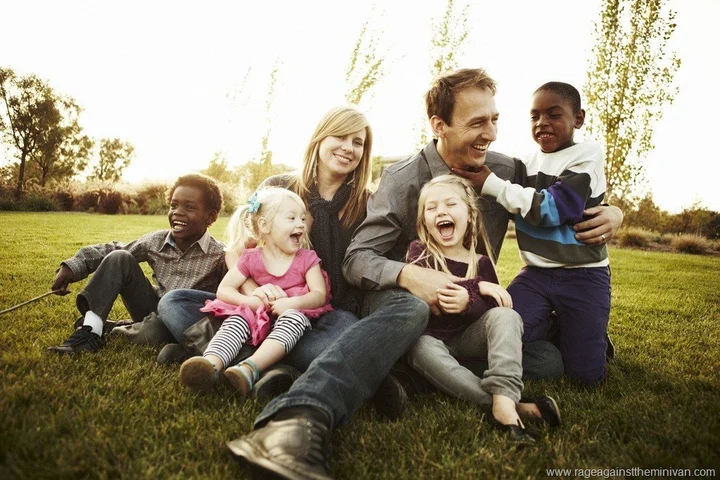
My family has been formed in many ways. My first child was adopted from the foster-care system as an infant. My second two children came the old-fashioned way. My last child was adopted at nearly 4 years old from an orphanage in Haiti.  I've been blessed to experience the beauty of childbirth, as well as the joy of meeting an adopted child for the first time.  Each experience was equally emotional and life-changing.  However, the experience of adopting has given me a unique perspective on motherhood, teaching me some new truths, and reinforcing what I believe to be true about parenting.

Blood does not determine a family.
Probably the most common concern I hear from people who are considering adoption is whether or not they will be able to love a child that isn't "their own".  I can tell you, though, that the moment my first son was placed in my arms, he was very much my own. My love for my children is not dependent on our biological connection.  Adoptive families, step-parents, and blended families know well that family bonds transcend biology, and that family connections can be formed in many ways.

Those nurturing things we do for our babies in their first year of life? They matter.
I've had the experience of adopting a baby, and also adopting a child who spent his early years in an orphanage setting. While I've always believed that the nurturing, bonding behaviors that we do with babies are important, it becomes even more apparent when you observe how the lack of this nurture effects a child. Research shows that things like touch, eye contact, and attention not only infuse a child with self-worth, but they even effect the way the brain and nervous system develop.  When you love an infant, you are impacting their development in profound ways.  When a child is deprived of that nurture, the impact can be life-altering.

When you adopt transracially, you do not become the parents of a minority child. You become an interracial family.
Adopting transracially effects the entire family unit, and this means that the whole family must adjust to make sure that a child of another race grows up with a sense of belonging.  Adoptive parents must open their eyes to racism, instead of burying their head in the convenient sand of a mythical post-racial world.

Raising a child of another race requires humility and a willingness to seek help.
Race isn't something I think about in our day-to-day routine. By and large, parenting my boys is no different than parenting my girls. I still have the same hopes, dreams, fears, and insecurities as a mom . . . I'm still largely concerned with the day-to-day minutiae that every mom of every race is concerned with. How are they doing in school? How are they doing socially? Are they kind and compassionate? However, this is what I know to be true about raising black boys: it will be imperative for me to teach them that some will look at them with suspicion or stereotype based on their skin color. I HATE THIS. I hate that it's true and I hate that I have to burst their innocence and I hate that it may shift their view of the world. But it's a part of our role as their parents, and we can't do it alone. I don't share that experience, and so I have to enlist other people to help guide them in this. It's why it's so important to us that our boys have strong black role models. This is why I subscribe to blogs like The Root and My Brown Baby and continually attempt to learn.

You can save a child once. After that, it's called parenting.
Adoptive parenting is not a noble pursuit, and I squirm a little any time I hear people perpetuating the narrative that adoptive parents are saviors. While it's certainly true that adoption can save a child from a life of living in an orphanage, adopted children should not be required to bestow special gratitude to their parents.  Adoptive parents are regular, imperfect people.  Adoptees have the same rights as biological children to be resentful, annoyed, or ungrateful towards their parents, without being reminded that they've been "saved" by their parents.

Personality is determined by DNA. Character is determined by nurture.
When we decided to adopt, we have a few friends with disturbing concerns about how we "didn't know what we were going to get".  I would say that this is true for anyone who decides to become a parent.  I've observed that all four of my children were born with distinct personalities that seemed to transcend the fact that they've each been raised in the same household. It's been a joy to see how each child's personality develops. All parents would do well to give their kids the freedom to be who they are. However, I do believe that character is shaped by parenting. So while I may not have much influence in regards to how extroverted my kids are, I do believe that I can shape them to be kind, compassionate, and confident individuals.

Every child deserves the love of a family.
Most of us know this intuitively, but as an adoptive parent I've spent time in orphanages and seen the difference that living in a family can make.  While it's wonderful that there are settings that can provide an at-risk child with food, clothing, and shelter, I firmly believe that it's in each child's best interest to have a loving parent whose goal is to provide the love and attention that only a family can afford.
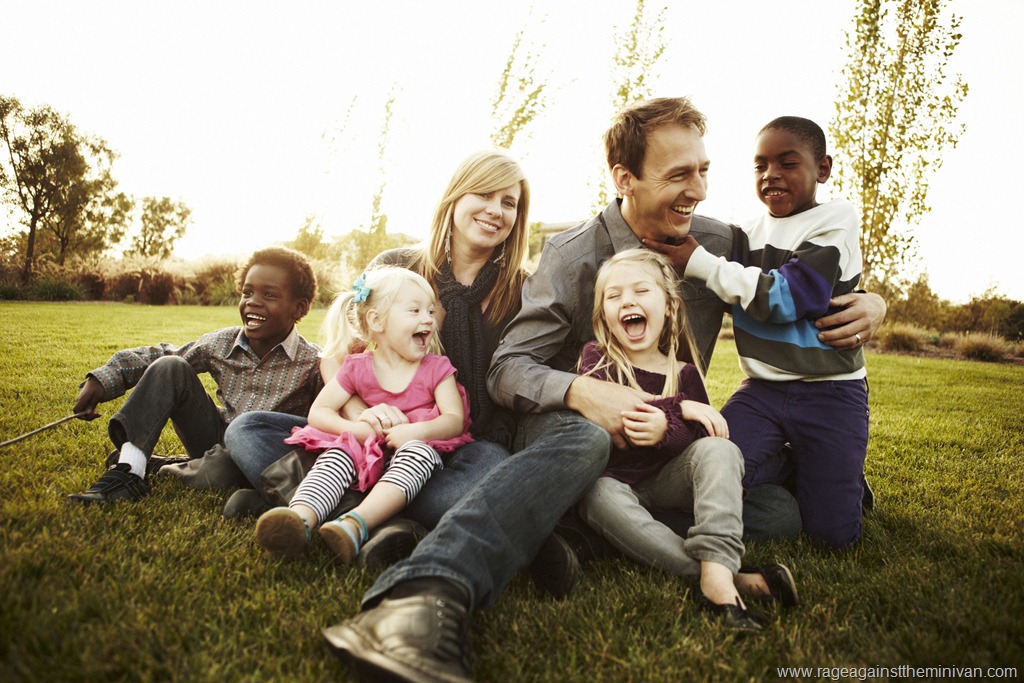
2012-05-10-Howertons.jpeg

Read more by Kristen Howerton at Rage Against The Minivan.


Follow Kristen Howerton on Twitter: www.twitter.com/kristenhowerton

FOLLOW PARENTS
My family has been formed in many ways. My first child was adopted from the foster-care system as an infant. My second two children came the old-fashioned way. My last child was adopted at nearly 4 ye...
 
 
  • Comments
  • 118
  • Pending Comments
  • 0
  • View FAQ
Comments are closed for this entry
View All
Favorites
Recency  | 
Popularity
Page: 1 2 3  Next ›  Last »  (3 total)
10:52 PM on 05/17/2012
Crime surveys of the general population have found that biracial persons are significantly more likely than either single race whites or blacks to be victims of violence by family members and friends.

I can't find any data on trans-racially adopted children but I wonder if abuse is also higher in those families.

Family violence, 2007: Victimization rate by victim-offender relationship, by type of crime and selected victim characteristics (Rate per 1,000 persons age 12 and over):

Crimes of violence by Relatives:
White only - 2.2
Black only - 2.1
Two or more races - 11.5 (5.2 times the white rate and 5.5 times the black rate)

Crimes of violence by well-known persons:
White only - 4.7
Black only - 5.5
Two or more races - 20.4 (4.3 times the white rate and 3.7 times the black rate)

Crimes of violence by Strangers:
White only - 8
Black only - 10
Two or more races - 25.8 (3.2 times the white rate and 2.6 times the black rate)

From csv0735:
http://bjs.ojp.usdoj.gov/content/pub/sheets/cvsprshts.cfm
This user has chosen to opt out of the Badges program
photo
GlennWatson
Two million fans
07:25 AM on 05/19/2012
I wonder why strangers would target biracial family members or how they would even know.
07:49 AM on 05/19/2012
Perhaps biracial persons have some aspect of their personality that increases their likelihood of being attacked?

"When it comes to engaging in risky/anti-social adolescent behavior, however, mixed race adolescents are stark outliers compared to both blacks and whites. We argue that these behavioral patterns are most consistent with the “marginal man” hypothesis, which we formalize as a two-sector Roy model. Mixed race adolescents – not having a natural peer group – need to engage in more risky behaviors to be accepted.

[...]

We analyze twenty-one variables designed to capture a student’s risky/anti-social behavior in and out of school. The in-school behavior variables include: trouble with teachers, trouble paying attention, trouble with homework, trouble with students, effort on schoolwork, skipping school, and never suspended or expelled. The variables designed to measure behavior out of school include: watch TV, drink, smoke, dare, lie to parents, fight, property damage, steal, violent acts, sell drugs, encounter violence, ever sex, ever STD, and ever illegal drugs.

[...]

Strikingly, on fifteen out of the twentyone variables relating to bad behavior mixed race adolescents exhibit worse behavior than both of their single race counterparts."

The Plight of Mixed Race Adolescents:
http://mba.yale.edu/faculty/pdf/kahn_mixed_race.pdf
wetcoastm
Free Speech As Dictated By Our Sponsors
02:06 AM on 05/17/2012
Wow thank you for such good advice about raising children who Coe from a different ethnicity - it does matter that we acknowledge racism and your kids will know that they can come to you when they have negative encounters because you accept and understand their reality.

Bravo!
06:28 PM on 05/16/2012
There is a great local tv show that had Dr. Jane Aronson, world renowned international adoption expert, on this month. Go to www.kidsfirstrgmd.com and watch the show! Really interesting!!!!
08:52 AM on 05/15/2012
After reading a lot of these comments, people should take away from this article and others experiences that each adoption story is unique. No two are the same, even within the same family. Each child coming into a new adoptive family has had different experiences and different losses that makes up their psyche. I remind our daughter daily that the past, while sad, isn't her fault. She now decides what direction her future will take her and that's completely within her power and control. "The one thing you can’t take away from me is the way I choose to respond to what you do to me. The last of one’s freedoms is to choose one’s attitude in any given circumstance.” Viktor Frankl

Our daughter didn't adopt us until roughly a year and after her adoption. She struggled with what love is and how infinite love really can be. She also struggled with the guilt of loving us and being angry at her birth mother. Three years later, we're still bonding as a family, growing as a family and becoming a much stronger family in the process. The love was instant for us but the bonding has taken time. Like we tell our daughter, we have all the time in the world.
04:08 PM on 05/14/2012
I really liked your statement: Personality is determined by DNA. Character is determined by nurture. I might have to steal it. As an adult who was adopted as an infant, I have always struggled with ways to give credit to both aspects of who I am, nature and nurture. They both matter, but in different ways. My adoptive parents are responsible for the person I am today. So is my genetic heritage. (I have a very different personality than my adoptive parents and have from an early age. It was a learning curve for everyone involved.)

Also, your statement about "saving" adopted children. It also makes my skin crawl when well-meaning people say this. I'm grateful to my parents because they love me, care for me, and still continue to build a relationship with me. They have seen me at my best and my worst and still think I'm amazing. (I'm ambivalent about adoption as it has left some severe emotional issues in its wake. Although I don't blame them for my issues, that can't be an easy thing for them.)

Finally, I would like to encourage you to continue to keep an open mind about the race issue. I'm half Latin American, and look white enough to pass for Italian. That said, some well-informed racists have called me out over the years. The first few times it came as a complete shock.

It sounds like you're doing a good job. I don't say that lightly.
01:04 PM on 05/14/2012
Thank you, Kristen for sharing this beautiful story that was very on-point on so many levels. I am adopted, as are my 2 brothers. We are also an interracial family. The differences in my siblings' social skills (1 who came from an orphanage, and the other from foster care) are stark. I often brag that there are 5 members of my nuclear family and none of us share DNA. I also define family as the "village" of people (legal relatives and those who are not) who raised me. My adoptive parents, and us kids, are all unique and beautiful and flawed at the same time. Thank you for sharing your story and may families around the world find adoption a heart warming (and eye-opening) experience- full of unconditional love.
09:03 AM on 05/14/2012
I have to say I am an adopted child..My Mom told me that when she first saw me she was smitten. Some not all parents may be like that but I must say I do not think of her saving me...I think that I was givin a second chance at a life. I am grateful to my Mom for taking me home..I would not know where I would be without her now. Truethfully what she says about kids needing affection is true..it does change our life...I grew up without a father in my adopted family..so I lack fatherly affection and in turn do not know how to interact with guys. Though I love my Mom dearly and I have to say I hope you like your now cleaned garage we did this sunday. Happy Mothers Day Mom I love you.
07:44 AM on 05/14/2012
Well-written; on behalf of many adoptive families - including ours - thank you.

I would like to offer, however, that MANY parents (mothers, I think, in-particular) who adopt do NOT feel an immediate attachment or bond to their adoptive children. I did not. We adopted two of our children from Ethiopia almost three years ago when they were nearly 5 & 6 years old. I never considered that I might not feel an instant "mommy" bond to them and when attachment didn't happen immediately (or even weeks or months later) I was shaken to my core. Since that time, attachment has and continues to form, but I find it an ultra-marathon - not the 50 yard dash.

Do I think, then, as some argue, that we shouldn't have adopted? NO!! I've recognized a love more powerful than emotions, for parenting ALL my children - whether adopted or not.

I could go on here, but I'll spare you : ) I only share this point on attachment to offer another perspective and encourage adoptive parents who may feel discouragement or guilt over not instantly attaching. I especially appreciated your point on adoptive parents being "saviors". Yuck. I hate when people put us on that pedestal or point out to our children how lucky they are to have such a "wonderful" family.
10:03 AM on 05/14/2012
Well as an adoptive parent that bonded instantly with my daughter from the moment I laid eyes I her I cannot imagine not bonding with your child. God blessed me with a precious daughter and she is 100% my daughter. Giving birth does not make you a mother any more than not giving birth doesn't make you one. I would do anything for my precious girl and when people say I rescued her I say no she rescued ME!!!
10:31 AM on 05/14/2012
And of course, the immediate bond doesn't always happen for biological moms and babies either. It can take awhile for that emotional love to grow. It can be shocking and discouraging when it doesn't happen right away. Love and bonding is more more complex than we usually allow for it to be.
11:11 AM on 05/14/2012
Thank you for that reminder. After being awake for 36 hours my first look at my daughter I was in tears not from the beautiful baby but because I wasn't feeling this instant love I was assured would happen. I also now know that exhaustion didn't help. I bless the nurse who took her for day-old tests that next night and returned her, silently, sound asleep, thumb tucked in mouth, swaddled tight. I woke a couple hours later to a sleeping, comforted baby in the bassinet next to me and started feeling that connection growing.
11:34 AM on 05/14/2012
Yes, absolutely and I appreciate you pointing this out. Since my own experience I've had several friends admit bonding struggles and read several accounts of biological mothers struggling with the same feelings (or lack thereof) I had. Bonding IS complex and as mentioned in Michi chi's reply, often laced through with many factors outside the bond: extreme exhaustion, sometimes medical issues of the child, other family members' reactions, etc... A writer friend, Jennifer Grant, has written a lovely memoir called, "Love You More", in which she addresses the attachment issue. Though she bonded instantly to her adopted daughter, she gives a voice and encouragement to those who don't.

Thanks for your reply beccaeliasen!
photo
HUFFPOST SUPER USER
Snmartinez
01:34 AM on 05/14/2012
Once I have my little girl. I'd love to adopt a 4-5 yr old child.
10:45 PM on 05/13/2012
This was interesting to read. I'd like to adopt one day - lot of work to do first but it's valuable to read accounts of those who have and even listen to the comments that come up. Thank-you for being here and sharing your family with us. I particularly love this:

"While I've always believed that the nurturing, bonding behaviors that we do with babies are important, it becomes even more apparent when you observe how the lack of this nurture effects a child. Research shows that things like touch, eye contact, and attention not only infuse a child with self-worth, but they even effect the way the brain and nervous system develop. When you love an infant, you are impacting their development in profound ways. When a child is deprived of that nurture, the impact can be life-altering."

Gold for me to hear, where I stand...

Happy mothers day Kristen. :)
This user has chosen to opt out of the Badges program
photo
emphatico
....is politically radioactive.
09:04 PM on 05/13/2012
Jennifer WilsonPines said:

"Don't know where you came up with the nonsense about mom's being uncomfortable with adopted kids...."

-----------

I am 'speaking' out of experience here, Jennifer! Women do a lot of the heavy-lifting when you've got a traditional family....no doubt about it. However, she ends up treating the adopted child as an outsider. There is nothing wrong with it -- it's a biological impulse.

That's my concern about adoption. If you wouldn't be able to treat those kids as well as you take care of your biological kids, there is no point in adopting them.
05:27 PM on 05/13/2012
I just realized what bothers me so much about many of these comments. Only adoptees can say that strangers love to rewrite their family history for them! I know how much I was loved. I know that being clumsy, nonathletic, having incredibly bad handwriting, not learning math or spelling wasn't caused because I'm "resistant to being adopted."
Yes laws need to be change. But don't ever ever say that adoptive parents (from a century ago in my case) can't love their adoptive kids as much
This user has chosen to opt out of the Badges program
photo
04:23 PM on 05/13/2012
Your family is beautiful.
04:04 PM on 05/13/2012
Thank you for this article, especially the parts about interracial adoption. I am of Pacific Islander descent and was adopted by a White couple at birth. I am in my late twenties so obviously times were different then and it wasn't nearly as common as it is today. My parents didn't see me as being non-White and to this day I've never spent time with someone of my own race. They didn't mean to do any harm, it was just that the situation was very unusual.

I'm going to mail this link to my in-laws. They've been making a lot of comments about my adoption lately since my son was born and a lot of the comments have been quite ignorant (questioning how I know what my hertiage is, for example). I believe to really understand what it's like you must have either adopted a child or been an adopted child yourself.
This user has chosen to opt out of the Badges program
photo
emphatico
....is politically radioactive.
10:36 AM on 05/13/2012
Jeez! Can we just remove all the words -- transracial, interracial, etc? Humans are the same everywhere. We have the same physiology, same anatomy, belong to the same species, etc....

While I commend you on adopting kids from different backgrounds, the fact that you feel the urge to write about adopting and all those "transracial, interracial, etc" words that you are using are unfortunately indicating that you are not thoroughly comfortable with those kids.....and I understand! It's biological and you can't help it -- after all, your own biological children are technically "competing" with these boys for resources.

Anyway, what I've learned over time is that when kids are adopted into a family, the mother is usually the one who is not thoroughly comfortable with it, especially if she has her own biological children. I can't blame them though. That's what biological survival is about.

But I might be wrong in my assessment of your situation. Still, I will commend you for adopting kids who need help.......and happy mother's day to you.
02:36 PM on 05/13/2012
Nope. I wish race didn't matter but it does. I have one black and one white son - society treats them very differently & no matter how much you try to convince yourself that humans are all the same, you cannot convince everyone else.
This user has chosen to opt out of the Badges program
photo
emphatico
....is politically radioactive.
08:54 PM on 05/13/2012
"...no matter how much you try to convince yourself that humans are all the same, you cannot convince everyone else."

-------

I read that as:

[heatherreb] doesn't think people are fundamentally the same, so she treats her black son and white son differently. That's how your comment came across.
02:52 PM on 05/13/2012
Obviously, "emphatico," you have not ever adopted children yourself, nor have you actually ever SERIOUSLY researched adopting children of your color or of another color. With that being said, I find it peculiar that you would actually comment on this article as if you had any personal expertise on this subject.
This user has chosen to opt out of the Badges program
photo
emphatico
....is politically radioactive.
08:51 PM on 05/13/2012
Yes, I have a personal experience on the subject.