Image credit: Saurabh13/Shutterstock.com
This past weekend, the Jets played the Bills. And they didn't just play for the crowds at Met Life Stadium. They played in people's houses, in restaurants and bars, they streamed over smartphones and there were play by plays over the radio. Expert commentators gave their unique viewpoints on the game and on the players, and highlights were posted and accessible online within minutes of happening. Fans tracked stats through custom interfaces and family and friends cheered or commiserated over their shared experience.
Many kids play sports growing up. They learn the intricacies and nuances of a game. They learn and feel both the challenge and the thrill of participating, and carry that with them whether they're cheering on their teammates, or their idols. Even though most kids don't end up becoming professional players, they still have an interest and affinity for their sport, and the NFL, MLB, NBA, NHL and others have succeeded at providing a myriad of ways for them to continue their love of the game, whatever game that may be.
Ballet is a performing art and, arguably, a sport of sorts. It could be described as a live spectacle of non-verbal expression, human emotion, choreography, music, storytelling and artistry, that some people develop an affinity for. Like sports, some people just enjoy watching, many dance themselves (or did as a kid), and some get into the detail of watching and following artists' careers as they reach new heights of accomplishment.
How would the size of the audience for yesterday's Jets game have changed if people could only watch it in person? If the only way to experience your favorite sports were to physically be in a stadium watching a game, would it have the same presence in your life? Would you be as excited to buy tickets to a game where you didn't know the rules, or any of the players?
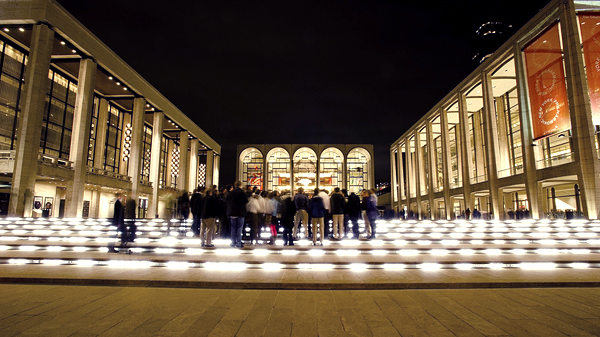
An article in yesterday's New York Times, "A Digital Future Not Quite Here for City Ballet," sharply points out the disappointing fact that the $9 million media suite built two years ago at the David H. Koch Theater -- home to the New York City Ballet and formerly the New York City Opera -- has sat completely unused. For full disclosure, this was a project I worked on during my time as director of New Media with NYCB under Ken Tabachnick, the general manager at the time. Believing firmly in the need for performing arts companies to embrace digital media, we worked hard to support such initiatives at NYCB.
The Times article focuses heavily on labor disputes and uncertainties around compensation of the parties involved as reasons for the unused media suite. But a "digital future" for New York City Ballet -- or any organization really -- requires a lot more than equipment and operating agreements to come to life.
In my opinion, until NYCB commits to shifting both their operational and artistic focus from live ballet performances for audiences in a physical theater, to creating and providing the world with the best ballet experiences particular to NYCB's aesthetic and standards -- no matter where, how, or through what channel -- they will struggle to have a future, digital or otherwise. A strategic plan and vision for how the company, and its artists, can exist and succeed in these new media must be developed and executed as an integral component of the company's artistic programming, not as an afterthought. Without a plan and a commitment to take these new opportunities as seriously as the artists take their work, I'd imagine any kind of discussions around logistics and compensation are likely to stall.
One of the most common arguments against dance becoming more accessible through digital media has been the fear that if a video exists online, or if people can see it in a movie theater, they won't come to a live performance. This makes no sense to me. The more quality access people have to the art form, the better. The multiple points of access for sports games contribute heavily towards making the live experience the ultimate experience, whether it's going to see the Yankees play, or going to your local high school's football game. Each media experience is unique in its format and in the information that is presented. It is designed for who, how, when and why it will be viewed and is part of a larger ecosystem of experiences dedicated to the sport.
New York City Ballet was built on artistic innovation and a re-imagining of a traditional art form for contemporary audiences. I love the company and the artists that are a part of it, so it kills me to see so little movement from NYCB when it comes to reaching a broader audience through new media. While there are many hurdles to cross and more to be discovered before digital media can become a fluid and revenue-generating component of the company's operations, the reality is there is much more New York City Ballet could and should be doing in this space, with or without a $9 million media suite.