iPhone app iPad app Android phone app Android tablet app More

Featuring fresh takes and real-time analysis from HuffPost's signature lineup of contributors
La Carmina

GET UPDATES FROM La Carmina
 

Japan Earthquake Anniversary: Struggling to Save Fukushima's Animals (PHOTOS)

Posted: 03/11/2012 10:12 am

"The Japanese government's lack of response regarding helping animals and people after March 11th has been is a disgrace," says Elizabeth Oliver, founder of Animal Rescue Kansai (ARK).

Days after the disaster, Fukushima's animals were starving. Rescue groups rushed to Tohoku to care for abandoned pets. Their work grew more difficult as the government enforced an exclusion zone, and shelters became grossly overcrowded.

What happened to Japan's animals after the 9.0-magnitude earthquake? We look back at a year of survival, and the ongoing efforts to rebuild.
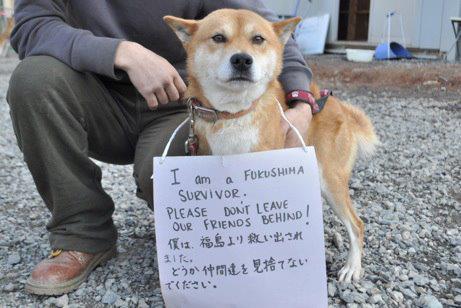
2012-03-09-8.jpg
(Photo courtesy of JEARS)

Immediately after the disaster, residents in the hardest-hit areas had to relocate. Since evacuation centers didn't allow animals, most left their pets behind. The evacuees thought they would only be gone a few days. It turned out they were not allowed to return at all.

Three local no-kill shelters formed an alliance and took action. Tim Exley, media and animal rescue volunteer of Japan Earthquake Animal Rescue and Support (JEARS) says, "We gathered what we could and with borrowed transportation headed almost 1,000 km (621 miles) to the north to help out."
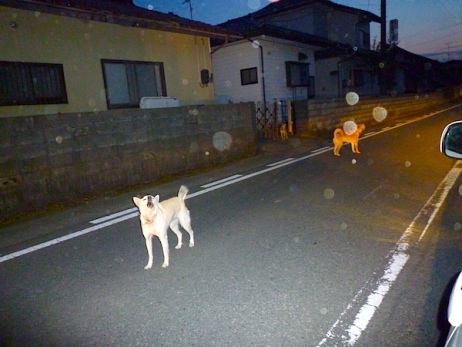
2012-03-09-14.jpg
(Photo courtesy of JEARS)

Rescuers were horrified by the condition of the animals. Skeletal dogs roamed ghost towns. Elizabeth Oliver of ARK says, "Around the 20-km [exclusion] zone, we found many pets had died from starvation, tied up or left in cages."

The groups transported as many as possible to shelters. ARK examined and vaccinated all the animals they boarded (over 200 to date) and searched for their owners. JEARS used their popular Facebook page to post updates and raise donations.

Sadly, nothing could be done for cattle and other livestock, too large to be moved or cared for. Most died in their stalls.

When the government enforced a 20-km exclusion zone in April 2011, thousands of animals were locked in. Volunteers could not legally enter to feed and rescue them. Nonetheless, some snuck into the "dead zone," risking arrest and radiation poisoning.

These hard first months were offset by stories of reunion and survival. A dog named Maruko was saved after being stuck under rubble for 11 days. Three weeks after the disaster, a dog was found floating on a roof, over a mile out to sea.

A popular video shows a dog who refused to leave his injured canine companion. And Tashirojima, an island inhabited mostly by cats, made it through the tsunami with minimal damage.

The freezing cold set in. In December 2011, the government let animal rescue groups temporarily enter the zone. However, many dogs and cats remain in the area.

As spring approaches, a new phase of problems unfolds. The surviving pets are breeding and their offspring are feral, meaning they're impossible to catch or adopt out. "The government still mistrusts private groups rather than embracing them," Exley says, making campaigns in the evacuation zone difficult.

Oliver is most concerned about the terrible conditions in government shelters. "These 'rescued animals' are warehoused in tiny cages, seldom taken out and lying in their own filth. This is likely to lead to stress, illness and death."

ARK and JEARS will continue to take in pets from Tohoku and other parts of Japan. Funds are most urgently needed for shelters, food and veterinary care. Here are six ways you can help.

What are your thoughts on the animal rescue efforts, and the Japanese government's lack of response?

A happy reunion
1  of  8
PLAY
FULLSCREEN
ZOOM
SHARE THIS SLIDE 
Go-Go was returned to his owner in Fukushima, after being housed at Animal Rescue Kansai. (Photo courtesy of ARK)
RATE IT!   |  
VOTE
Eh...
Kawaii!
CURRENT TOP 5 PICK YOUR OWN TOP 5
USERS WHO VOTED
NEW! CREATE YOUR OWN SLIDESHOW


Follow La Carmina on Twitter: www.twitter.com/lacarmina

"The Japanese government's lack of response regarding helping animals and people after March 11th has been is a disgrace," says Elizabeth Oliver, founder of Animal Rescue Kansai (ARK). Days after th...
 
 
  • Comments
  • 6
  • Pending Comments
  • 0
  • View FAQ
Comments are closed for this entry
View All
Favorites
Recency  | 
Popularity
12:13 PM on 03/12/2012
I would not send any donations to the Japanese gov't find an International Animal Rescue group that you can research and investigate first. the Japanese gov't took the donations that were sent to help the people of the nuclear disaster and used it for whaling.
photo
HUFFPOST SUPER USER
karen lyons kalmenson
i poem/paint, sometimes, i ain't
05:57 AM on 03/12/2012
the japanese government was overwhelmed
this may be true
but animals have feelings and are "people" too
their needs should always be a major part
of any equation
to be cared for and protected as citizens
of very nation
05:00 AM on 03/12/2012
It´s a total disgrace. I know every government/country will always put people first, but if I myself wasn´t allowed to either take my 3 cats with me into a shelter or not try and go back and find them, I would have stayed on the street with them and would have done anything, illegal or not, to get them back, respectively. But that´s just me. My cats are my children, full stop. And many other animal owner/lovers will feel the same.

The breeding is of course a major problem. What will happen to these animals? Most will obviously survive in the wild, hunting and living off scraps, but what about the radiation? They, and their offspring, will probably die painfully and slowly from this....

I wish there was something I could do. I feel helpless not being able to rescue these animals. However, there are many volunteers over in Japan who feel the same as I do, and I am sure they are doing *everything* they can (which is never enough, mainly because of the restrictions imposed).
12:15 PM on 03/12/2012
I feel the same also about my 2 dogs, you can send a donation to a legitimate international organization to help them help the animals.
03:15 PM on 03/12/2012
I have already donated to ARK last year, but don´t have a job at the moment so cannot help with money right now. But I actually meant *physically* helping anyway. I wish I could do that, but hey, I guess I´m involved in my own way helping with my local cat rescue working for the animals here, and as long as Japan knows my thoughts are with their beautiful country and its people and animals, I guess I have to contend with that.
05:45 PM on 03/11/2012
3.11.12

With as many people suffering and losing all their possessions, children and lives on such a grand
scale, it is very humbling and heartrending to know that even through all of that; a few people felt
compassionate enough to make a way for their animals. I always pray for our animal friends, because they are vulnerable and cannot speak. They deserve consideration and care because
we are their stewards, so any time the animals can be helped is time that we can share in the
satisfaction of knowing that we did what we could, even for the animals.
The government of Japan may not be the most compassionate or caring of people, but like
anywhere else, if enough Japanese people show the government that they want just a 'semblance' of care and compassion shown to the animals, someone, somewhere will get the point! I never underestimate the power of the 'human spirit'. If people are willing to risk arrest to rescue animals
in a restricted area, they intend to see to it that some animals will be saved even at a sacrifice.