
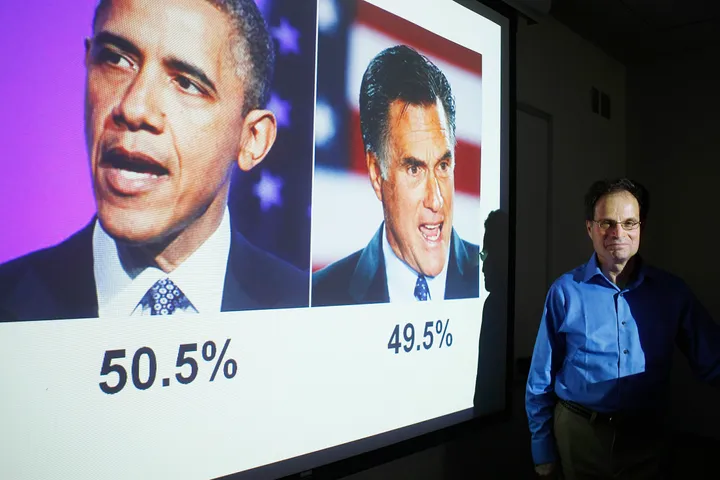
The latest round of political endorsements has started. Madonna, George Clooney, Jay-Z, and Beyonce endorsed President Obama, Rick Santorum endorsed Missouri's Todd Akin for Senate, Jack Nicklaus and Scott Baio from Happy Days endorsed Mitt Romney, and Clint Eastwood sort of endorsed Romney. In the next few weeks, newspapers around the country will continue their tradition of endorsing political candidates.
But should newspapers continue to endorse presidential candidates? It's a longstanding tradition, but is it outdated? Most papers still do it, but some decide not to. In general, their influence has been decreasing.
Many papers see political endorsements as a journalistic obligation to their readers. In January, the Chicago Tribune defended its tradition of endorsing candidates, stating,
"...We want to inform our readers and encourage them to push an agenda for a more vital community. The most direct way they do that is in choosing who will lead their government. In our editorials, we explain what we think should be done about government pension costs, educational shortcomings, political dysfunction and more. We offer our opinions on issues from the mundane to the cosmic. Not least important, we endorse candidates, from the top of the ballot to the bottom. To arrive at our choices, we send out questionnaires, scrutinize voting records and public statements, and interview hundreds of candidates. We make our evaluation of which ones will best serve the interests of the public. And then we tell our readers."
There still is some prestige from receiving a newspaper endorsement, especially during the presidential primaries. In 2004, John Kerry's floundering campaign got a boost from endorsements by several Iowa papers, while John McCain's 2008 comeback was helped by newspaper endorsments in New Hampshire. Some candidates mention newspaper endorsements in their TV ads.
However, as everyone knows, newspaper circulation has been in steep decline over the last decade. In addition, unlike 30 years ago and beyond, people can get plenty of political opinions from the Internet, cable TV, and talk radio. Celebrities get into the act as well, including Madonna and Oprah endorsing Obama, and Chuck Norris endorsing Mike Huckabee four years ago. A 2008 Pew Research Center for People and the Press survey found that 69 percent of responders said that newspaper endorsements had no impact on their vote and that they were slightly more likely to be swayed by an endorsement by Oprah Winfrey or their minister, priest, or rabbi. In her 2000 book, Everything You Think You Know About Politics...and Why You're Wrong, Penn Communications Professor Kathleen Hall Jamieson found that only 1 percent of people said that newspaper endorsements greatly impacted their vote, while 10 percent said it somewhat impacted their vote.
In many cases, the presidential endorsements are predictable. Most liberally oriented papers endorse the Democrat, while most conservative papers endorse the Republican. According to Editor and Publisher magazine, in 2004, John Kerry received 213 newspaper endorsements, while President Bush received 205. In 2008, Barack Obama received 273 newspaper endorsements, while John McCain received 172. In 2008, some newspapers, including the Philadelphia Inquirer, endorsed Obama, but also ran an endorsement of McCain by dissenting editorial board members.
Most American newspapers still endorse presidential candidates. However, some major newspapers don't endorse political candidates, including two major national papers, USA Today and the Wall Street Journal, which stopped endorsing candidates after its 1928 endorsement of Herbert Hoover. In January, the Chicago Sun-Times announced that it would halt endorsements, and the Atlanta Journal Constitution stopped endorsing in 2009.
One reason why newspapers should halt national endorsements is that many readers and nonreaders believe that such endorsements show that the papers' coverage will be biased in favor of the candidate that they're endorsing. In reality, the Editorial Board meets separately from the rest of the newsroom, and the paper's endorsement has no effect on the paper's coverage. If a paper's Editorial Board endorses Obama, the rest of the paper won't hesitate to give extensive coverage of a scandal involving Obama, if one arose. The problem is that most people aren't aware of that separation. They assume that if an Editorial Board gives mostly liberal opinions and endorsements, the rest of the paper will have a liberal bias as well. The same assumption would be made for Conservative Editorial Boards and newspapers.
Newspapers are very wary about reporters' conflicts of interest due to the concern that their reporting will be deemed biased by their readers. Most media outlets prevent their reporters from expressing their own political views and they can't wear campaign buttons, volunteer or donate to political campaigns, put up political signs on their front lawns, or attend campaign rallies. Yet, that concern doesn't seem to translate to endorsements by the editorial board.
The best solution would be for newspapers like the Philadelphia Inquirer and other major regional papers across the country to just stick to giving endorsements for local races, such as State Representative, local judges, mayor, governor, U.S. Senate and House, state auditor, township commissioner, and ballot initiatives. Those types of endorsements tend to have more sway with the voters.
Local newspapers have a distinct advantage when it comes to local races. For most of the major local races in the Philadelphia area, the Inquirer and Daily News Editorial Boards will interview each candidate and get a sense of their demeanor and where they stand on positions important to local voters. Most local candidates can't afford significant TV ad time, so most people don't know much about these candidates. The local paper's informed endorsement can help voters make up their mind.
Another possible approach is for Editorial Boards to just set forth the candidates' positions on the issues, without giving their opinion on who to vote for. This is the approach taken by many newspapers' voters guides for local races. That way, the newspapers could give the readers detailed and accurate information about the presidential candidates' positions, without taking sides.
At any rate, as print newspapers continue to fade away, so should their tradition of endorsing presidential candidates.
This article was first published on Philadelphia Magazine's website thephillypost.com