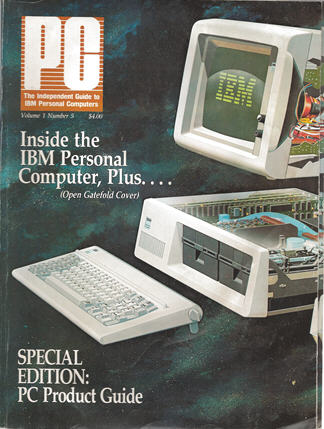
IBM PC from an early edition of PC Magazine
An Anniversary for Me, Too
On August 12, 1981, IBM introduced its first personal computer known as the IBM PC.  I remember it well because I wrote the EasyWriter manual to accompany the word processing program that IBM sold along with that original PC.  I first saw the PC in April, 1981 after being hired as the "Director of Publications" at Information Unlimited Software, a small software firm in Kensington, California that IBM contracted to port the software from the Apple II to its as-yet-unannounced PC. I left the software company and became editor of PC Magazine during its first year of operation.
The PC wasn't the first personal computer. Apple was doing well with its Apple II and Radio Shack was on its second generation of PCs by the time "Big Blue" entered the market. There were also several PC makers in the business end of the market with machines that ran the CP/M operating system.
But it wasn't until IBM joined in that businesses and even most consumers started taking personal computing seriously.  Up until that time, personal computers were mostly for hobbyists and those willing to live on the "bleeding edge" of technology.
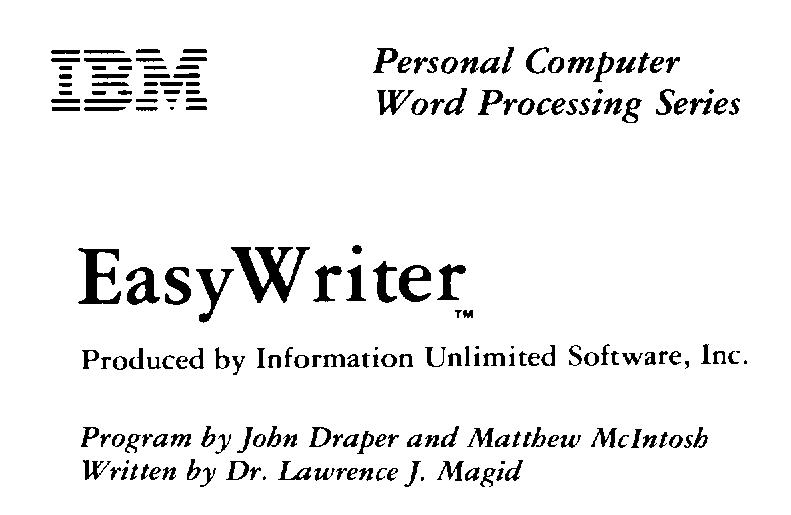
Cover sheet from EasyWriter manual
The first PC came standard with 16 kilobytes (KB) of memory at a bare-bones price of $1,265 without a monitor or a diskette drive.  A full-blown system with 64K of memory, two floppy drives, a display/printer adapter card and a monochrome screen cost $3,735 in 1981 dollars. Adjusting for inflation, that's $9,275 today.  IBM's dot matrix printer and its required cable added another $610 to the price tag for a grand total of $4,345. In November of 1981, I wrote an article for PC Magazine called "PC on a Budget" where I wrote about how to assemble your own PC for "only" $3,399.
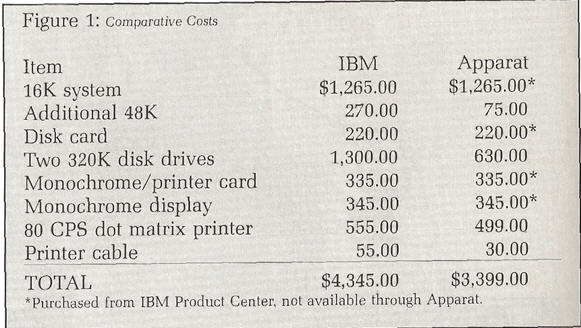
Chart from PC Magazine article by Larry Magid showing cost of PC at retail or if you assemble it yourself
First IBM PC vs. Today's PCs and Smartphones
To put the power of that PC into perspective with today's technology consider that a modern but modest PC with 4 gigabytes of memory and a 160 GB hard drive has more than 65,000 times the memory and a million times the storage of that first PC. Â Even today's smartphones have far more memory, storage and processing power than IBM's entry into the market.
IBM is no longer in the PC business. It sold its personal computer division to China-based Lenovo in 2004. Lenovo is now one of the leading makers of laptop PCs with its popular ThinkPad line.
Follow Larry Magid on Twitter: www.twitter.com/larrymagid
Happy birthday IBM !!
http://goo.gl/xSSpj
Bill Gates saw an opening with IBM's not-knowing-what-to-do:
http://www.youtube.com/watch?v=DcWjOodAtoE
(dramatized but based on real life)
And taken to illegal extremes, but by then it was too late:
http://www.zdnet.co.uk/news/desktop-os/2004/07/13/the-legacy-of-microsofts-1994-consent-decree-39160392/
Compaq first cloned the IBM PC's BIOS. IBM sued. IBM lost, which gave birth to "IBM Compatible".
REAL competition (Mac, Atari, Commodore, Amiga, etc) eventually lost due to IBM's brand name, combined with these competing platforms (especially Commodore and Atari) being deemed "game machines" when they were far ahead of their time in terms of multimedia and multitasking capabilities, especially the Amiga. And "IBM Compatible" helped as well. People love names and marketed tidbits over reading full books. Congress isn't immune either, but I digress.
Distributed computing, via IBM or any competing personal computer, was great. Freedom from mainframes and the "eggs in one basket" approach. But that approach is returning, and keep an eye on the terms of service agreements. You might be giving up far more than you realize...
How did PC's fetter IBM's mainframe monopoly?
Initially the personal computer busted the information monopoly enjoyed by stock brokers, doctors, bankers, lawyers, pharmaceutical companies, governments and other groups. The "library" became overthrown as the central repository of information, archived and indexed by its standards rather than by the needs of the user but now transformed into an exceedingly valuable specialized information resource.
There can be no evasion of fundamental new and good political forces and anti neo-Feudalism corporatist forces unleashed by the PC revolution and currently busy wreaking its welcome havoc.
We must remain alert for various reactionary forces which have been, and will be employed to water down, sow "clouds" of confusion, dilute, oppose or even stop the wonderful individual liberations which this PC revolution has entailed.
Good post, but it's a combo of PC and the Internet that really made fundamental advances and freedom... and new challenges to profit on and exploit. As in my direct response to the article, "eggs in one basket" is the future, and if the terms of service say the company will take a royalty-free copy of intellectual property the user creates, that's a no-no. They would profit from it long before the user ever could begin to do so.