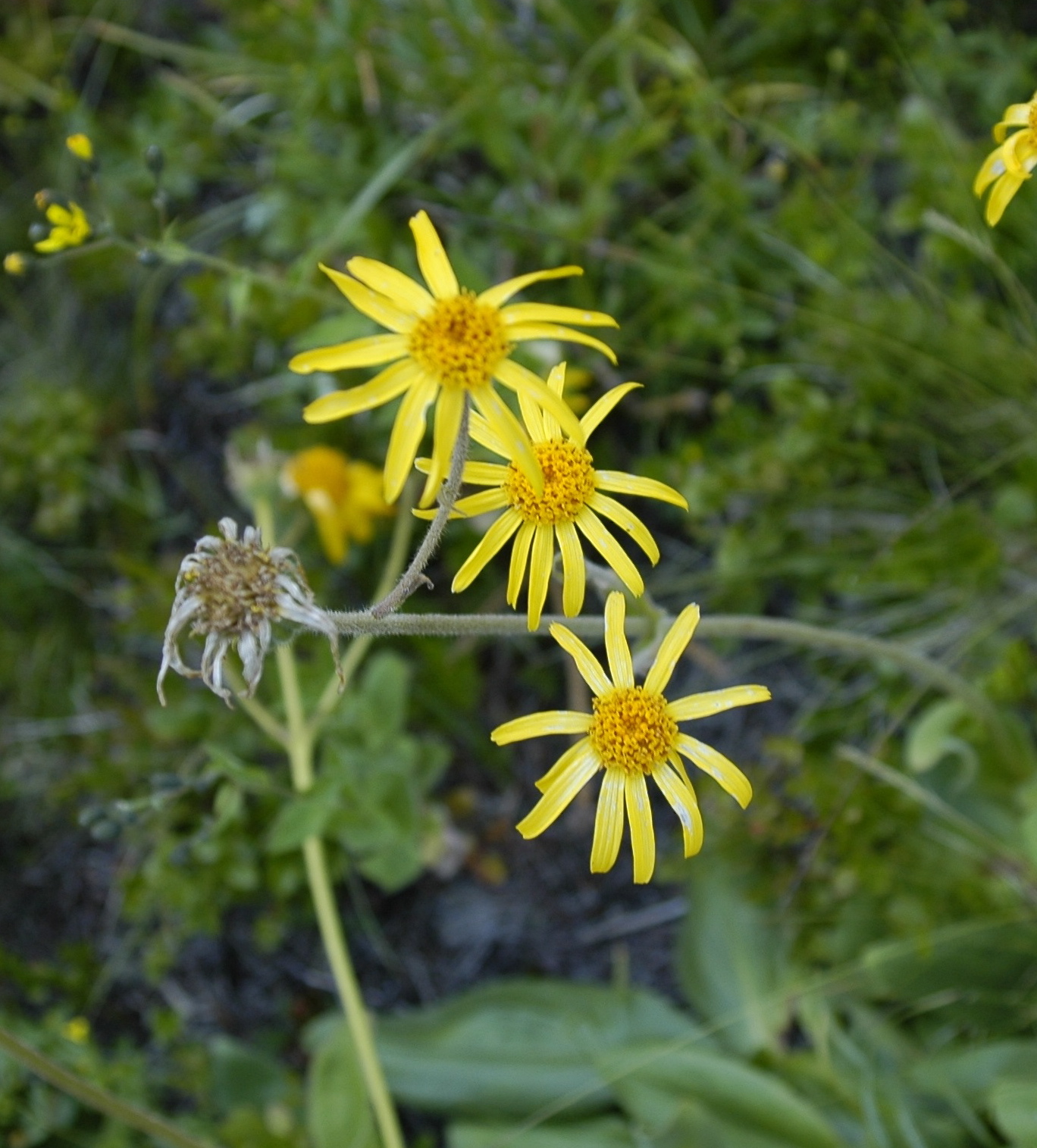
Known for its remarkable healing properties, Arnica montana has been used for centuries to treat the effects of accidents and injuries. The name refers to the genus and species of the yellow flowering plant, which is endemic to the mountains of Central Europe. This plant is sometimes referred to as Leopard's Bane and is popularly known as the Mountain Daisy in homeopathic usage. Thousands of physicians and millions of patients around the globe have successfully used Arnica to treat the bruising, soreness, inflammation and swelling that results from all types of physical trauma. Savvy consumers are demanding safe, non-toxic treatments and homeopathic Arnica may represent one of the best options available due to its reputation for safety, effectiveness, ease of use and broad applicability.
Clearing Up Some Misconceptions:
A bit of an odd situation has arisen because although homeopathic medicines are FDA approved and regulated, they have not been widely embraced by mainstream medicine and, as a result, there is a lack of information and many misconceptions regarding the nature and use of homeopathic products. With recent media attention (1) (2) focused on the use of Arnica for healing injuries, it is important to clarify those misconceptions and set the record straight as to how it can be properly used to maximize its benefits. In addition, there has always been a good bit of confusion in the media about herbal and homeopathic preparations in general -- and this identity problem applies to Arnica as well as many other homeopathic products.
Most of the general public is pretty well acquainted with herbal products. Also called botanicals or phytomedicines, herbal medicines are prepared from plant materials and administered in their natural form for a wide variety of ailments. Arnica has been historically used as an herbal preparation, however, the most common over-the-counter and only FDA approved and regulated form available is homeopathic Arnica montana. Sold in most natural food stores, it is important to understand that homeopathic Arnica is not an herbal product nor is it a nutritional supplement.
Homeopathic medicines are made from plant, mineral and animal substances, but it is the manner in which they are prepared that makes them unique. Homeopathic medicines are diluted to such a degree that skeptics claim the small doses are merely placebos. They argue that, in theory, it is impossible for them to have any therapeutic effect because it cannot be explained how they work. Experienced homeopathic practitioners and patients make the counter-claim that they actually work in practice. While the controversy rages on, the popularity of homeopathic medicine continues to grow.
Indications for Homeopathic Arnica:
Since homeopathic medicines have very specific indications for their usage it is important to understand what circumstances are best suited for Arnica (3). It is a perfect fit for all kinds of childhood bumps, bruises and contusions, and many occupational and sports injuries. As a general rule, homeopathic Arnica is a prime candidate for any accident or injury that results in physical trauma consisting of bruising, tissue damage, broken blood vessels, black and blue skin discoloration and swelling. It is most specific to blunt forms of trauma, especially to soft tissues. Arnica can also be of benefit in strains, sprains and muscle injuries.
In fact, most homeopathic practitioners believe that the administration of Arnica is the one best course of action to take in the early stages of all cases of physical trauma, and that homeopathic Arnica should be stocked in all clinics, ambulances, emergency departments, school nurse's offices, first-aid kits and home medicine cabinets.
When administered in a timely fashion, Arnica montana can prevent a great deal of suffering in both the short and longer term. I have personally witnessed remarkable results in my own medical practice with bruises and hematomas resolving in short order, much more quickly than would be expected if left untreated. (It should be noted that bruising unrelated to physical trauma can be caused by a wide range of medical conditions. This type of bruising is not likely to respond to Arnica and should warrant further medical investigation.)
The legendary efficacy of homeopathic Arnica has made it the choice of many professional athletes and sports teams. There has been a great deal of attention given to sports-related head injuries in the media lately and, in my opinion, Arnica should be the first line of defense in cases of head trauma (4). Even surgeons and especially plastic surgeons are turning to Arnica for pre and post-operative use to help speed recovery from surgery. I suspect this may have something to do with a research study published in the Archives of Facial Plastic Surgery that noted less bruising in face-lift patients treated with Arnica (5). Research studies investigating the effects of Arnica have generally yielded mixed results. A sampling of studies that have concluded that Arnica can assist in the healing process are listed at the end of this article (6) (7) (8).
Most homeopathic physicians would concur that homeopathic Arnica can significantly reduce morbidity in trauma patients and can reduce complications and help speed recovery even in cases of internal bleeding. My own clinical experience has me convinced that the proper use of Arnica would revolutionize emergency trauma treatment protocols.
Guidelines for Administering Homeopathic Arnica:
There also tends to be a lot of confusion regarding the dosing of homeopathic medicines. They should not be used on a prolonged daily basis without professional supervision because, unlike conventional pharmaceuticals, homeopathics act according to a stimulus-response principle. While regular drugs are usually employed to suppress or prevent symptoms from occurring and are sometimes taken indefinitely, homeopathic prescriptions are designed to stimulate a healing response. Thus, a few doses are often sufficient to rouse the body's own innate healing mechanism into action.
In more practical terms, the frequency of the stimulus applied is much more important than the quantity of the homeopathic medicine taken at any one time. The mildest of bruises and injuries will often respond quite nicely to a few applications of a low strength topical form of Arnica, which is available in a variety of creams, gels and ointments. Be advised that topical Arnica should not be applied to broken skin or open wounds. A more appropriate option for cuts and scrapes is topical homeopathic Calendula, which is a preparation made from marigolds.
Moderate to more severe injuries will respond better to oral Arnica, which is commonly available in a few potencies of increasing strength ranging from 3x, 6x, 6c, 12x, up to 30x, and 30c. For example, a moderate bruise from a fall can be handled with two or three doses per day of a lower-strength Arnica for a couple days. A more serious injury, in addition to necessitating a thorough medical evaluation at an appropriate facility, is better handled with more frequent doses of a higher strength of Arnica, like a 30x or 30c. One could administer a dose every hour or even every 10 minutes during the first hour depending upon the severity of the condition. Again, serious injuries should always be given proper medical attention.
Homeopathic Arnica is safe, easy to use, and its power to rapidly heal is often a revelation to the newcomer. Everyone should have a vial of those little white pills nearby in the unfortunate event of a mishap.
Photo Credit: http://commons.wikimedia.org/wiki/File:Arnica_montana_20100.jpg
References:
(1) Seeking Relief Through Arnica by Bee-Shyuan Chang, New York Times, September 14, 2011
(2) Video: Dr. Mehmet Oz recommends Arnica for bruising on the Dr. Oz Show.
(3) Nature's Materia Medica, edited by Robin Murphy, ND, Lotus Health Institute, Blacksburg, Virginia, 3rd Edition, 2006
(4) Larry Malerba, DO, DHt, "Unexpected Help for Victims of Traumatic Brain Injury", North Atlantic Books Communities, July 13, 2011
(5) Seeley BM, Denton AB, Ahn MS, Maas CS. "Effect of homeopathic Arnica montana on bruising in face-lifts: results of a randomized, double-blind, placebo-controlled clinical trial." Archives of Facial Plastic Surgery Jan-Feb; 8(1):54-9, 2006.
(6) R. Widrig, A. Suter, R. Saller & J. Melzer. "Choosing between NSAID and arnica for topical treatment of hand osteoarthritis in a randomised, double-blind study". Rheumatology International 27 (6): 585-91, 2007.
(7) Otto Knuesel, Michel Weber and Andy Suter. "Arnica montana gel in osteoarthritis of the knee: An open, multicenter clinical trial" Advances in Therapy Volume 19, Number 5, 209-218, DOI: 10.1007/BF02850361, 2002.
(8) Robertson A, Suryanarayanan R, Banerjee A. "Homeopathic Arnica montana for post-tonsillectomy analgesia: a randomised placebo control trial." Homeopathy Jan; 96(1):17-21, 2007.
Larry Malerba, D.O., DHt is the author of "Green Medicine: Challenging the Assumptions of Conventional Health Care," published by North Atlantic Books. He has been a practitioner, educator and leader in the field of holistic medicine for more than 20 years.
www.DocMalerba.com
Green Medicine on Facebook
Follow Larry Malerba, D.O. on Twitter: www.twitter.com/@docmalerba
Judith Acosta: A Personal Case for Classical Homeopathy, Part I
Judith Acosta: A Personal Case for Classical Homeopathy: Part II
I've actually done an experiment where I used topical arnica on half of a big bruise and left the other half untreated. The bruise faded the same on each side.
Okay, it's not the most scientific study but if arnica really made a difference, shouldn't it show a difference?
1. Effects of the Arnica 30X on 1995 Oslo marathon runners (1998)
http://www.sciencedirect.com/science/article/pii/S0965229998800782 // Arnica reduces muscle soreness
2. The effect of homeopathic remedies Arnica montana & Bellis perennis on post-partum bleeding (2005)
http://www.ncbi.nlm.nih.gov/pubmed/16036165 // bleeding after delivery
3. Homeopathic arnica therapy in patients receiving knee surgery (2006)
http://www.journals.elsevierhealth.com/periodicals/yctim/article/S0965-2299%2806%2900041-0/abstract // arnica for inflammation
As you say, she spams links, thinking quantity somehow trumps quality.
The writing is on the wall for homeopathy as it continues down the path to the dustbin of history.
See: http://www.quackometer.net/blog/2011/11/liverpool-homeopathic-hospital-has-gone.html
It works.
http://www.lhup.edu/~DSIMANEK/cargocul.htm
"The first principle is that you must not fool yourself--and you are the easiest person to fool."
Face facts, homeopathy is a sham.
Secondly, it is not true that patentability determines whether a company is willing to devote resources to manufacturing and marketing a drug. The existence of generic drug companies demonstrates that your statement is incorrect.
You may have your own opinion but you may not have your own facts.
http://bit.ly/aojfhY (1986) // Arnica along with Bryonia & Rhus Tox for fibromyalgia
2. American Journal of Homoeopathic Medicine (http://www.homeopathyusa.org/journal)
Homeopathic treatment of dental neuralgia by Arnica and Hypericum.
Albertini H, Goldberg W, Sanguy B, Toulza CL., 1985, 3, pp. 126-129. // 60 people received either 4 pilules of Arnica 7C alternated with 4 pilules of Hypericum 15C every 4 hours or placebo administered in the same way. Pain levels were assessed over 3 days from the beginning of the trial. It was found that 12 of the 30 people who received the placebo had a positive response to this intervention, and 23 of the 30 people (76%) given the homeopathic medicines responded positively to these.
3. Journal of Alternative and Complementary Medicine (Liebert)
Arnica montana 4X for Healing of Wounds After Hallux Valgus Surgery Compared to Diclofenac (2008)
http://www.liebertonline.com/doi/abs/10.1089/acm.2007.0560
There goes the neighorhood.
Arnica montana 30c for post-tonsillectomy analgesia (2007) // pain after tonsils removal
http://www.ncbi.nlm.nih.gov/pubmed/17227743
1) that study only had 190 patients, 89 (or 42%) of which did not finish the study, and that alone makes it unreliable;
2) the study looked at:
(a) patients' pain score;
(b) consumption of pain pills;
(c) followup visits to their GP;
(d) antibiotic usage;
(e) day their swallowing returned to normal;
(f) day they returned to work; and,
(g) whether they had to readmitted for bleeding.
Only on (a) was any difference observed, which means the results are clinically insignificant.
What difference does it make if people rate their pain as lower if they are using the same amount of pain killers, antibiotics and are readmitted for bleeding just as often and there is no difference in their ability to swallow normally or return to work?
Yet another shoddy study with weak results that homeopaths trumpet. A person who genuinely considers this study to be good evidence for homeopathy either did not read it or did not understand what they read. In either case, it demonstrates a lack of professional competency and should preclude being permitted to give people health advice.
"RESULTS: Eight trials fulfilled all inclusion criteria. Most related to conditions associated with tissue trauma. Most of these studies were burdened with severe methodological flaws. On balance, they do not suggest that homeopathic arnica is more efficacious than placebo.
CONCLUSION:
The claim that homeopathic arnica is efficacious beyond a placebo effect is not supported by rigorous clinical trials."
I think that just about sums it up.
“Preparation for Birth by Homeopathy: Experimentation by Double-Blind Versus Placebo”,
Pierre Dorfman, Marie Noel Lasserre. and Max Tetau,
94 (April 1987): pp. 77-81
// Arnica along with Caulophyllum, Actea racemosa, Pulsatilla and Gelsemium, all in 5C potency
"The average labor time of the women given homeopathy was 5.1 Hours, while the Placebo Group was 8.5 Hours. Only 11.3% of women given homeopathy had any abnormal labor, while 40% of Placebo Group had an abnormal labour"
Effect of Homeopathic Arnica montana on Bruising in Face-lifts (2006)
http://archfaci.ama-assn.org/content/8/1/54.long
"No subjective differences were noted between the treatment group and the control group, either by the patients or by the professional staff. No objective difference in the degree of color change was found. Patients receiving homeopathic A montana were found to have a smaller area of ecchymosis on postoperative days 1, 5, 7, and 10. These differences were (P
So how does significant improvement with the use of Arnica prove that homeopathy doesn't work?
Do you have any high quality studies that show that homeopathic dilutions of arnica (or any other substance) is efficacious for any specific condition?
The studies cited by Malbera were not high quality studies and two of them did not even test homeopathic dilutions.
Do you not think that you should have such evidence before you tell people that purchasing a product from you will cure their ailment?
Nah, they use it because people who should know better and check their facts them them it works and it becomes a self-perpetuating myth.
The amount of sporting bruises I've collected over the years always healde at the same rate, arnica or not. The only thing that made any difference was the massage rubbing the gel in.
http://www.youtube.com/watch?v=oqOAVCE_Z1c
Are the manufacturers still using the bible as part of the manufacturing process?
If so, what version of the bible?
When is the bible smacking routine used during the manufacturing process...before, after or during the "shaking" step?
Just how does arnica taken orally, interrupt the physiological inflammatory response at the site of an injury?
Inquiring minds want to know.
The medicines are now made through automated machines...
Skeptics can make fun of homeopathy...but they cannot seem to understand it.
There is no way to tell one homeopathic preparation from another, or from distilled water. While some noise has been made about nuclear spectroscopy, it is just noise (the phenomenons noted cannot be repeated, and nonetheless did not distinguish different preparations). The FDA cannot tell them apart, and neither can Larry Malerba or Dana Ullman.
You must rely on faith that a homeopathic remedy was prepared as claimed, very much the same as Kosher beef. There is nothing wrong with faith in your local Kosher butcher, but then again a Shohet does not offer malaria prevention recommendations. The butcher will be honest with you about advocating Kosher, and not even try to dream up a scientific rationale.
The problem is that:
1) although the belief in a life force predates homeopathy by, at least, a millennium there is no evidence that it actually exists and evidence to support the belief that it does;
2) the principles of homeopathy were developed before we understood that many diseases are caused by germs and not by disruptions in a life force;
3) homeopathic dilutions were developed prior our understanding that there is a limit to which you can dilute a substance beyond which the substance no longer remains; and, most importantly,
4) when homeopathy is subjected to rigorous testing it consistently fails to produce results.
Homeopathy is no less difficult to understand than any other religious belief.
I am concerned because of how popular homeopathy is becoming... look at how money corrupted Big Pharma. Is the same thing happening to (dare I say it) big homeo?
To distinguish homeopathic remedies one from the other: nuclear magnetic resonance spectrum; Raman laser spectroscopy; nuclear spectroscopy; measuring the physiological variability in the human body
www.extraordinarymedicine.org (see High Dilution Studies)
http://homeoresearch.blogspot.com
www.ncbi.nlm.nih.gov/pubmed/16296914
Obviously something other than water is being detected in all of these tests. Since that is the case there must be something there to measure besides water..........don't you think?
http://bit.ly/edUwqd
published in Elseiver
Citation (3) is simply to a book on homeopathy used to support the statements as to homeopaths' beliefs.
Citation (4) is to another article by this author that was published in a magazine titled Dynamic Living, which is not a peer-reviewed.
Citation (5) is a study of only 29 patients that only showed statistically significant results on days 1 and 10 (but not on days 5 and 7) and the results of which were abstracted by the authors as "No subjective differences were noted between the treatment group and the control group, either by the patients or by the professional staff. No objective difference in the degree of color change was found." In other words, it found the opposite of what Malbera claims.
Citations (6) and (7) are not homeopathic products. Citation (8) was a study of 190 patients of whom only 54% completed the study, which alone makes the findings unreliable.
Collectively, citations (6), (7) and (8) demonstrate the cherry-picking of studies, which is one of the most common fallacies used by homeopaths.
Although Malbera describes the studies of Arnica as showing "mixed results" he then only provides citations to ones that reinforce his belief (notwithstanding the fact that not one of those studies can be considered reliable).
No control group, no placebo, extremely high risk of bias.