
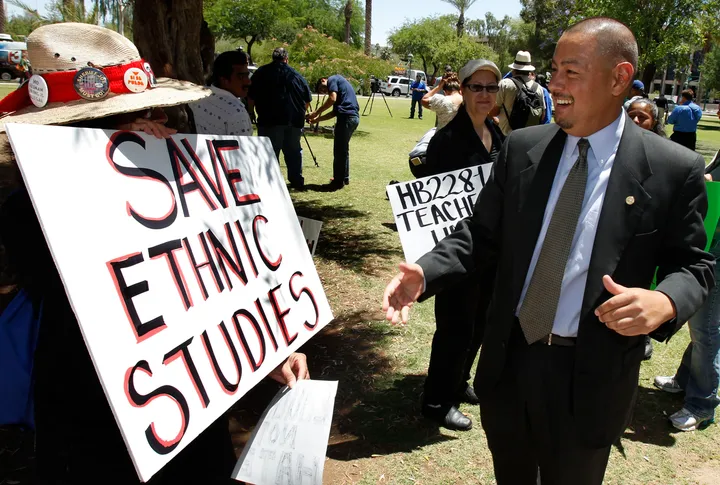
When I read about the battle over so-called ethnic studies in Arizona and elsewhere, I am reminded of my own personal struggle against ignorance.
It began the day I was born and continues to this day.
I think that I am not alone in this struggle.
There is just so much we don't know, that I think if we are not struggling against ignorance then we are succumbing to it.
The truth is often unpleasant -- sometimes very unpleasant. I feel better about myself when I don't think -- and would feel even better if I never knew -- about the working conditions in the factories in which my computer or my shoes were made or the age of the workers or how little they were paid.
I don't find it pleasant discovering just how cruel humans have been to each other in this country and elsewhere throughout history.
Sometimes I wish I didn't know how small we are in the galaxies or how miniscule human history is in the long forward march of time.
I prefer not to think about deterioration, disease and death.
I do get some comfort -- perhaps a little sadistic -- sharing these unpleasant realities with my students, liberating and burdening them with the truth. They don't always show their appreciation. At least not right away.
But there is great value in the truth just as there is value in many unpleasant things. Having children, for example, can be wonderful, but for most of us there are unpleasant moments. Staying in good physical shape is a huge blessing that is often the result of unpleasant physical exertion and disciplined eating habits.
Our greatest hope as a species is our capacity to be enlightened. So let's not cower from the unpleasantness of our country's past. Instead, let's try to understand it.
If the truth about who we are and what we've done makes people angry, do we really soothe that anger by covering up the truth?
Or only postpone it?
Education is not provocation. The truth, well taught, helps us realize that the human story is one of vulnerability and fear that has often turned to savagery and exploitation but ultimately has produced great enlightenment.
Without that enlightenment we're pretty much just high-tech savages.
Without truth how can we have enlightenment?