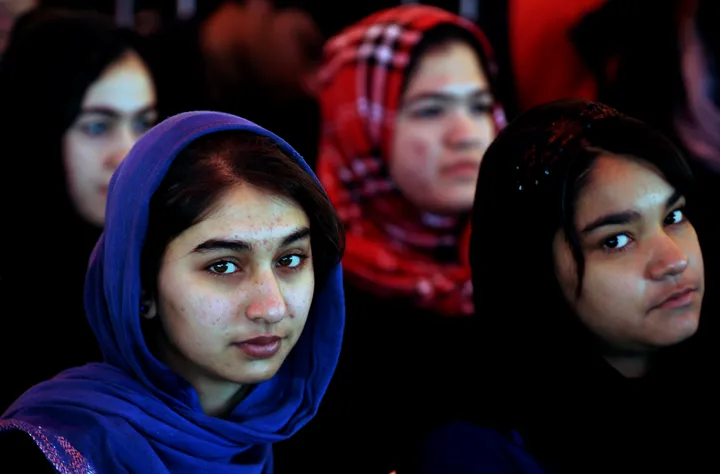
Consider a world in which you have to sneak out of your home to read this blog post. A world where publicly expressing your thoughts -- or privately penning them in your own journal -- could mean risking your life.
Masha Hamilton, founder and creator of the Afghan Women's Writing Project (AWWP), is a person changing this reality and making a cultural conversation happen. AWWP came from an idea based on Masha's longtime interest in Afghanistan and the powerful women she regularly encountered during her trips there. AWWP strives to give women a voice without censorship -- an almost non-existent privilege for most women in a country where male relatives and media largely control women's freedom of expression. Volunteer teachers staff the project and instruct Afghan women via the Internet.
Since launching in 2009, participants and volunteers working with AWWP has grown considerably. A few months ago, I joined as a writing tutor and had the opportunity to hear powerful stories while working in partnership with program participants on new pieces.
In a short interview, Masha and I discussed her own story -- her thoughts about the project, its direction and how volunteers can make an immediate impact.
Laura Cococcia: Since launching AWWP, you and your team have achieved amazing progress -- not only with the project itself, but also with getting the word out. What have you found most rewarding about the project so far? The most challenging?
Masha Hamilton: The most rewarding aspects have certainly been reading the essays, watching the women writers delve deeper on a weekly basis, and the satisfaction of knowing we are creating an outlet for at least some voices.
It's also been satisfying to work with an amazing volunteer team of authors, teachers, web designers, etc. I'm also very excited about our latest effort, to raise funds to establish Afghanistan's first women's only Internet cafe.
The challenges? Simply keeping it all organized, and getting readers to the blog to comment on the work these women are doing, so that they feel their voices are being heard, and so that we can engage in a creative and intellectual exchange.
LC: Can you share any feedback you've received from the women in Afghanistan participating in the project?
MH: The women involved in the project are grateful to be part of it, and excited about sharing their work. At the same time, they often work under enormous challenges. They sometimes must keep their work secret from their family members. And of course, they are working in English, which is often their third or fourth language.
LC: What can we -- as a global, national and online community -- do to help with the Afghan Women's Writing Project?
MH: Helping is as simple as reading a blog entry and making a comment. You can also do exactly what you are doing here -- spread the word, so that these women writers become even more connected to writers and readers here.
Find out more about how you can get involved in the Afghan Women's Writing Project here.