The Passover story is inspiring and the holiday is a time to family and friends. But I'm in the midst of Passover preparations, so right now it's all about the food.
Most of the symbolic foods associated with the multi-course Seder meal that begins Passover don't allow for much creativity. There isn't much you can do to change bitter herbs, a roasted lamb shank, a roasted egg, and a green vegetable.
But one -- charoset (sometimes spelled haroset or charoses) -- lets you roam, in a good way. It symbolizes the mortar the Jews used to build structures when they were slaves in Egypt. Just about the only requirements for charoset are that it should contain fruit and spice, and should end up resembling mortar.
Whether you chop, grind, or pound the ingredients, after you add liquid to bind them, all you have to do is mix and refrigerate the charoset for at least a few hours so the flavors can meld. Charoset can be made a day ahead of time, or even two if that's better for you. If you find a recipe that looks appealing, you can adapt it to fit your pocketbook, food preferences, available ingredients or any other constraint.
Regional variations of charoset showcase the ingredients and combinations of the locale they were developed. Charoset recipes from the Middle East tend to have dried fruits common to that region, such as dates and apricots, and spices such as cardamom. Versions from the southern U.S. may include pecans and Greek and Italian versions often include pignolas/pine nuts.
The common ground:
- Fruit -- fresh and/or dried
- Spices
- Liquid
The options:
- Nuts and/or seeds (optional)
- Sweetener (optional)
The variations:
Consistency -- Chopped roughly, processed to a mortar-like texture, or ground to a fine paste.
Preparation method -- Some recipes simply require combining all the ingredients and chilling the charoset. Others (typically recipes that include dried fruit) involve simmering the fruits in liquid before combining the ingredients.
Taste -- Depending on which spices are used and how much, charoset can be sweet, spicy and/or hot.
Ingredients -- Add or subtract to fit your tastes. This is not an exhaustive list, as I'm sure there are variations I haven't seen, or even imagined. But this list includes the ingredients I've seen included in my decades of charoset-making, and more importantly, charoset eating. I am not advocating using all these ingredients in 1 recipe. (Heaven forbid!) Rather, find a "set" of ingredients that you like and fashion your own version or look for a recipe that includes those elements.
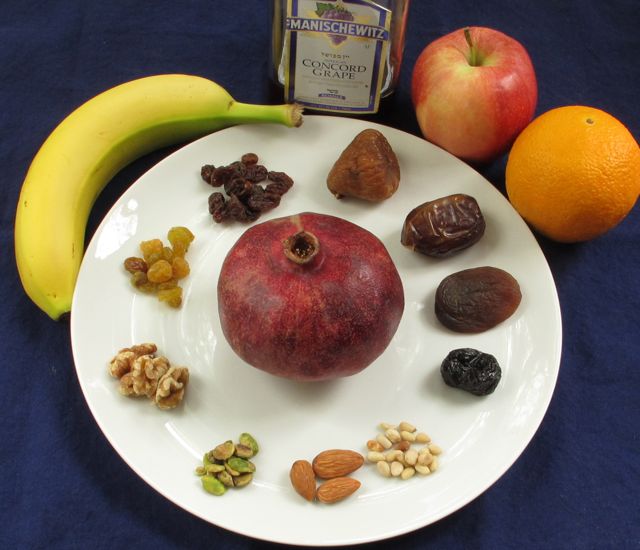
- Fresh fruit -- Apples, bananas, coconut (a drupe, which is also sometimes loosely classified as a nut or seed), lemons (grated rind), mangos, oranges, pears, pomegranates, strawberries,
- Dried fruit -- Apples, apricots, dates, figs, prunes, raisins (dark and/or golden),
- Nuts -- Almonds, chestnut paste, hazelnuts, pecans, pistachios, pine nuts (pignolas), walnuts
- Seeds -- Poppy, sesame,
- Spices -- Allspice, cardamom, cayenne pepper, cinnamon, cloves, cumin, ginger, nutmeg, black pepper
- Sweetener -- Honey, jam, sugar (Although I haven't found a recipes using agave or stevia, either of them should work if used in the proper proportion.)
- Liquid -- Brandy, cider vinegar, juice (orange, apples, grape, lemon, lime, pomegranate), port, sweet red wine (kosher-type, such as Manischewitz)
Do you have a favorite charoset recipe? If you do, I hope you'll share it with us in the comments below.
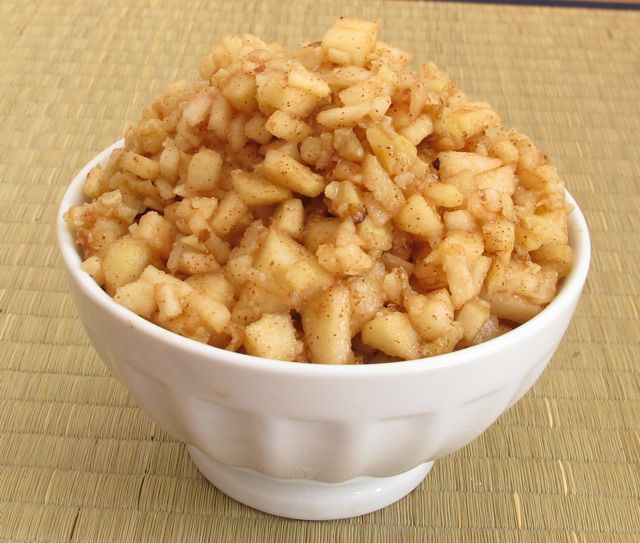
My family is from Eastern Europe. Our traditional Ashkenazic version is apple and cinnamon-based. Here is the recipe.