I grew up thinking I wouldn't be able to have children because of what I was told. I underwent several invasive procedures by the age of 19, battling abnormal cells, and losing healthy cervical tissue in the process. Then on March 2011 (six years later), I started feeling funny. I told my husband: "I'm nauseous and tired all the time, I must be ill." Two pink lines and a blood test later, "How did this happen? We're pregnant!"
I never thought I had choices regarding the birth of our child. As far as we were concerned, a baby is born inside a hospital, at the hands of a doctor. You don't have a say about anything regarding your birth, right?
I became restless at the thought of having my baby in a hospital. After all, it was a doctor who performed those numerous procedures on me that would land me into a "high-risk pregnancy" category, after bumping me from the "infertile" one. I learned that by the year 2009, Puerto Rico (the country where I live in), had the highest Cesarean rate in the world with an alarming 50 percent. I saw The Business of Being Born, and read every book Ina May Gaskin wrote.
Sadly in Puerto Rico there are no birth centers. It's either hospital birth, or home birth. As a first time mother, not knowing what to expect, I was terrified of losing my baby. I wrote a comprehensive birth plan I shared with the OB/GYN I had at the time, and instead of helping me overcome those fears, he humiliated me. He told me I was in no position to bargain. "You don't know what you're doing." So I left his office that day and never came back. I was 32 weeks pregnant.
A friend of mine had given birth at home, and she recommended an amazing midwife. I eradicated all the terrible images I had of birthing mothers. I took control. I sought guidance from a Higher Power. I surrendered to my body; my instinct. "You can do this," it said to me.
My beautiful 8 oz, 20-1/2 in. baby was born on Nov. 19, 2011 at home. It was the most empowering and beautiful experience of my life. I danced, ate, sang, slept, but most importantly, was always surrounded by loving, supportive people.
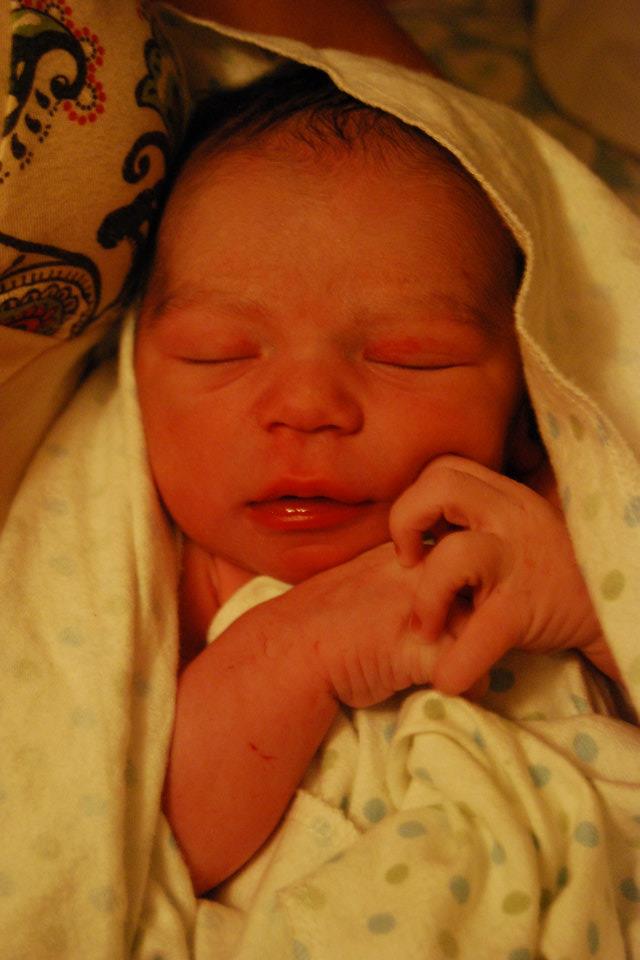
Giving birth to my child naturally was not about politics, nor adventure. It was about what was best for both of us. I felt the need to protect our first moments together, to bond, and as a result of following my gut, I acquired a purpose in life.
Educate yourself, and make an educated choice.
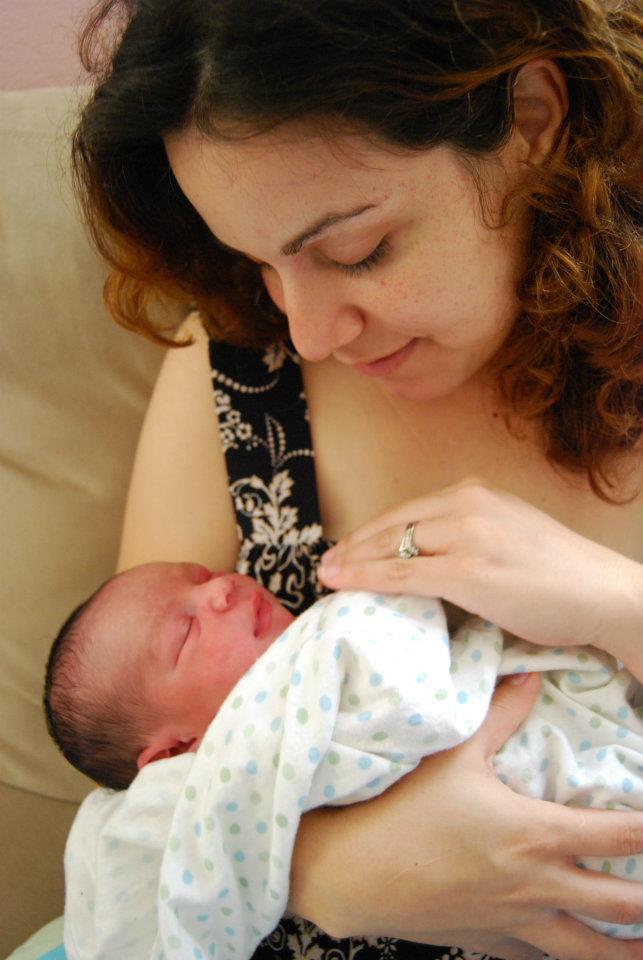
I grew up thinking I wouldn't be able to have children because of what I was told. I underwent several invasive procedures by the age of 19, battling abnormal cells, and losing healthy cervical tissue in the process. Then on March 2011 (six years later), I started feeling funny. I told my husband: "I'm nauseous and tired all the time, I must be ill." Two pink lines and a blood test later, "How did this happen? We're pregnant!"
I never thought I had choices regarding the birth of our child. As far as we were concerned, a baby is born inside a hospital, at the hands of a doctor. You don't have a say about anything regarding your birth, right?
I became restless at the thought of having my baby in a hospital. After all, it was a doctor who performed those numerous procedures on me that would land me into a "high-risk pregnancy" category, after bumping me from the "infertile" one. I learned that by the year 2009, Puerto Rico (the country where I live in), had the highest Cesarean rate in the world with an alarming 50 percent. I saw The Business of Being Born, and read every book Ina May Gaskin wrote.
Sadly in Puerto Rico there are no birth centers. It's either hospital birth, or home birth. As a first time mother, not knowing what to expect, I was terrified of losing my baby. I wrote a comprehensive birth plan I shared with the OB/GYN I had at the time, and instead of helping me overcome those fears, he humiliated me. He told me I was in no position to bargain. "You don't know what you're doing." So I left his office that day and never came back. I was 32 weeks pregnant.
A friend of mine had given birth at home, and she recommended an amazing midwife. I eradicated all the terrible images I had of birthing mothers. I took control. I sought guidance from a Higher Power. I surrendered to my body; my instinct. "You can do this," it said to me.
My beautiful 8 oz, 20-1/2 in. baby was born on Nov. 19, 2011 at home. It was the most empowering and beautiful experience of my life. I danced, ate, sang, slept, but most importantly, was always surrounded by loving, supportive people.

Giving birth to my child naturally was not about politics, nor adventure. It was about what was best for both of us. I felt the need to protect our first moments together, to bond, and as a result of following my gut, I acquired a purpose in life.
Educate yourself, and make an educated choice.
Follow Limari Colon on Twitter: www.twitter.com/limaricolon
Just last week I met a woman who was induced with cytotec, without her consent, last year (2011). What about them?
The Midwives Alliance of North America is currently partnering with organizations and researchers to conduct thorough studies on these issues using the robust MANA Stats database, which houses a wealth of information regarding midwife-led maternity care and births in the home, birth center and hospital settings. We welcome and encourage researchers with a study proposal to apply for the data -- find more information here: http://mana.org/DOR/about/about-mana-stats/researchers/. This upward surge of women choosing homebirth in the U.S. is yet another reason why continued high-quality research needs to be available.
Wendy Gordon, CPM, LM
I've heard privately that the number is appallingly high and that's why they won't tell American women. MANA KNOWS that homebirth kills babies, they just don't want women to find out.
I'm so proud of my natural choice, although totally understand it's not for everyone. The larger issue is that we should all be able to choose and have our insurance company cover the cost. Period.
According to The Guidelines for Perinatal Care published by the American Academy of Pediatrics (AAP):
"the hospital, including a birthing center within the hospital complex, or a freestanding birthing center, provides the safest setting for labor, delivery, and the postpartum period."
The AAP is, if it is possible, even more strongly oppoesed to water birth. The AAP Committee on the Fetus and Newborn released a comprehensive report in 2005 that waterbirth is not safe for babies. The report, Underwater Births, states:
"The safety and efficacy of underwater birth for the newborn has not been established. There is no convincing evidence of benefit to the neonate but some concern for serious harm."
Who are you going to believe when it comes to the safety and well being of babies? Pediatricians and neonatologists, whose sole concern is the safety and well being of children, or homebirth advocates?
Second of all, medicine IS a round business. Won't you agree that it would be EXTREMELY crucial to the financial status of doctors and hospital administrations if word got out that home birth for low risk women was as safe, and even better than a hospital birth?? What would that do to the whole U.S. "matenity" system? What would it do to OB/GYNs that depend on births, and C-sections to pay the rent. To the nurses? To the anesthesiologists who administer the epidurals? What would it do to the hospital administrators who depend on filling every bed with a atient to pay the rent? What would it do to the pharmaceuticals who sell Pitocin, Cytotec, Demerol and the infamous epidural? Oh, yeah. Your argument is very convincing. Let's all go and give our bodies to the doctors who know what they're doing. Let's not for a minute there trust science and nature, because women's bodies are NOT designed to give birth on their own.
Third and final argument, what you said about waterbirth is irrelevant. Home birth and water birth are not synonyms.
Homebirth is not an economic threat to obstetricians; there is an OB shortage and most cannot take on all those who request care. There is no possible way it is an economic threat to pediatricians or neonatologists. But homebirth represents 100% of the income of homebirth midwives.
Won't you agree that it would be EXTREMELY crucial to the income of homebirth midwives if word got out that home birth has a neonatal mortality rate more than 7 times higher than comparable risk hospital birth?
Won't you agree that it would be EXTREMELY crucial to the income of homebirth midwives if word got out that the Midwives Alliance of North America (MANA) refuses to release the death rates for their own midwives?
Won't you agree that it would be EXTREMELY crucial to the income of homebirth midwives if word got out that the death rate for planned homebirths with licensed midwives in Colorado has exceeded the death rate for the state as a whole and has risen in every single year since 2006, and that the homebirth midwives of Colorado refused to release the death rates for 2010?
When it comes economic incentives for hiding the truth, homebirth midwives have far more to lose than obstetricians, pediatricians and neonatologists.
I understand your concerns, but sometimes we are misinformed. Just as there are good and bad doctors, there are good and bad midwives. You don't choose the first one you meet! A good certified midwife is prepared to handle wrapped umbilical cords (my baby had his cord around his neck), hemorraghes (they have Pitocin inyections ready to stop a hemprraghe) and emergency transports (in case of an emergency). A true good midwife will assess the risk, and make a timely decision in case of a hospital transfer. Most transports are done in a car! Not even in an ambulance we a gruesome image you might see in a Hollywood movie.
During my labor, my midwife was constantly monitoring my blood pressure, heart rate and my baby's heart rate. If these would've change, I would've ended in a hospital. Assisted home births are planned with a highly trained staff. I had a back up OB/GYN which I saw every week during my last months of pregnancy and was well aware of my labor, in case I needed to be transferred to a hospital. I also alerted the pediatrician I chose for my baby. I had two midwives, a doula, my mother, father and husband with me, a back up OB/GYN, a pediatrician and a hospital 10 minutes away. I had a beautiful home birth for a total of $2,500 and got pblic health insurance in case I needed hospital coverage.Â
I wonder if Ms. Colon would have made the same choice if she'd been aware that the Midwives Alliance of North America (MANA), the organization that represents homebirth midwives, has collected a database of 24,000 planned homebirths and refuses to release the death rates.
I wonder if Ms. Colon would have made the same choice if she'd been aware that in the state of Colorado, which has licensed homebirth midwives since 2006, that the homebirth death rate has exceeded the death rate for the state as a whole (including premature babies and pregnancy complications) in every single year since and has risen in every single year since 2006, The death rates are so appalling that the homebirth midwives of Colorado refused to release the death rates for 2010.
I wonder if Ms. Colon would have made the same choice if she had been aware that the state of Oregon has had at least 19 reported neonatal deaths in the past 10 years for a rate that is more than 4 times higher than the death rate for comparable risk hospital birth.
I wonder if Ms. Colon would have made the same choice if she had been truly informed of the risks.
I wonder if Ms. Tuteur is aware of the fact that Holland is called the "Capital of Home Birth" and they have better outcomes than American women have.
I wonder if you are aware that OB/GYNs perform elective C-sections, a VERY risky procedure.
I wonder if you in fact know that women are routinely induced at hospitals, before their 39th week, while a baby can safely inhabit his mother's womb for 42 wks.
There is always another side to the story. I don't claim home birts are for everyone. I do thank God that medicine exists, and that OB/GYNs are there when they are needed. Low risk pregnancies have better prognosis in an assited homebirth with a trained professional, than in a hospital.
For Ms. Megandale to suffer pre-eclampsia, no respectful midwife would recommend a homebirth, since she is considered a "high risk" pregnancy.
Don't be so quick to judge me, or any other woman who opted for a home birth, just because you believe it is an irresponsable choice. Educate yourself, and stop swallowing the pill American women have been fed since the 1950s. Birth, as God intended, is entirely natural. There is no reason to fear it. There is no reason for medical intervention, unless a complication arises that calls for it. Thanks for reading!
Limari, my great grandma had all 10 of her kids at home, and I had two of mine at home after having a hospital birth that went great - except for the exorbitant bill.