More

Featuring fresh takes and real-time analysis from HuffPost's signature lineup of contributors
Lisa Belkin

GET UPDATES FROM Lisa Belkin
 

Can Adoption Lead To Child Abuse?

Posted: 11/ 9/2011 7:08 am

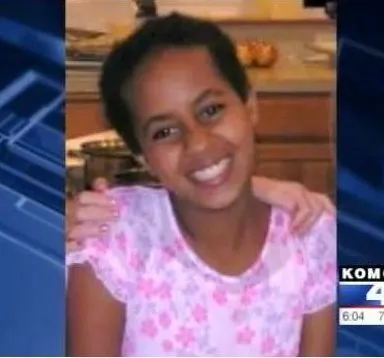
I have not been able to get four-year-old Sean Paddock, or 11-year-old Hanna Williams, or 7-year-old Lydia Schatz out of my mind. As Erik Eckholm reported in the New York Times yesterday, and Anderson Cooper discussed on CNN, most recently last week, the three children all died within the past five years, and they had several chilling factors in common.

Each of their deaths were brutal and agonizing: Sean suffocated; Hana, who was found lying naked in the muddy yard, died of hypothermia and malnutrition; Lydia showed signs of a brutal beating. In each case, one or both of their parents has been charged with their murder.

And in each case, those parents are said to have essentially punished their children to death, allegedly because they believed it was God's will. They are said to have been guided by the book To Train Up A Child, by Michael and Debi Pearl, which advocates beating children with rubber tubing, leaving them outside in the cold, and witholding food for days at a time in keeping with Biblical teachings. (No, I am not linking to it, out of sympathy with those who are petitioning sites like Amazon not to sell this particular book, which does not directly advocate the level of abuse that killed these children, but that appears to have been misinterpreted and misused by at least some of the parents who stand accused.)

Much attention has been paid to the religious pieces of a this tale. Less noted is that each of these children joined these families through adoption. Sean was born in the US, as were his five adopted siblings. Hana was from Ethiopia, as was her adopted brother (their parents had six biological children as well), and Lydia was from Liberia (there were two other adopted siblings among the family's nine children.)

Is this merely grisly coincidence? Or is there something about the adoption dynamic that makes violent abuse more likely?

One possibility is that adoptive children -- particularly those who spend their earliest years in an orphanage or shuttling from one foster caregiver to the next -- are more likely to suffer reactive attachment disorder, which are essentially the inability not only to bond, but to feel. The effects are not just psychological, but also physical, with evidence these children can have elevated levels of the hormone cortisol, which increases their tolerance for pain. Some speculate that spanking a child with Reactive Attachment Disorder can spiral out of control quickly, because it takes abusive levels of pain before the child actually feels it and responds.

This cycle is the talk of a handful of adoptive parenting websites, and, in particular, it has been discussed often on Why Not Train a Child, which is dedicated to warning parents about the dangers of the Pearls' book. There an anonymous commenter there, who describes him or herself as knowing the parents of Hana Williams personally, speculates:

Initially, I think their intentions for adopting were "good" (although  I am uncomfortable with the idea of adopting children solely because you are religiously motivated to "rescue" them). I don't think they adopted Hana and her brother so that they could have some children to torture and abuse. However,I believe they made a huge assumption that these kids would respond to their methods just like their own biological children did. They expected Hana and her little brother to assimilate into their family, and most likely ignored their culture, how they had grown up (customs, beliefs, etc), and most importantly, the trauma that Hana and her brother had gone through in their childhoods. These kids just weren't acting like their biological children. Instead of taking a step back and getting professional help, they decided that they would continue to follow the Pearl method, but continued to up the ante, because these kids were NOT succumbing to being "broken".

Adoption can save a child and create a family. It can also come with complications that biological parents are far less likely to face. All children are vulnerable, but adopted children are more so, because the very fact of their adoption tells of a shakier start in life. They deserve more of our protection. In at least three cases they did not receive it.

 
I have not been able to get four-year-old Sean Paddock, or 11-year-old Hanna Williams, or 7-year-old Lydia Schatz out of my mind. As Erik Eckholm reported in the New York Times yesterday, and Anderso...
 
 
  • Comments
  • 114
  • Pending Comments
  • 0
  • View FAQ
Comments are closed for this entry
View All
Favorites
Bloggers
Recency  | 
Popularity
Page: 1 2 3 4  Next ›  Last »  (4 total)
VA Jill
Retired RN, Army mom. Bring the troops home!
02:16 PM on 11/15/2011
When a book advocates spanking/whipping a child as young as 6 months, as the Pearls' book does, it IS a guide to abuse and should be banned, just like any published "guide" to criminal behavior. Misinterpreted? I don't think so.
photo
Karissa36
Saving lost boys and fighting pirates.
06:23 PM on 11/13/2011
Children are a joy, but no one is perfect, and they can definitely get on your nerves. In many cases, it is a personality mis-match with a parent. For example, a stoic silent type parent is faced with a high-strung noisy child. It is easier to deal with this when you can say the child is like a family member, and prior exposure of the parent to that family member has increased the parent's tolerance for that behavior. I can see how with an older unrelated child, more set in his ways, with a history of dubious prior care, it would be much harder for a parent to adapt to mis-matched personality traits. The main problem though is that the parents in the article seemed hopelessly intolerant.
07:13 PM on 11/11/2011
adoption is far from a great solution in many cases - sometimes people want something so bad until they have it; then they find out it's not all that terrific, you know the old saying - be careful what you wish for, this could apply to adoptive parents as well as the kids
11:38 AM on 11/11/2011
This is not so much about adoption in general, but about adoption of older children. Many times adoptive parents have no idea what they are getting themselves into. They are not prepared to deal with RAD, for example. They may have expectations that that child will be grateful because he or she was "saved" or "rescued". If the parent is an authoritarian (and I think that it is safe to assume that anyone who would follow the Pearls would be authoritarian), they may believe that strict discipline is only way to correct behavior. They don't understand that the behavior they find unacceptable may be rooted in abuse or neglect or trauma.
This isn't about blood or bonding, but unrealistic expectations.
12:31 AM on 11/11/2011
It is meaningless to say that the children have no or little sense of pain, unless there is some evidence to offer in support of this statement. Do the people who say this mean the child requires more than the usual amount of anesthetic to tolerate dental work? Or that they are slow to withdraw their hands from a heat source (a common laboratory measure of pain thresholds)? I am positive that no such evidence exists.

In fact, to say the children don't feel pain is simply another way of stating that the speaker feels they are alien, not human, even in some way demonic--- and thus that desperate measures may be required to control them.

Belkin's statement about "not feeling" is a logical possibility, but it's essential to realize that there is nothing to support it. It's also a logical possibility that adoptive parents harm children because THEY do not feel, but I doubt that that's the case either. There's nothing to be gained for adoptive families by oversimplifying the situation.
12:40 PM on 11/10/2011
PART II:

Surely absence of kinship increases the risk of sexual abuse and there are no taboos against sex with an unrelated person in your home, despite taboos and laws against pedophilia. Adopted children are at risk for sexual abuse from parents as well as siblings. Yet no one is admitting these risk factors or researching their prevalence.

There are two reasons we turn a blind eye to these abuses that are glaring in our face once again with the headlines about Jerry Sandowsky - adoptive father of six and foster parents to untold others.

The first reason is one that a publisher told me when rejecting The Dark Side. he said that adoption is society's fall back position and we do not want to see any flaws in it.

The other reasons is that it is a mega billion dollar industry and like all such money-makers has lobbyists who convince lawmakers to keep passing legislation to make it easier to adopt and provide incentives and benefits such as huge tax credits, most of which goes to international adoption despite being presented as a way to help the foster child population be adopted.

We just keep looking away and ignoring....

Mirah Riben, author, THE STORK MARKET: America's Multi-Billion Dollar Unregulated Adoption Industry
12:39 PM on 11/10/2011
PART I:

More than 226 children MURDERED by adoptive or foster parent abuse are identified here: http://poundpuplegacy.org/node/20813#comment-16769

Yet we call them anomalies. And these are just those who actually died as a result of being beaten, caged, starved, tortured, beaten...Many more have survived such torment including sexual abuse.

In my 1988 book "shedding light on the Dark Side of Adoption" I first called attention to this phenomenon and called for research into the question you pose here. After all, it is a known fact that sexual and other abuses are far more common in foster families than the general populace. You have identified one of the pieces of the puzzle of why people who go out of their way to be parents, who pay huge fees to adopt in some cases, and are alleged to be motivated...why they would harm children trusted to them. The other part of the puzzle is the reason identified for abuse in foster homes: absence of kinship.

Children born into their families often act out. However, there is the ability to see some of oneself or relative in their independence, defiance or rebelliousness and even admire that spark. In unrelated children there is a fear of what it might lead to. Did the child inherit "bad blood"? What is he capable of? There is fear of the unknown possibilities with a child who is, after all, your flesh and blood.

Continued...
02:56 PM on 11/18/2011
What are the statistics for parents murdering their biological children? I can think of three right now that are missing or were found dead. One in Washington state, Baby Lisa and the mom who dumped her one year old in the woods. As a parent who has children by birth and by adoption, I can definitely tell you I feel strong "kinship" with all. Are there differences? Yep, only my adopted daughter looks like me and we did not seek that, in fact, her birth mom is part hispanic. Our only son, adopted from an abusive orphanage in Ukraine, has been our biggest challenge and heartbreak. He is finally making progress after years of therapy, run-ins with juvenile authorities and having to be in psych hospitals and residential treatment. If anyone lived with children of trauma, you would get some insight into how abnormal your normal life becomes. Even now, door alarms, a sibling who insists on a key-lock door to feel safe, people have no idea.
12:30 PM on 11/10/2011
I think CountryJake nailed it. The American fundamental Christians who were arrested in Haiti after the earthquake were lying outright to the parents of the alleged "orphans" they tried to bring home for other fundamentalist Christians to adopt.

They might have had in their church community at least one like-minded licensed social worker who could have done the vetting (i.e., home study) to process the adoption through the state courts. That's probably where the vetting process fails. (This church group was apparently very naive, though, about immigration law, and would never have gotten the children into the U.S.)
HUFFPOST SUPER USER
cdncommentator
09:53 AM on 11/10/2011
I think the whole premise of the article is wrong. The issue isn't adoption, it's abuse.

Also, when the writer says adoption, she means "adopting an older child". None of what she says would apply to adopting a newborn, or in fact, any child under the age of 1.
09:36 PM on 11/09/2011
It is sad that some people still call hitting their kids, "spanking". It is hitting people. Pushing, shoving, hitting, pounding, assaulting. Spanking doesn't cut it anymore. It's a euphemism for child abuse. Start listening to your kids. Talk to them. Be present with them. When you have a bunch of kids, it's hard to be present. Have as many as you can be properly present with and that is about one, two or three. After that nannies are involved and then it is a managing dilemma, not parenting. Listen and train them up with caring guidance, which means no hitting, no touching in anger. And stop hiding behind religion to shield your abusive sides. Get help. Admit you hit and get help now.
08:17 PM on 11/09/2011
After ten years of stepparenting, seven years of family and step therapy, I had just about decided that Mothers can be like animals, they protect their young, and push away the others. I don't believe that now, but I wondered why i couldn't bond with two stepdaughters, and they were horrid to me, and their bio father treated them terribly. The oldest one was finally diagnosed antisocial personality disorder with thrill seeking behaviors. The youngest one was worse and more violent than the older. so i blame the fact that there was no affection and bonding between us due to their disorder, their father's disorder, not on being a protective mother of my own children and failing to love the steps. i stayed for 10 years to protect them from their father. At the age of 18, the oldest one was taking on all the boys in the neighborhood in the camper, while Dad was drunk sitting there by a fire pit. Then I realized it was never going to get better. and I left. So I think its a combination of things that make it difficult to raise step and adopted children.
07:37 PM on 11/09/2011
Abuse of adopted child is absolutely something that is present in homes and it's time for it to be addressed.
09:09 PM on 11/09/2011
Sadly, abuse of children no matter how they come into the family is prevalent. You will find adoptive parents versus biological parents have a significantly smaller percentage.
photo
HUFFPOST SUPER USER
see-ellen2001
06:39 PM on 11/09/2011
I think some people have the "savior" complex: I will take this poor, stray child into my home and fill them with Jesus and all will be well. They have this religiosity that they believe solves all problems and when it doesn't they cannot cope and resent that the child refused to be saved by them and God.
06:35 PM on 11/09/2011
These children who have been abused to death were struggling to survive in already large families; Sean was one of six children in the Paddock family, Lydia Schatz had eight other siblings and Hana Williams also had eight other siblings. They were not brought into the typical adoptive situation, such as that of a childless couple, longing to nurture and raise a child of their own.

To add and perhaps clarify one point in your piece, there is a valid reason that much attention has been paid to the religious aspects of these three murder cases. All three of the families involved were headed by adoptive parents, yes, that is true. But weren't they also participants in the current right wing fundamental Christian agenda that stresses adoption as some sort of advisory order from a God who is under attack in this nation? Did the adoptions of these horribly abused children originally take place as a misguided effort to rescue them from a godless world and to help build some spiritual army of Christian soldiers, bent on taking back the world for God?

I honestly think that your analysis might be better directed toward an examination of such conservative evangelical adoptions, in which potential parents are even advised to adopt rather than foster, simply because there are laws against corporal punishment as a method of discipline when parents take in a foster child. With adoption, there are no such protections for children.
This user has chosen to opt out of the Badges program
photo
06:19 PM on 11/09/2011
I guess it depends which three instances of child abuse you choose to highlight - if you choose murdered children who are adopted instead of biological, then that becomes the deciding factor. What are the actual statistics of abuse between adopted and biologically-related children?

As for the intention of the parents, I would argue that most abusive parents cloak their actions under the guise of "discipline". The ones who weren't disciplining their child to death will try to pass the horror off as an "accident" or "mistake". I am betting few if any woke up that morning and consciously admitted they were going to kill their child.