More

Featuring fresh takes and real-time analysis from HuffPost's signature lineup of contributors
Lisa Kaas Boyle

Lisa Kaas Boyle

GET UPDATES FROM Lisa Kaas Boyle
 

California Is for Plovers, Not Polystyrene

Posted: 04/ 4/11 04:39 PM ET

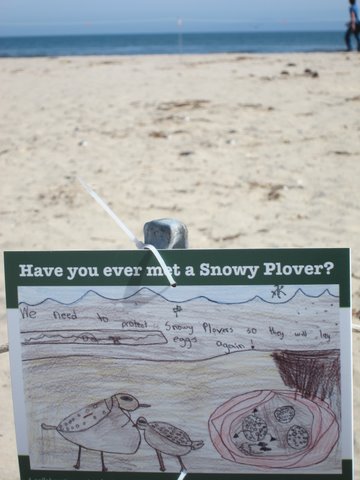
It's beach weather already in Southern California, and when I hit the beach yesterday at Malibu Lagoon, I discovered that I was sharing the sand with some pint-sized visitors who had a VIP section roped off to themselves. Reading the signs posted around the area, I discovered that I was encountering some very rare and distinguished guests indeed: the threatened Coastal Snowy Plover, birds whose habitat of shallow coastal waters near the mouths of streams like Malibu Creek, is disappearing. Once I saw my first plover in the Malibu sand, a small, sparrow-sized, pudgy, round, white bird with wonderful black and brown markings on its head and wings, I was smitten. When I read that the new chicks look like balls of white fluff standing on toothpicks, I really wanted to see a newborn... but it may be many years before I see a plover chick in Los Angeles County.
2011-04-04-ploversign.jpg


The hope in roping off sections of plover habitat in people populated areas like Malibu Lagoon is that we will be able to share the beach with our feathered friends and that the plovers will nest and reproduce. Plover experts have seen some nesting behavior: for example, males hollowing out the sand with their bodies to build "scrapes" or hollows in the sand that they will decorate with beach debris to make nests. But according to Garry George of the Audubon Society, no eggs have been recorded since 1949 in Los Angeles County, where many beachgoers, including dogs, can frighten the skittish birds or kill them. For thousands of years, the entire California coast was home to nesting plovers. Today, the closest population of nesting plovers to Los Angeles County is in Orange County at the Bolsa Chica Conservancy by Huntington Beach. Military bases at Vandenberg and Camp Pendleton also offer prime nesting opportunities for plovers because the beaches are closed off to the civilian population. Disturbances from human activity can cause birds to use their energy reserves defending territory instead of breeding.

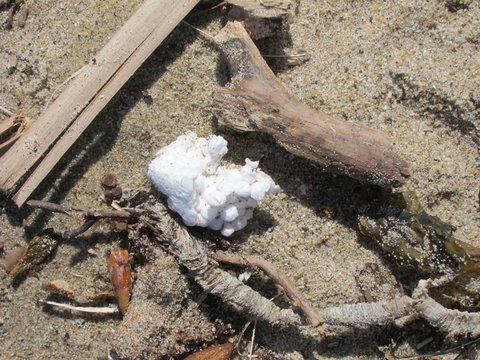
Plovers eat small invertebrates like flies and larvae from the seaweed that washed to shore. Much plover habitat is disturbed by beach cleaning machines that rake up the natural beach organic material like seaweed along with the tons of mostly plastic trash that litters our beaches. The roped off section at Malibu Lagoon is an attempt to prevent human interference. I noted the lush quantities of kelp on the sand at the lagoon, teaming with potential food for the plovers. But I noticed something else that saddened me. The natural food was enmeshed with something quite unnatural: copious quantities of plastic, mostly polystyrene, in various stages of breaking apart. This polystyrene isn't just from careless beach goers. This super light plastic blows long distances and washes down the Malibu Creek and storm drains from inland. Polystyrene is also carried up onto the beach from the ocean, our largest waste dump.
2011-04-04-polystyrene.jpg


Polystyrene, a type of plastic known most commonly by its Dow Chemical brand name of Styrofoam, is one of the most common forms of trash at California beaches, right up there with plastic bags and plastic resin pellets, the raw material from which plastic items are formed. Polystyrene is particularly dangerous to birds and sea creatures because it breaks into round bits that resemble larvae and fish eggs that mimic food. Styrene a chemical found in polystyrene is a known animal carcinogen. It is not good for birds, fish, turtles or cetaceans, and it's terrible for people too. Styrene is a known human neurotoxin, possible human carcinogen, and it migrates easily into food or drink when foam containers are heated or come into contact with hot food, acids (like lemon or tomato juice) and fats or oils. A study by the United States Environmental Protection Agency conducted in 1982 found that 100% of Americans tested had Styrene in their fat tissue.

How can we help the plovers? Besides leaving some coastal areas undisturbed by human traffic so plovers can nest, the key for increasing their numbers, we can stop making the plastic waste that invades their habitat. California Senate Bill 568, as introduced by Senator Alan Lowenthal, would prohibit food vendors in California, on and after January 1, 2013, from dispensing prepared food to a customer in polystyrene foam. 47 local California jurisdictions already ban Styrofoam.

Can California's beach lovers and Plovers exist in harmony? It's worth our best efforts to make room for this wonderful creature at the beach. And there are multiple benefits to giving up our nasty habit of packaging fast food in polystyrene that is poisoning us and fouling our beaches and Plover habitat.

Maybe we will be lucky and get some plover chicks at Malibu Lagoon this year, but come late April or May, the Plovers will leave and probably fly back to wherever they hatched says Kimball Garrett, California bird expert and ornithologist at The Natural History Museum in Los Angeles. When the plovers return to Malibu Lagoon in 2013, should the California ban on polystyrene food containers pass, maybe the birds will feel more at home with a nesting area of seaweed and driftwood, not polystyrene.

To learn more about the health and environmental impacts of polystyrene and to voice your support for SB 568 to ban polystyrene food packaging in California, please visit Clean Water Action where you can contact your Senator. To learn more about the Snowy Plover and see some wonderful photos visit the California Audubon Society.


  • Comments
  • 8
  • Pending Comments
  • 0
  • View FAQ
Comments are closed for this entry
View All
Bloggers
Recency  | 
Popularity
photo
HUFFPOST SUPER USER
Sean Taylor Teacher
Literacy is a right of all people
09:09 PM on 04/05/2011
The plastics Lobby must track what you write Lisa! The Walkercom post sounds more like a PSA for the ultra-safe plastic industries. Some day we may find autism, ADD, ADHD, birth defects, Alzheimer's, and the umpteen other maladies that are on the rise are cased by exposer to the chemical soup we live in. Are we guinea pigs for corporate chemical america? Cheryl makes the argument that strawberries have polystyrene, yum! The chemical industries sounds like they suffer from Munchausen by Proxy for profit! Cheryl and Walkercom thanks for the post! We always need a positive spin on the chemicals in our bodies and environment!
photo
HUFFPOST BLOGGER
Lisa Kaas Boyle
04:22 PM on 05/03/2011
Right you are Sean! The petrochemical lobby is pretty sophisticated and we know they are well funded! They have employed some former tobacco lobbyists and use some of the same strategies that were used to defend cigarettes. It is a full time job to stay up on the subject of the health and environmental impacts of plastics, but though we are out-funded by industry, we have the facts on our side. No amount of misleading advertising or contributions to lawmakers can change objective science (not funded and manipulated by industry!). www.EWG.org is doing a great job of tracking the chemicals that reach us even in the womb. EPA Administrator Lisa Jackson has cited their research in her discussions about how our laws to keep toxics out of our products have failed. TOSCA grandfathered in just about every toxin that affects us - and we have a policy here in America that chemicals are innocent on the market, in consumer use, until proven guilty - that usually means until some consumer can prove a specific chemical killed them. Seriously - less than a handful of chemicals have ever been banned under TOSCA. Do you have any idea how many toxins you are exposed to on a daily basis? And they have synergistic effects!
02:15 PM on 04/05/2011
While no one likes to see polystyrene foodservice disposed of in a manner that harms the environment, I would like to correct some misleading information found in this column. First, polystyrene cups and plates are entirely safe for consumer use. Polystyrene foodservice is FDA-accepted for food-contact use, and there is no validated scientific evidence that it poses any human health risk. In fact, polsystyrene containers have been used safely for more than 50 years without adverse health effects. Potential health risks from styrene, the basic chemical from which polystyrene is made, have been studied extensively for many years. The large and still growing body of scientific evidence points away from any human health concern for people who use the thousands of products made from it. It is common knowledge that foodservice containers, including polystyrene and others, have materials that can migrate into their contents under normal use. Since the early 1990s, the polystyrene industry has conducted tests on styrene migration; the results have shown that these very low levels pose no health concern. Find accurate information on polstyrene at www.americanchemistry.com/pfpg, and on styrene at www.styrene.org. Posted for the Styrene Information and Research Center, Arlington, Va.
photo
HUFFPOST BLOGGER
Lisa Kaas Boyle
04:31 PM on 05/03/2011
Studies on styrene migration conducted by the polystyrene industry do not impress most people. The tobacco industry funded many studies to show that cigarettes don't cause cancer. We all know the history of those studies. Styrene food containers will be banned just like cigarette smoking is banned in buildings - because it is dangerous to public health. Styrene should not be in our food packaging. Anyone who says otherwise is making a profit from selling it.
photo
HUFFPOST SUPER USER
Sean Taylor Teacher
Literacy is a right of all people
10:28 PM on 04/04/2011
Plastic bags and other refuse that ends up in the ocean creating the toxic plastic soup ( Pacific Ocean Gyre mess) should be charged with the clean up. Coastal communities should ban the use of any material that shows up in the environment that are not biodegradable. The Pacific Ocean Gyre will eventually encompass the totality of the pacific. The plastic soup floating offshore will be our mess for the next hundred or even thousand years! Thanks, Lisa for more great insight and food for thought, in a paper wrapper. http://www.gyrecleanup.org
photo
HUFFPOST BLOGGER
Lisa Kaas Boyle
07:07 PM on 04/04/2011
@ Elizabeth: Polystyrene is bad for so many reasons, and it is not efficient to recycle polystyrene food containers because they absorb food oils and because they are so light they offer little materials for the resources spent to recycle. I cringe when I see hot food being put in polystyrene because someone is about to get their food with an unwanted side of styrene. Polystyrene is consumed by many creatures in the wild too. The Snowy Plovers in Coastal Los Angeles are not threatened because of the polystyrene - they are threatened because their habitat is disappearing and is populated by people and our pets. But I want to make the point that the Plover habitat is degraded because of our trash. In fact Malibu Lagoon is officially listed as degraded because of trash, and one visit there will show you why! There is even a shopping cart stuck in the muddy water. Quite meaningful I think because our consumer habits are at the root of the trash problem. The styrofoam and all the other plastic, non-biodegradable trash on the beach and in the water is the result of buying fast food and other consumer products in plastic.
03:02 PM on 04/05/2011
Bet you don't mind getting a cinnamon roll or bottle of beer with the "unwanted side of styrene." It's naturally occuring in those foods as well as strawberries, coffee beans, and peanuts. Misinformation is not really information at all.
This user has chosen to opt out of the Badges program
05:15 PM on 04/04/2011
Excellent article!! I wish there was a photo of these cute little birds here. We definitely need to protect the beaches, the birds, and our children from these dangerous toxins from styrofoam!! It should be outlawed and our politicians and DOW Chemical should be ashamed!!!