Featuring fresh takes and real-time analysis from HuffPost's signature lineup of contributors
Loren Fishman, MD

GET UPDATES FROM Loren Fishman, MD
 

Another Health Benefit Of Yoga: Easing Back Pain

Posted: 10/28/11 09:25 AM ET

When a major medical journal such as the Archives of Internal Medicine publishes a clinical trial showing the effects of yoga for low back pain, the yoga community (and increasingly, the medical establishment) sits up and takes notice. The study, which came out yesterday, was long awaited and is the best of its kind in organization, sheer brute numbers and statistical analysis. Nevertheless, I am eager to see more work done on this important topic, and I suspect the study's lead investigator, Karen Sherman from the Group Health Research Institute in Seattle, would agree. The clinical trial suggests that yoga helps people with their back pain. It does not show any psychological or behavioral benefit to yoga vs. stretching in the sample of people it selected.

To both simplify and narrow results by using a homogeneous group of participants, this excellent study excluded participants who had some common categories of back pain. People who had herniated discs and spinal stenosis (narrowing of the spinal column), for example, were disqualified in an effort to prove yoga's value for the generic symptom "low back pain." (Non-yoga clinical trials of back pain are often set up the same way, and my opinion about them is the same.)

Back Pain From Specific Conditions

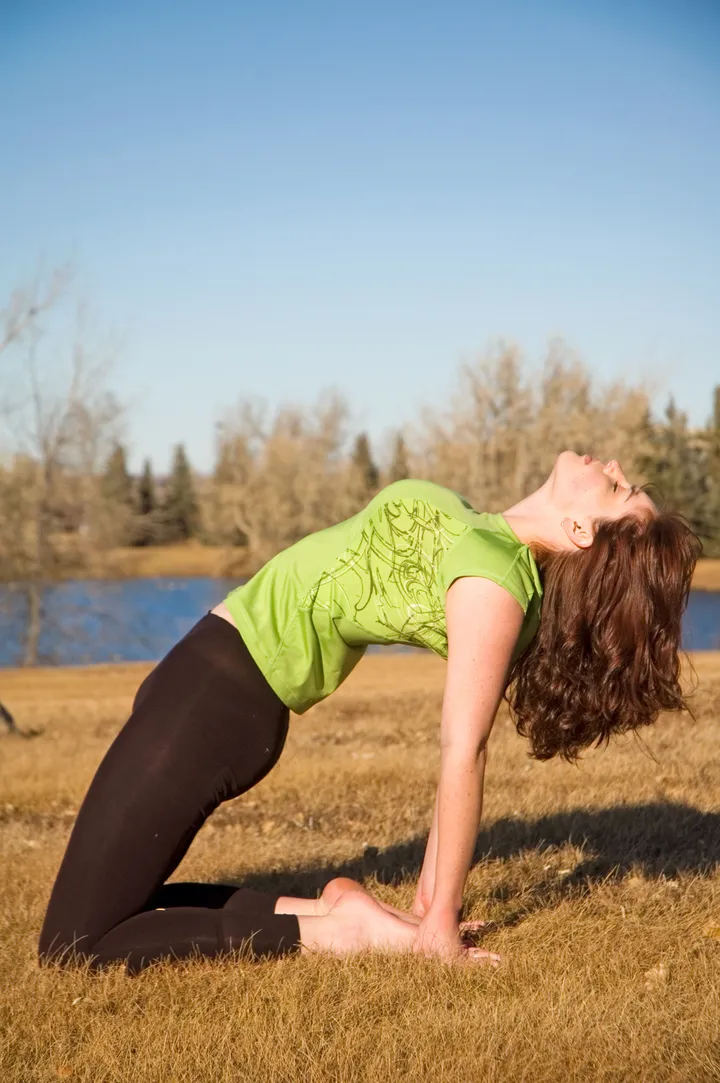
Yoga therapists often treat different conditions, such as stenosis or herniated disc, in completely different ways, as do medical doctors like myself. For example, yoga is frequently used to treat a herniated disc by extending the back, by bending backward; people who have spinal stenosis find relief by doing yoga that emphasizes flexion, or bending forward. By looking at back pain as a generic problem rather than as a problem with different causes, Karen Sherman's group took a necessary first step, and it was successful. Both yoga and stretching (and let's face it, yoga involves stretching) help garden variety chronic low back pain.

Now I hope future studies of yoga and back pain can examine individual treatments for specific conditions such as herniated disc and stenosis, and do so on a one-on-one basis as yoga was taught in ancient times, rather than in large classes. Yoga classes are an artifact of urban economics: Yoga teachers cannot make a living without pooling fees that way. It's the same in medical school: pretty big classes. But the doctor sees patients one at a time, and the yoga therapist usually does the same thing, or sees very small groups of two or three patients. The true value of yoga, like the true value of any medical treatment, may be indicated by large studies, but the best, most relevant information may be found by studying the results of individual treatment. And collecting information by studying patients one by one may contribute to understanding the less tangible effects of practicing yoga -- psychological, behavioral and even spiritual.

Less-Tangible Benefits of Yoga

A survey of 33,000 yoga teachers and therapists worldwide that I did with several colleagues in 2008 and published in the Journal of the Association of Yoga Therapists, found that most people begin doing yoga for physical or general psychological reasons: "shoulder pain" or "want to relax," but that if they do yoga regularly for more than a year, they do it for the psychological benefits more than for any other reason. Those results were duplicated in an Australian national survey.

The spiritual element in yoga is difficult to capture in large groups and perhaps difficult to quantify at all using Western techniques of randomized controlled trials. But with researchers like the group in Seattle thinking about these problems, going forward we are likely to find answers.

 
When a major medical journal such as the Archives of Internal Medicine publishes a clinical trial showing the effects of yoga for low back pain, the yoga community (and increasingly, the medical esta...
 
 
  • Comments
  • 11
  • Pending Comments
  • 0
  • View FAQ
Comments are closed for this entry
View All
Favorites
Recency  | 
Popularity
06:08 PM on 12/27/2011
Dr. Fishman is absolutely correct that controlled clinical trials eliminate factors which are difficult to quantify such as the "spiritual" component of the practice. And he is also right about the economic basis for group classes and group therapies...ie it is economic and practical rather than necessarily the best approach for conveying the benefits of a particular therapy. To convince contemporary physicians and scientists, the double-blind placebo-controlled trial is essential, but how can one possibly run a placebo group (is it correct to compare yoga vs stretching, with stretching as the placebo?). Of course stretching will have some benefits in certain cases, so what else can serve as a neutral placebo procedure in these studies? One placebo suggestion would be a meditation or prayer practice...if a significant improvement with yoga compared to prayer was found, it would suggest that the physical aspects of the yoga was the critical factor responsible for the therapeutic effect. Conversely if the placebo were stretching exercises, a significant improvement with yoga would suggest that the spiritual component (in the most basic mindfulness of movement) is the key therapeutic ingredient. In my view, the optimal therapy is one-on-on, assuming that the therapist is well-trained and experienced and the patient has a defined condition. But the fact remains: research that is to convince physicians that something is therapeutic needs to rely on clinical trials.
03:14 PM on 11/22/2011
I believe that the best way to alleviate back pain is by exercising and stretching. One of the most beneficial exercises to help alleviate back pain is Hot Yoga, this exercise is indeed very effective.
http://www.losethebackpain.com/
06:53 PM on 11/09/2011
Too many Americans are being prescribed painkillers by their doctors for chronic low back pain. You have the power to live a healthy life without drugs or surgery. Read more at http://www.drjeffschwab.com
02:26 PM on 11/08/2011
I am 28 years old and have had 2 micro-disc surgeries on the L5. The first on 4/29/07, the second on 7/19/10. I'm 5' 10 "125lbs. For a couple years I relied heavily on Ibuprofen due to lack of insurance, and was taking 8-16 a day depending on weather conditions and working conditions. I now have insurance and have been taking vicodin 500 mg up to 3 times a day for almost a year now and live to more painfree life. Inform me by Findrxonline.com/blog that this drug has side effects which can harm health and the nervous system. Anyone can share their experiences because I did notice changes in my way, I hope your comments and thank you in advance.
11:00 PM on 11/02/2011
I have spinal arthritis. Yoga is very effective for me to avoid the flare-ups, while remaining active.
12:22 AM on 11/02/2011
Well, I had lower-back issues some years ago (almost certainly relating to having small children in my life), and I found that the yoga classes I attended (which almost certainly were not the best sort of yoga classes for someone with lower back pain) moved from one pose to another too quickly, and ended up exacerbating the problem. When I switched from yoga to pilates (which is all about building core strength and flexibility), I found it to be far more effective.

I don't often have time for a full pilates class anymore (the aforementioned small children in my life now have busy schedules involving music lessons, hockey practices, dance...) I still do regular core workouts based on pilates moves, and find they keep my lower back supple and pain-free.

Check out this pilates-inspired 5 minute core workout:

http://www.naturallyradiant.info/site/core-workout-2/252
07:58 PM on 10/28/2011
Heart of Yoga is to control the body with advanced Tiag. Need to train the mind to rest before practicing yoga movement. The rest I will let you know that the movement of yoga postures that may have a problem with your body. You can choose what I do yoga.
http://thaimassageonline.com/massage-therapist/how-important-is-the-psychology-of-yoga.html/
11:31 AM on 10/28/2011
There are also some specific things you can do to promote back health (http://www.marklfuerst.com/blog/2011/10/13/back-pain-relief-from-a-herniated-disc/):

Use proper lifting techniques.

Do not bend at the waist.

Bend your knees while keeping your back straight and use your strong leg muscles to help you support the load.

Practice good posture when walking, sitting, standing, and sleeping.

For example, stand up straight with your shoulders back, abdomen in, and the small of your back flat.

Sit with your feet flat on the floor or elevated.

Sleep on a firm mattress and sleep on your side, not your stomach.

Stretch often when sitting for long periods of time.

Do not wear high-heeled shoes.

High heel shoes cause you to lean forward and the body’s response to that is to decrease the forward curve of your lower back to help keep you in line.
01:29 PM on 10/28/2011
Good advice, but I don't understand sit with your feet flat on the floor or elevated. Is there another way? And is there a reason not to sleep on your back? Just wondering...
01:52 PM on 10/28/2011
Hi Carol - In other words, don't tuck your feet under you (which I have a habit of doing at my computer). As for sleeping on your back, for most people with back pain the best position is to lie on your side in a fetal position with a pillow between your legs. If you prefer to lie on your back, put a pillow under your knees.
09:02 AM on 10/28/2011
As a Yoga Therapist, I work one on one or in small specific classes it is always nice to read an article about yoga as therapy and not only yoga in large classes.
Thank you for once again bringing Yoga Therapy into the light!
Namaste!