Most traumatic brain injuries result in damage to the brain because the brain ricochets inside the skull during the impact of an accident. Mild traumatic brain injury (MTBI), also called "closed head injury" or "post-concussion syndrome," is a condition where an individual suffers a mild concussion, whiplash or blow to the head, and subsequently develops symptoms such as recurring head pain, cognitive difficulties, emotional and personality changes, hypersensitivity to light or sound, nerve damage, memory difficulties, etc.
Every couple has their "how'd you meet?" story. Ours is particularly useful because it offers both the story and a casual reminder that I actually did get a film made at one point in my illustrious career, convenient two-birding at a time when blowing one's horn just 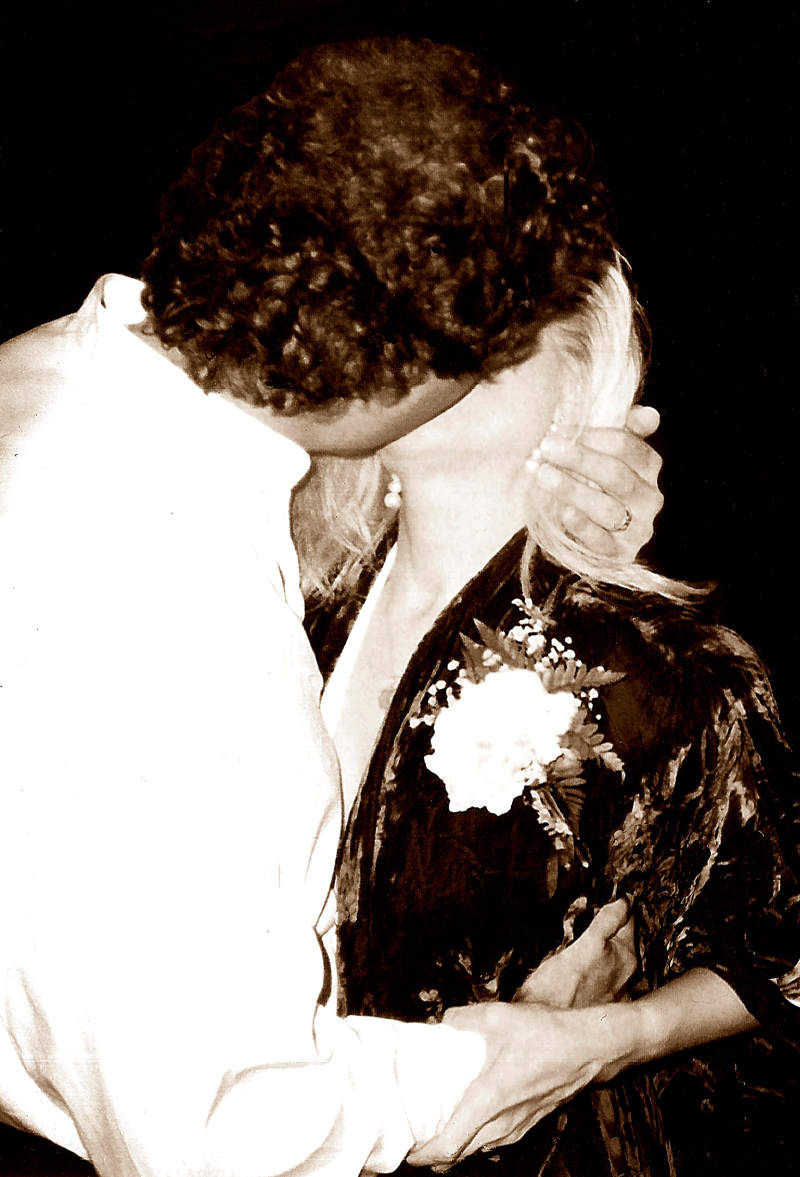 seems crass. This film, from a screenplay I co-wrote (with Patricia Royce) called "To Cross the Rubicon," was being produced in Seattle, and at some point early in the process I went to the company office and met the company attorney, Pete Wilke, Esq. Not long after, Mr. Wilke, Esq. negotiated my contract for the film, we fell in love, and on Oct. 1, 1990 we drove to the courthouse in Mount Vernon, Washington, where Judge Gerald Mullen postponed his lunch to solemnly don a long black robe, and in the company of our two witnesses, court secretary Pam Green and jovial bailiff Harold Johnson, we took our vows. I remember wondering if the courthouse/elopement scenario would feel generic and unemotional, but when Judge Mullen said, "The union into which you two are now about to enter is the closest and tenderest into which a human being can come," I was a goner.
We moved from Seattle into my L.A. apartment. I got pregnant. We moved into a bigger house. He passed the California Bar. We had our son. We shared time with his daughter. We struggled with our careers, wrestled with money, had good times and bad. Work. Marriage. Schools. Careers. Playgrounds. Families. College. Parenthood. Life.
Being married is an interesting journey. You start with a powerful cache of feeling, an idealized sense of this person you're latching yourself to, yet with a firm grip on the point and purpose of your commitment. At least, that was my experience. But learning about your mate is the real adventure, isn't it? Pete was unlike any man I'd ever known. Quiet and laconic, like a lawyerly Gary Cooper, he was an avid athlete, a doting father and, I discovered, a prolific songwriter with a voice as sweet as caramel. Banging on his left-handed guitar in our barely furnished living room, he concocted a musical built around his best songs: "Country Rules" (originally called "Country! The Musical"), which he ultimately produced in the late '90s at what was then the premiere country music venue in Orange County, Calif.: The Crazy Horse Saloon. Audiences were delighted, and good reviews followed, most notably one that appeared on the front page of the L.A. Times' calendar section. Appropriately encouraged, he then wrote what was to be his first album, "Down from Montana," recorded in Nashville, reviewed enthusiastically online, and still playing on Montana radio and in homes the country over.
Three years ago Pete was in his car, stopped at a crosswalk waiting for a couple of pedestrians to make their way across the street, when a distracted driver smashed into him from behind at about 25 miles an hour with no attempt to brake. Pete's head had been turned slightly to the right; the impact was stunning, and amongst other injuries, his right frontal lobe sustained damage. "MTBI," they called it -- mild traumatic brain injury. Mild because he can still walk and talk. The impact on his life, however, was anything but. In fact, nothing has been the same since.
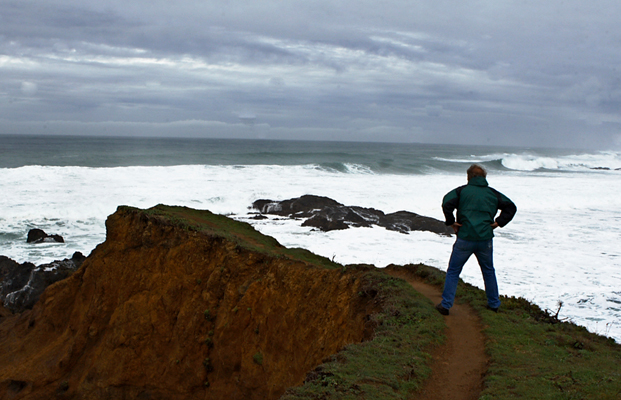
This is a man who rarely took an aspirin. A man who hiked down the Grand Canyon almost every year and trekked through the Montana wilderness pheasant hunting every fall. A man for whom music, theater, singing and the whole gamut of sensual, creative and aural pleasures was deeply appreciated. A man who longboarded down the Strand with his teenage son and played softball with his band of buddies. Who, even after being hit by a car as a pedestrian and breaking all sorts of bones and body parts years before, had healed quickly enough that a walking trip through Spain was doable only a year later. That kind of man. The man before MTBI.
In the three years since, Pete's world has been about ERs, hospital visits, neurology treatments, pain management, ear/hearing care, and pharmaceutical assistance for a myriad of injuries and symptoms including painful ear nerve damage, considerable hearing loss, 24/7 tinnitus, excruciating head pain, cognitive challenges, persistent startle reflex, loss of certain emotional components, etc. Though the cognitive struggles have improved significantly, allowing him to continue and rebuild his law practice (which suffered in the first year after the injury), and though the extreme nature of the head pain has subsided enough on a day-to-day basis that he's once again able to enjoy many aspects of his life, the landscape of his existence -- and ours as a couple, a family -- has changed significantly.
He has to wear hearing aids now and cannot hear well enough inside his head to sing or play guitar, yet he can no longer go to clubs to listen to music because the volume is intolerable; the same with movies and sporting events. Softball is out, hunting is a thing of the past, and travel became challenging. Activities with our son in the two years before college were mostly nonexistent. Sometimes Pete could barely tolerate talking, and silence became a big part of our lives. Laughter? Not so much.
The pain level got so extreme last year that he hit a full-blown crisis that resulted in him leaving home for a couple of months in an attempt to quell the pain inside his head and heart. It was a brutal experience for him, for me, for our family, one that shook us all to the core. In his absence I not only had to deal with our son's and daughter's confusion and my own grief at the potential loss of the marriage and husband I'd known, but to confront my fears and inadequacies as "the wife of a brain-damaged man."
One thing that is very much missing from the treatment protocol of brain injury -- traumatic or mild -- is guidance and assistance not only to the injured party but to their families, as well. It is virtually impossible, as a neophyte to the injury and its many enigmatic results, to have any notion of what you're getting into; to understand the full spectrum of imminent impact on the family system, the marriage, the personality of the injured; to know the best treatments, the most advantageous way to handle stress, the sense of isolation, etc.
Regardless of what you may think you know, you don't know squat. And yet even in a major city like Los Angeles, there is no social worker to take your family's hands after a diagnosis, no instructional program to attend, no support whatsoever for how to deal with this monolithic event. I was given no advice or information that would have alerted me to many of the unexpected ramifications of not only how a brain-injured person might act, but how best to respond, how best to be a partner, a family member, a caretaker to that brain-injured person. In all of L.A. I could not find one active support group specifically for the spouses or families of the brain-injured or for the brain-injured himself.
This is a shocking deficit, particularly in this era of so many brain-injured athletes and returning vets dealing with the short- and long-term consequences of this most confounding injury. Luckily, I was referred by Pete's neurologist to a brain injury survivor from a now-defunct support group who proved to be a desperately needed and deeply appreciated source of insight and perspective that only a person who'd gone through the injury could be. In a way, she saved us from total familial implosion.
After talking to her, it became abundantly clear that I needed to better educate myself, to learn what Pete actually needed from me rather than what I thought I should be giving him. They call it the "invisible injury" for good reason: unlike with TBI (traumatic brain injury), where the injury and resultant symptoms are so obvious, MTBI patients can seem normal. They walk and talk and do many of the same things they used to. What is not readily understood is the "mindstorm" that is going on inside their head: the confusion and anguish, not only about what they're experiencing, but the resentments they feel and the conviction they have that nobody really understands what they're going through. Which is most likely true.
My re-education was all-encompassing. I ordered books and read everything I could find online. I talked to doctors and therapists and alternative medicine practitioners. I sought the comfort and counsel of friends and family members and got through the days. I made adjustments in my thinking, my reactions, my expectations. I dealt with the fear that neither my husband nor my life would ever be the same. It was gut-wrenching and terrifying, but mostly my heart ached for the anguish Pete was experiencing -- and I missed my sweet, good man.
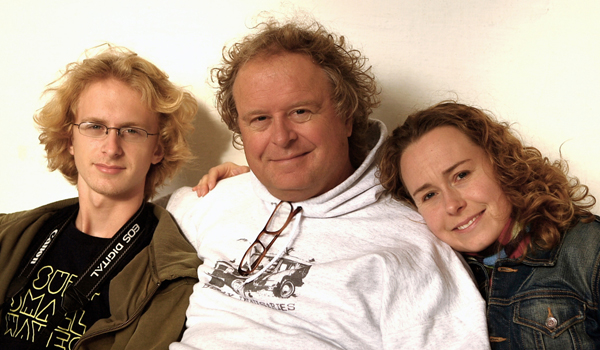
As difficult as it was, the time away proved restorative for Pete, and he ultimately came home. It was a confusing and often a very challenging transition, but little by little, life got back to some kind of normal. He reconnected with his kids and was able to spend more time on his practice. The tinnitus, head and ear pain were still ever-present but definitely more manageable, and the rage and confusion he'd felt about this life-shattering injury evolved to a more tolerable level of acceptance. In fact, he's so stoic about it that I sometimes forget he's got buzzing and whirring going on in his ears every minute of every day, or that so many of the things he loved most in life -- music, sports, activity -- can no longer be experienced. His identity as a person, a man, a husband and father, has been compromised by this injury, and that's got to just get to him. I know when I really think about it, all I want to do is cry.
But he doesn't cry; he just gets on with his life. He needs to rest more often during the day, take breaks from activities when the pain in his head gets too intense, and often by Friday night a long conversation with his wife is not doable. He doesn't laugh as often, but we went to a movie (a quiet one) the other day, and he recently hiked the Grand Canyon (albeit slowly) for the first time in years. He's taking care of his family, his work; he's living his life. He even picked up his guitar a while ago and tried. It didn't sound good to him, it didn't feel good, but he tried. I hope he'll try again.
As for us, we're a "work in progress," as he says. Despite all that's improved, he is a different man. 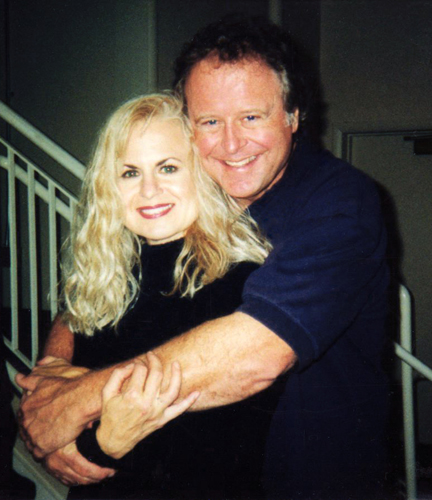 He still struggles with accessing his higher-band emotions (empathy, love, remorse, compassion), a common result of frontal lobe damage and a particular consequence I struggle with. Some days are better than others. Sometimes I do a commendable job of dealing with it; others, I'm a mess. Sometimes he seems fully engaged, but other times he's as cold and distant as a stranger. It's hard for us both to realize that someone who loved and felt with such depth and intensity cannot fully get to those feelings at will. His neurologist says they're there, somewhere in there, but that he just isn't able to get to them -- yet. There's hope. But brain injury is a complex and mystifying event, this I've learned, so I can't help but wonder how long it will take for him to once again look at me with the full range of his feelings. I've learned from experience, and I've been ably taught by my mentor, that time is not to be predicted, watched, gauged. It's the worn but wise cliché of "one day at a time." And it takes time -- lots of time -- to heal a brain.
But he's here. He may be different in some ways from the man he was, but the man who is here, who is smiling at me from across the room, who loves me however he can love me and works so hard to find solutions and compensations for where he's lacking, is still the man I love. The concept of "for better or worse" was never so poignantly felt as it has been for both of us these last years, and this is when you realize what stuff your marriage is made of. Not whether he makes you laugh, can keep pace on a walk, or still writes you musical poetry. None of that ultimately matters. What matters is resilience, loyalty, commitment, empathy, compassion. What matters is remembering and re-educating. Holding on and letting go as needed. Understanding that this "tenderest union" is tough, as well -- tough enough to endure and remain grounded, even in the age of MTBI.
Some resources I found helpful:
All photos courtesy of Lorraine Devon Wilke
___________________________________________________________
Follow Lorraine Devon Wilke on Facebook, Twitter, and Rock+Paper+Music. Find details and links to her other work at www.lorrainedevonwilke.com and her Author Page at Amazon, watch her book trailer HERE, and be sure to follow her adventures in independent publishing @ AfterTheSuckerPunch.com.
AFTER THE SUCKER PUNCH
by Lorraine Devon Wilke
______________________________