
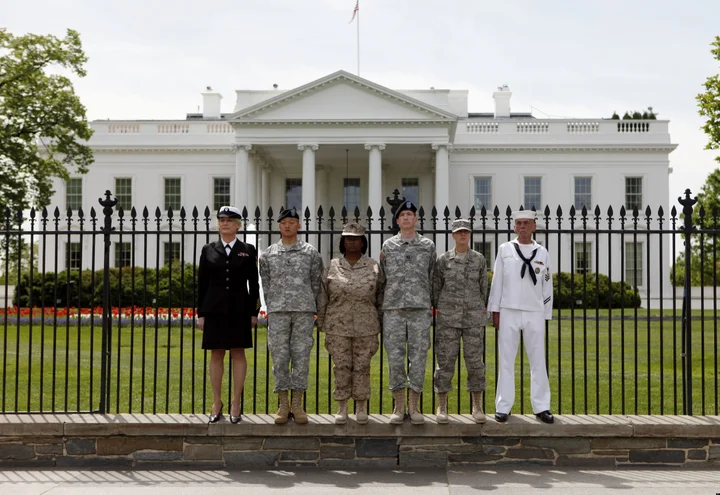
Every year on this day, military veterans are asked to "come home." As they march down our city streets, it is clear that this day honors the service and sacrifice of those who survived, those who were lucky enough to come home.
But as proud as we may seem, reunited with our compatriots, celebrated by our neighbors who line the sidewalks in support, not all our journeys are reasons for joyful celebration. We returned home without friends, without limbs, without the blissful innocence that once shielded us from the punishing realities of war. Post-traumatic stress, depression, physical wounds and sexual trauma have inflicted permanent scars on a growing population of our generation's war veterans. The pain from these injuries of war only escalate as the combat deescalates.
Many of us get treatment and begin our long road to recovery the moment we step back onto American soil. But for some of us, the healing cannot begin until we enlist in another war at home. Since joining the ranks of gay veterans, I have publicly called this war a battle for equality, integrity, and many other powerful platitudes that resonate well throughout the airspace of a media war-zone. But at the heart of my struggle to end unjust discrimination in the military, these bold moral principles become mere words; the motivation to keep fighting in this war resembles the motivation we realized in Iraq. We did not fight for apple pie, the Constitution, or purple mountains' majesty. We fought for each other.
As we fight to repeal "Don't Ask Don't Tell," we know that this fight can easily be more painful than physical combat, as the people we fought to protect subject us to the harsh bigotry of popularity polls and the soft bigotry of political inaction. Caught in this battlefield, it is easy to claim victimhood and suffocate in the sadness of national betrayal. Gay Americans, like all scapegoated and stigmatized minorities in America's history, know this feeling all too well. But just as all the patriots who had to come home to fight for equality, we cannot heal our injuries by permanent sorrow and self-pity. The only treatment that can heal the wounds of betrayal and hatred is a recommitment to fight for each other, to stand up for each other, to love one another.
As difficult as it might be, we find healing in the fight. We re-enlist as activists, thrust into public roles while mending private wounds. Like the Grand Army Republic, who camped outside the halls of power protesting in uniform after the Civil War for racial equality, or the Veterans for Peace who march and stand boldly to end the failed policies that subjected any of us to the killing fields in the first place, we are all called upon to serve again. For those whose careers were cut short, our new duty fulfills the true purpose of the uniform: defending our principles of freedom and justice. This is the kind of war that can never end.
As the military's suicide rate has reached historic levels, doubling that of the rest of society, it is easy to see the dangers of hopelessness and escapism among many of our veterans. Some of us come home and want a rare moment of privacy. We have certainly earned our moment to bask in the quietude of peace. But soon our training catches up to us as we see others suffering. We realize our true self-worth when we fight on behalf of others. Like Lieutenant Dan in "Forrest Gump," we cannot help but shout back at the howling winds in a lonely shrimp boat, tossed about in every direction by overpowering waves and despair, seeking out the battle we were meant to fight, yelling "Is that all you got?!" In so doing, we finally start finding our way home.