
- BIG NEWS:
- Green Energy
- |
- Animals
- |
- Food Politics
- |
- Green Living
- |
If you are thinking about making the switch to organic food, eggs and milk are a good place to start, for two fairly simple reasons.
1) Organic Cows and Chickens Eat Grass
If you eat your vegetables, you have more nutrients in your body. The same goes for cows and chickens that are fed grass.
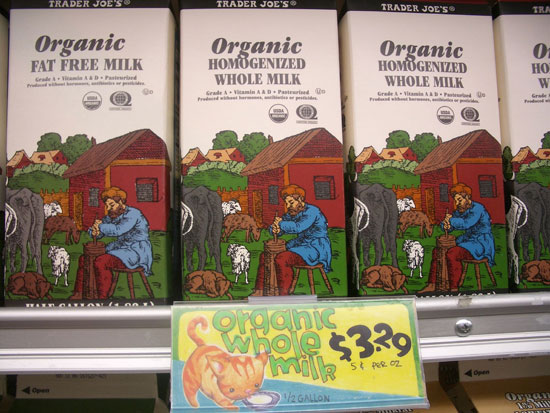
On Organic Milk
Despite the nay-saying from the National Dairy Council, several studies suggest there is an unquestionable nutritional difference between organic and regular milk. The most recent, released by Newcastle University in the U.K., states organic milk has:
• Sixty-seven percent higher levels of vitamins and antioxidants
• Sixty percent more conjugated linoleic acids than regular milk
• Higher levels of good Omega-3s
• Lower levels of Omega-6s than conventional milk.
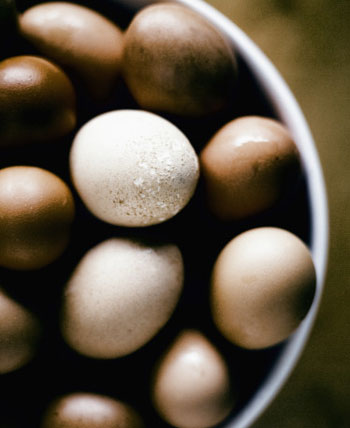
On Organic Eggs
Similar results were found in a Penn State study on eggs, which compared eggs from birds raised on an industrial diet to eggs from pastured chickens. According to the study, eggs from pastured chickens have:
• Three time mores omega-3 fat
• Nearly twice as much vitamin E and 40 percent more vitamin A in yolks
The Penn State study also suggests that the kind of grass is a significant factor. Pastured chickens feeding on mixtures dominated by clover and alfalfa produced 18 percent more omega-3 fat than those that ate grass alone. Also check out Also this organic egg report from Mother Earth News and the Poultry Site's definition of healthy eggs.
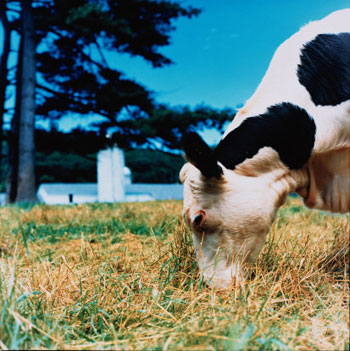
2) Organic Milk and Eggs Taste Better
You don't need science for the second reason: taste! Raised in an area that still had fresh delivered milk from grass-fed Jersey cows, I was a bit spoiled in the milk department. At a young age, I refused to drink "store-bought milk," and still find organic milk to taste richer and creamier, without the metallic aftertaste that seems to linger in some grocery store brands.
The Cleaner Plate Club has a detailed taste test, with photos, on organic and conventional scrambled eggs. The author finds that organic eggs are richer in color and flavor, and perhaps even more satisfying, deterring over-eating.
Conduct your own taste test and comment on the results below.
More from the Huffington Post
::Organic Pantry: Easy Tips For Stocking Your Shelves
::How to Get Your Kids to Love and Appreciate Your Efforts to Feed Them
More from TreeHugger on Organic Milk
::Brit Study Says Organic Grass-Eating Cows Give Healthiest Milk
::Organic Milk Really is Healthier
::Participate in the Milk Debate in the TreeHugger Forum
More From TreeHugger on Organic and Free Range Chickens
::Cage-Free Is All The Rage
::How to Green Your Meals
::Another Kind of Chicken Coop
Photos from top: Flickr; Ray Kachatorian/Getty Images; Meredith Heuer/Getty Images.
Follow Mairi Beautyman on Twitter: www.twitter.com/mbeautyman
Want to reply to a comment? Hint: Click "Reply" at the bottom of the comment; after being approved your comment will appear directly underneath the comment you replied to
Thanks NoSillyName, we made a correction, it should be pastured chickens.
I agree with you completely. Taste & texture of both, color of eggs, nutritional quality. The lack of CLA in the modern American diet has been named by some scientists as a cause of the obesity epidemic.
As for the higher price, I don't use much of either product so when I do, paying more for quality is worthwhile, even on my tiny monthly income.
However, the use of the word, PASTEURIZED in reference to chickens has thrown and distracted me.
You also used "pastured" and I think the other word may have gotten through spell check.
I agree it's the organic tastes better but I just cut way down on the dairy anyway.
Hell, with all of the hormones, antibiotics, and other chemicals pumped into farm animals in order to keep them alive in hellishly crowded (but commercially desirable) conditions, this alone is a worthwhile reason to go organic. We already know these find their way into the milk and eggs, specifically. If YOU other guys want to gamble that large amounts of bovine estrogen won't make you soft and give you "man-boobs," that's your decision.
Me ... I have enough trouble staying lean (forget about cut). I don't need the additional challenges that commercial dairy, meat, and eggs provide.
All true; BUT, organic does not necessarily mean grass-fed.
That was my big beef (ha ha) with this article. On the organic eggs, when it says "100% vegetarian fed," that usually translates into corn, and not grass. The label must specifically say "free range," and even then you should be leery of that claim. It's best to just buy eggs from local farmers markets--if you are lucky enough to have one nearby.
I recently read Michael Pollan's "The Omnivore's Dilemma". Seems you may know about it already, but get it if you don't. The difference between small local farm, and industrial organic is night and day.
Lit,
Thank you for your post, this is definately something this article overlooked. That you have to really check out the brands you buy. I am fortunate enough to live somewhere where I can actually drive half an hour to a farm and buy the overstock eggs that they don't send to market from the barnyard itself. Amazing deal- two flats (about 4 dozen eggs) for two dollars!!! I or my neighbor will go and buy eggs for my whole neighborhood, as buying that much in bulk makes up for the cost of gas to get there. And I can see the farm itself and the conditions of the chickens and their feed.
When it comes to milk, I did online research to find out which local dairy farm produced the highest quality organic milk before selecting it at my local Trader Joe's. My vegetables i buy at a farmer's market.
Unfortunattely, as you point out, most people are not fortunate enough to be able to get their food directly from the farmer, and they should really be aware that you can't just buy something that says "organic" and assume it 's all the same thing. You need to do a little research first and find out what the cows were specifically fed.
And if possible, it is ALWAYS better to buy milk and eggs from local producers, as it is much more energy effective to buy locally than buying milk or eggs which were shipped in for far away.
One uncomplicated reason NOT to choose organic: the cost. I can barely afford the skyrocketing cost of groceries as it is. I don't have room in my budget for $7 a gallon organic milk. Sorry.
You must be logged in to comment. Log in or connect with