by Marcia Ishii-Eiteman, senior scientist at Pesticide Action Network
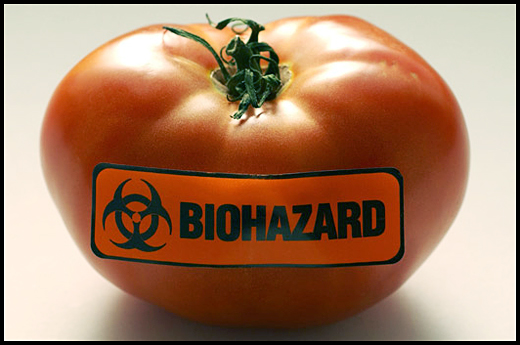
Very big news exploded across the papers yesterday: Eating genetically engineered (GE) corn has been strongly linked to serious health effects--including mammary tumors and kidney and liver damage. A team of European scientists released the first-ever long-term animal feeding study of the health effects of eating GE foods in the peer-reviewed journal Food and Chemical Toxicology. How and why we can find ourselves 15 years into the commercialization of GE crops without a single long-term, animal health impact study until now is the story beneath this story. I'll get to that in a minute.
Meanwhile, news of the study has gained global currency, and already France has called for a probe that could lead to European Union intervention, including emergency suspension of imports of the GE corn in question, a Monsanto product. Back at home, the findings take on particular relevance as California voters consider the Proposition 37 Right to Know initiative to label GE foods and U.S. Department of Agriculture considers approving a new wave of GE crops, starting with 2,4-D corn.
In a nutshell, the scientists, led by University of Caen molecular biologist Gilles-Eric Séralini, tested the long-term health effects of feeding rats diets consisting of different percentages of Monsanto's RoundUp-Ready corn, both from fields treated and not treated with the herbicide RoundUp. They also tested the effects of RoundUp alone by comparing the health of rats fed a conventional (non-GE) corn diet with and without the addition of RoundUp to their water, at levels that have been found in tap water or in GE feed.
The researchers found that rats fed GE corn and those whose water contained environmentally relevant levels of RoundUp faced the following:
- Two to three times more large tumors than the control group;
- The females developed mammary and pituitary gland tumors, and suffered pituitary gland abnormalities and hormone disruption;
- Male rats also developed tumors, but in particular experienced serious kidney and liver damage;
- 50 percent of males and 70 percent of females died prematurely, compared to 30 percent and 20 percent, respectively, in the control groups.
And the effects grew over time, so that by the beginning of the second year of the study, 50 to 80 percent of the females in all treated groups had developed large tumors, versus only 30 percent of the control group. Why haven't we heard of these kinds of results before? To date, we've only had a handful of short-term lab studies, almost none stretching longer than 90 days, the equivalent of adolescence in the study animals. The kinds of tumors and organ damage found by the European scientists take a bit more time to develop.
No single study can be definitive, but what Séralini's work points to is the need to take very seriously, and more rigorously understand, the risks to human health posed by GE crops and foods.
Here's the bigger news story: Why is this the first long-term health study on the effects of eating GE foods ever to have taken place, despite their presence in our food supply for 15 years?
Unfortunately, independent research into the health effects of GE foods before they are released into our food supply has been virtually impossible in the U.S. The "Big 6" pesticide and biotech companies that manufacture and tightly control patents on GE products have suppressed and restricted research into the efficacy and health impacts of their products. Licensing agreements expressly forbid research unless it has been approved by the patent holders, and they retain and exercise the right to prevent publication when results are not as desired. Scientists have been complaining about this state of affairs since at least 1999. More recently in 2010, a Scientific American editorial again noted both the lack of access and the suppression of research.
Industry players repeatedly insist that their GE products are safe, but they do so on the basis of studies that have never been repeated and ones that independent scientists have criticized as being deeply flawed. Repeating a talking point is not the same thing as repeating a study.
Meanwhile, contrary to popular belief, U.S. regulators at the Food and Drug Administration do not require independent studies verifying safety before approving the release of these products into our food supply.
The Séralini study will draw predictable opposition from Dow and Monsanto as these companies rush new GE crops like 2,4-D-resistant corn to market. And who knows how long this particular news cycle will take to play out.
I can only hope that the shockwaves generated by this study will wake up the regulators in our public agencies who have been willfully asleep at the switch for 15 years now. In the meantime (since said regulators seem to be clinging fast to their pillows), it appears to be up to Americans to assert our right to know what's in our food and to choose for ourselves whether to eat genetically engineered products or not. This fundamental right to know will be at the ballot box in November when Californians have the opportunity to vote for Proposition 37 and demand labeling of genetically engineered foods.
At present, many of the foods we eat and feed our children--up to 80 percent of the products on grocery store shelves--include genetically engineered ingredients. But without a label, the only
is if it's certified organic. Pesticide and GE seed corporations like Monsanto want to keep us in the dark to maintain unfettered, unlabeled access to the market. But we have a right to know what we're eating! Help us fight for the right to know:
To read Pesticide Action Network's
on Proposition 37, see our
on health and environmental impacts of genetically engineered foods, and check out the fully referenced synthesis by independent scientists
Marcia Ishii-Eiteman is a senior scientist and director of the Sustainable Food Systems Program at Pesticide Action Network (PAN). Marcia holds a PhD in ecology and evolutionary biology from Cornell University. She has written extensively on the ecological, social, and political dimensions of food and agriculture, and was a lead author of the UN-sponsored International Assessment of Agricultural Knowledge, Science and Technology for Development.
For more from Maria Rodale, go to www.mariasfarmcountrykitchen.com
Our 2024 Coverage Needs You
It's Another Trump-Biden Showdown — And We Need Your Help
The Future Of Democracy Is At Stake
Our 2024 Coverage Needs You
Your Loyalty Means The World To Us
As Americans head to the polls in 2024, the very future of our country is at stake. At HuffPost, we believe that a free press is critical to creating well-informed voters. That's why our journalism is free for everyone, even though other newsrooms retreat behind expensive paywalls.
Our journalists will continue to cover the twists and turns during this historic presidential election. With your help, we'll bring you hard-hitting investigations, well-researched analysis and timely takes you can't find elsewhere. Reporting in this current political climate is a responsibility we do not take lightly, and we thank you for your support.
Contribute as little as $2 to keep our news free for all.
Can't afford to donate? Support HuffPost by creating a free account and log in while you read.
The 2024 election is heating up, and women's rights, health care, voting rights, and the very future of democracy are all at stake. Donald Trump will face Joe Biden in the most consequential vote of our time. And HuffPost will be there, covering every twist and turn. America's future hangs in the balance. Would you consider contributing to support our journalism and keep it free for all during this critical season?
HuffPost believes news should be accessible to everyone, regardless of their ability to pay for it. We rely on readers like you to help fund our work. Any contribution you can make — even as little as $2 — goes directly toward supporting the impactful journalism that we will continue to produce this year. Thank you for being part of our story.
Can't afford to donate? Support HuffPost by creating a free account and log in while you read.
It's official: Donald Trump will face Joe Biden this fall in the presidential election. As we face the most consequential presidential election of our time, HuffPost is committed to bringing you up-to-date, accurate news about the 2024 race. While other outlets have retreated behind paywalls, you can trust our news will stay free.
But we can't do it without your help. Reader funding is one of the key ways we support our newsroom. Would you consider making a donation to help fund our news during this critical time? Your contributions are vital to supporting a free press.
Contribute as little as $2 to keep our journalism free and accessible to all.
Can't afford to donate? Support HuffPost by creating a free account and log in while you read.
As Americans head to the polls in 2024, the very future of our country is at stake. At HuffPost, we believe that a free press is critical to creating well-informed voters. That's why our journalism is free for everyone, even though other newsrooms retreat behind expensive paywalls.
Our journalists will continue to cover the twists and turns during this historic presidential election. With your help, we'll bring you hard-hitting investigations, well-researched analysis and timely takes you can't find elsewhere. Reporting in this current political climate is a responsibility we do not take lightly, and we thank you for your support.
Contribute as little as $2 to keep our news free for all.
Can't afford to donate? Support HuffPost by creating a free account and log in while you read.
Dear HuffPost Reader
Thank you for your past contribution to HuffPost. We are sincerely grateful for readers like you who help us ensure that we can keep our journalism free for everyone.
The stakes are high this year, and our 2024 coverage could use continued support. Would you consider becoming a regular HuffPost contributor?
Dear HuffPost Reader
Thank you for your past contribution to HuffPost. We are sincerely grateful for readers like you who help us ensure that we can keep our journalism free for everyone.
The stakes are high this year, and our 2024 coverage could use continued support. If circumstances have changed since you last contributed, we hope you'll consider contributing to HuffPost once more.
Already contributed? Log in to hide these messages.