by guest blogger Anne Cooper
Our children's health and our nation's school food did not change for the worse overnight, but we can't put the brakes on the damage it is doing fast enough. Read on for my Recipe for Success for school lunches.
A strong school-lunch program eliminates highly processed foods and puts a strong emphasis on fresh whole foods cooked from scratch. But, as you might imagine, choosing fresh, locally grown foods presents schools with all kinds of challenges. Unlike those of 20 or 30 years ago, most of the cafeterias in today's schools lack fully functional kitchens and the trained staff to operate them, which makes actual cooking a virtual impossibility. Additionally, inadequate funding makes it extremely difficult to shift from highly processed to locally grown fresh food.
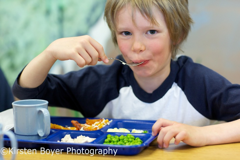
There are five major challenges to making school food healthier: food, finance, facilities, human resources/education, and marketing.
FOOD: To effectively implement a healthier school-lunch program, we need to eliminate:
• Highly processed foods full of sugar, salt, fat, additives, preservatives, and coloring
• Trans fats
• High-fructose corn syrup (HFCS)
• Fried foods
• Refined sugars and flours
• Vending machines that sell soda, candy, and chips
• Hormones and antibiotics
• Competitive foods, foods that are sold in school cafeterias but not part of the National School Lunch Program and therefore not regulated by USDA policies (the recently passed Healthy Hunger Free Kids Act will eventually give authority over these types of foods to the USDA). This means that day after day, children with money can buy such unhealthy items as fried foods, cookies, sodas, Slushees, and chips.
We should institute:
• Gardening classes
• Cooking classes
• Tastings and Rainbow Days held in cafeterias, as well as during cooking and gardening classes; these are a great way to get students to try unfamiliar foods, even something as simple as tasting different varieties of the same type of fruit can be a palate-widening experience for children.
• 30-minute lunch periods
• Recess before lunch
• Salad Bars and programs like Let's Move Salad Bars to Schools (Video)
• Cooking from scratch, which absolutely must be the focus of any healthy school-lunch program. Schools across the nation need to say good-bye to chicken nuggets and hello to roast chicken, toss out the french fries and get busy roasting potatoes and other colorful root vegetables. Canned fruits and vegetables should move over and make room for fresh ones. The Lunch Box website has all the tools schools need to help cook and serve healthier food.
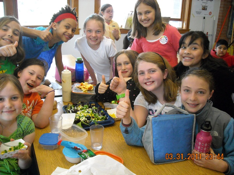
FACILITIES: Building, rebuilding, or retrofitting cooking facilities is a mandatory part of the change toward a healthier school food system.
FINANCING: All U.S public schools need more money to adequately finance their breakfast and lunch programs. Currently, the federal reimbursement rate is $2.77 per lunch. Most schools spend less than $1 on food per child per day, and this is just not enough.
HUMAN RESOURCES: Unlike school-cafeteria staff of the past, most of today's kitchen workers lack adequate food-service training. If we want better food for our children, then we have to hire, train, and adequately compensate professional staff.
MARKETING: It's one thing to make the food, another to get kids to eat it. Many successful school lunch programs around the country have employed traditional marketing techniques that treat children as potential customers: They "sell" the food. Attractive advertising, packaging, and service have been shown to increase consumption of a larger variety of school-lunch foods.
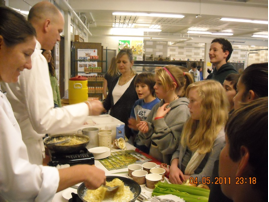
If we are going to positively impact the health of our children and our children's children, then we need to make a change and make it now. I believe that we must demand the following:
- Universal breakfast and lunch--healthy school meals should be a birthright in America
- Make school meals a health initiative and equate healthy school food to long-term healthy Americans
- Raise the federal reimbursement rate for lunch by $1.00, with a sliding scale based on local demographics
- Implement the new Institute of Medicine Guidelines
- Promote fresh fruits, fresh vegetables, and whole grains
- Institute Farm-to-School Programs and hands-on experiential cooking and gardening programs on a national basis
- Dedicate federal funds to rebuild kitchens
- Institute a National marketing campaign to make school food cool food
- Federally fund culinary "boot camps" to train school food-service staff to cook real food
Finally, we all need to do just one thing, just one thing every day to make the health of our children and our food supply a priority.
Perhaps, just perhaps, if we can do all of this we just might save our children--and the planet as well.
For more from Maria Rodale, go to www.mariasfarmcountrykitchen.com.