
For three days Rush Limbaugh verbally attacked a young Georgetown University law student who testified in support of the Obama administration's requirement that health insurance plans cover contraceptives for women. Among other pejorative terms, Limbaugh called the young woman a "slut" and a "prostitute." For this behavior, he has lost many advertisers, and is in danger of losing his credibility as a radio personality.
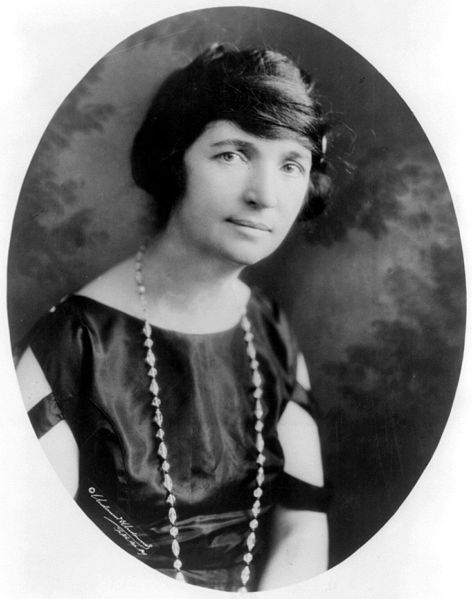
We need to remember that just a few short years ago, historically speaking, Limbaugh would have been speaking for the majority. More than any other single person, a diminutive woman named Margaret Sanger changed all that.
Working as a nurse among the poor of New York City, Sanger was entreated by poor women, over and over again, "Please, Miss, tell me what should I do, not to have another baby right away?" She was at a loss to answer this question, and when she asked doctors, they were of no help. Women from families of wealth and education learned how to plan their pregnancies, but poor women were vulnerable. Sanger saw these women having baby after baby, falling deeper into poverty. Desperate, they sometimes took the risk of aborting a pregnancy themselves.
Then one incident pushed Sanger over the line, giving her clarity about her life's work. This is how she tells the story in her autobiography. She had been called to the home of a Mr. and Mrs. Sachs, as she refers to them. When the husband, a truck driver with little income, came home, he had found their three young children crying and his wife unconscious from the effects of a self-induced abortion. Sanger and the doctor worked hard to save the woman, and Jake, the husband was at hand, doing what he could. Three weeks later, Sanger was preparing to leave the home after her final visit, and Mrs. Sachs said to her, "Another baby will finish me, I suppose?"
Sanger told the doctor that Mrs. Sachs was terribly worried about having another baby. The doctor was a kindly man who had heard this sort of thing so often that he just laughed and as he went out the door, he said, "You can't have your cake and eat it, too. Tell Jake to sleep on the roof." Sanger looked at Mrs. Sachs and saw on her face a look of absolute despair. "He can't understand," Mrs. Sachs said, "but you do, don't you? Please tell me the secret, and I'll never breathe it to a soul. Please!"
Sanger didn't know what to tell her, but she promised to come back. Night after night, the wistful image of Mrs. Sachs appeared before her, but she made all sorts of excuses to herself for not going back -- she really felt helpless in the face of this woman's need. Then the telephone rang one evening three months later -- it was Jake Sachs, and he was begging her to come, in an agitated voice. She hurried into her uniform, grabbed her bag and started out, dreading to enter that home again. When she turned into the dingy doorway, she saw the three little children, and then she went to the bedside of their mother. Mrs. Sachs was in a coma and died within 10 minutes. Sanger folded her still hands across her breast, remembering how this woman had begged so humbly for the knowledge that was her right to have. Mr. Sachs was pulling out his hair like an insane person and wailing, "My God! My God! My God!"
Sanger walked and walked and walked for hours through the hushed streets of New York. The sun was just coming up, as she arrived at her home. It was the dawn of a new day for her, too. She had been irrevocably changed by this experience. She ends this chapter of her book by saying, "I went to bed, knowing that no matter what it might cost, I was finished with palliatives and superficial cures; I was resolved to seek out the root of evil, to do something to change the destiny of mothers whose miseries were vast as the sky."
Margaret Sanger eventually became the founder of Planned Parenthood International. But it was a long, hard slog getting there. She began doing research on contraception, and in 1916 opened the first birth control clinic. Nine days later she was arrested. She was convicted, with the judge stating that a woman did not have "the right to copulate with a feeling of security that there will be no resulting conception."
She went all over the country with her message of contraception, violating the Comstock law against sending "obscene" reading matter through the mail, and was thrown in jail eight times, once in my hometown of Portland, Ore., now a progressive enclave. She was invited by a Portland church to address their congregation, and she was the honored guest at a lovely dinner. But then when she began to distribute her pamphlet Family Limitation, she and others were arrested. Undaunted, she writes, "I was tremendously gratified by seeing women for the first time come out openly with courage; over a hundred followed us through the streets to the jail asking, 'Let us in too. We also have broken the law.'"
Once again, almost 100 years later, women seeking information about contraception are called "obscene," and poor women are threatened with the loss of protection from unwanted pregnancies. But as Susan G. Komen learned last month, and Russ Limbaugh is learning now, great numbers of us will rise up in protest if women are denied access to contraception. Those days are over in this country. It's about time. Would that we could say the same for the whole world.
Marilyn Sewell hosts an on-line radio show on religion and public life: www.rawfaithradio.com