- BIG NEWS:
- Climate Change
- |
- Copenhagen 2009
- |
- Energy
- |
- Animals
- |
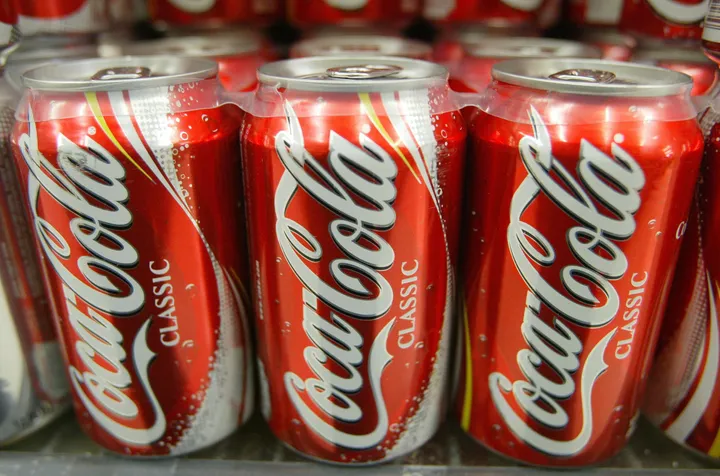
On October 6, the American Academy of Family Physicians (AAFP) announced its new partnership with Coca-Cola. What does AAFP get from this? A grant "to develop consumer education content on beverages and sweeteners for FamilyDoctor.org."
The AAFP, says its president, looks forward to
working with The Coca-Cola Company, and other companies in the future, on the development of educational materials to teach consumers how to make the right choices and incorporate the products they love into a balanced diet and a healthy lifestyle.
Coca-Cola must be thrilled with this. As its CEO explains in an op-ed in yesterday's Wall Street Journal, soft drinks are entirely benign and have nothing to do with obesity. Obesity is due to lack of physical activity and eating too much of other foods, not Coke. His view of the situation is entirely predictable.
But what about the AAFP? Family practice doctors have been telling me for years that it is not unusual for them to see overweight kids and adults in their practices who consume 1,000 to 2,000 calories a day from soft drinks alone. The first piece of advice to give any overweight person is to stop drinking soft drinks (or other sugary drinks).
This partnership places the AAFP in an embarrassing conflict of interest. I gather that members were not consulted. They need to make their voices heard. I hope AAFP members decide that no matter what Coke paid for this partnership, their loss of credibility is not worth the price.
Addendum: Here's what a Chicago Tribune blogger has to say about this.
Further addendum, October 10: As noted in the comments, AAFP members were consulted, more or less. Apparently, they decided Big Food was less of a problem than Big Pharm. Really? How about selling out to neither?
Cross-posted from The Atlantic Food Channel: Nutrition Blog
Follow Marion Nestle on Twitter: www.twitter.com/marionnestle
Connie Bennett: Speak Out Against Ill-Advised Coke-Doctors Partnership
For a doctors' group to take a six-figure sum from Coke is like accepting hundreds of thousands of dollars from Big Tobacco to create a physician-approved website claiming cigarettes are part of a healthy lifestyle.
Tamara Conniff: Why Red Bull Might Save Music
Music sales are plummeting -- both digital and physical. In part, this is due to the economy -- if a consumer has to choose between dinner and a CD, most will choose dinner.
Want to reply to a comment? Hint: Click "Reply" at the bottom of the comment; after being approved your comment will appear directly underneath the comment you replied to
See Connie Bennett's Profile
Dr. Nestle, you always post the most enlightening items. I'm so glad you spoke out about this. Please note that I linked to this wonderful piece in a new piece for the Huffington Post.
http://www.huffingtonpost.com/connie-bennett/speak-out-against-ill-adv_b_347706.html
Right on. We could, of course, continue our experiment with mercury in high fructose corn syrup.
i've herd tons abowt how 'toxic' sugar is, havng ben fiting brain cancer, and ya no what? its sugar. a natrl product. and is just fine for yuo in moderashn. this constnt hype of 'oh dont do anythng cas its bad fr yuo' gets reely old.....'drinkng, drugs and sugar'? give me a brake. to blame coca cola for obesity is the same as blaming remington for peepl killd by ther product.
honestly i'd rathr have a drink wth a naturl sweetner, aka sugar, than a diet drink wth a snthetc.
oh, and yeh i no how to brush my teeth too. i've got my big girl pants on! and that note has nothg to do wth sugar makng me 'obese'. *rolling my eyes*
So what exactly is the scientific basis for Coke being antithetical to a healthy diet? Drinking two gallons of whole milk a day probably isn't much healthier. I know lots of fat people that order a large water and two quarter pounders, is that really better?
"So what exactly is the scientific basis for Coke being antithetical to a healthy diet?"
Aside from the fact that sweet, acidic drinks are bad for your teeth, the main reason for sugary drinks being unhealthy is that people consume way too much of them. That's just my opinion of course, not the scientific view you wanted.
We also have sugar in too many other foods. For example, are there any PapaJohns pizza fans out there? One of the things that makes those pizzas good is the sugar in the pizza sauce.
I just sent AAFP an email expressing my dismay at this partnership, just go to their website (it's easy to find)...this seems to be a conflict to me.
By taking Coke's money they are now obligated to a message that isn't in the best interest of their patients but in Coke's best interest. I guess one one to look at it is that since doctors make their money by treating people that are sick then this works out to be a win/win for them...they get paid by Coke and encourage people to drink Coke and get sick, thereby creating more patients....I know that's way out there but I think they should consider what they are getting themselves into by selling out. What happened to the "do no harm" oath?
Why don't they partner with companies that make whole food juices or organic farmers that grow fruits and vegetables? Wouldn't that make more sense?
You know, it only makes sense that doctors team up with companies that sell products that make us sick. It keeps the doctors in the business of keeping us sick and their bank accounts full....
I don't trust any medical association. They are all in pocket of corporations.
I stopped drinking soda 8 years ago.
High Fructose Corn Syrup is the enemy of the people.
Please someone investigate AAFP and see if it's a front group for Corporate Food?
A spoonful of medicine helps the sugar go down.
I drink 6 to 10 sodas a day.
In March or so, my teeth hurt so I switched to Splenda based diet sodas....again, not trying at all to lose weight....
I lost 30 lbs. within 3 or 4 months.
It's one of the quickest and easiest ways to lose weight, provided that you drink soda in the first place.
If you look at a can of soda, you'll probably see that it has somewhere in the neighborhood of 100 calories. Say you drink six to ten a day, with all the sugary goodness intact. That's 600 to 1,000 calories added to your intake daily, or somewhere between a quarter and half of your daily calorie requirement. If you're eating a fairly typical diet on top of that, you're probably already meeting your daily calorie needs though, so all those hundreds of extra calories are just getting stacked up on top of it.
I like soda - or 'pop' in these parts - but the stuff is just bad for you. At least most energy drinks are vitamin fortified, not that it really gets them off the hook, but Coca-Cola? No nutritional value whatsoever. Moderation is key. At the level of consumption you described, which is pretty typical (fountain drinks are a big part of this), you could replace a whole meal's worth of calories a day with sugary soda if you hadn't already replaced it with low-to-no calorie diet soda. I'd go so far as to say that if Americans would eliminate their consumption of soft drinks for just one season - the length of time that you described - you'd see the weight of the average American sink like a stone.
"It's one of the quickest and easiest ways to lose weight..."
Just a couple of weeks ago, I decided to cut my sugary drinks down to one a day, and I've lost enough weight to make a difference in how my jeans fit. As you say, those drink calories add up very quickly.
With the risk of sounding negative in light of your obvious success in changing what you are drinking, I did want to through a couple thoughts out there.
I would encourage you to read up on organochlorides as a class of chemicals. There are not a lot of long-term studies with splenda, but given the high levels of carcinogenicity of some organochlorides, I would caution against long-term daily use.
Aspartame is another one I would strongly suggest avoiding. A measurable amount of aspartame is metabolized into methanol which is well known for its conversion to formaldehyde and formic acid. Not only is that terribly toxic, but multiple studies have actually shown people who drink diet sodas may actually gain more weight than those who drink the regular.
If you must have sweetened drinks, I have found that agave nectar is a good tasting low glycemic index sugar substitute.
There is a lot of information out there and it's not always easy to separate the truth from the sensationalism or big industry 'truth'. That being said, as a trained biochemist with fair experience in organic chemistry, splenda and aspartame (especially aspartame) are two things I don't allow my children to consume.
What HYPOCRISY from a medical group that USED to be above being bought.
In fact, when the American Heart Assoc allowed food companies to use it's "seal of nutrition approvalL" for heart smart foods, family practitioners were among the first to shriek that "sugary cereals" could get the Heart mark if they were whole grain, etc.
NOW the AAFP is endorsing Coke -- the stuff that can dissolve a nail after a couple of hours?
Yup -- money talks.
The only group with any integrity left seems to the AAP. American Academy of Pediatrics.
I always thought that it was telling that all the medical groups show their true colors via their name -- American Academy of Family Physicians, American College of Surgeons, etc. These are groups of, for and about the DOCTORS.
AAP is the American Academy of Pediatrics, not Pediatricians -- as in it's about medical care for children, not about what the doctors need and want.
I regret to burst your AAP bubble, but Coca-Cola and McDonalds are big corporate sponsors that are featured prominently on their convention website.
Although i'm off cane sugar, I would rather have it than HFCS. I use pure stevia only.
Kind of like the tobacco industry telling people to to smoke responsibly.
high fructose corn syrup is not your friend.
Time to start eating organic foods, because HFCS is in everything else in the grocery store.
Obesity epidemic coincides with introduction of DIET Coke.
You must be logged in to comment. Log in or connect with