There has been a preoccupation during the current American election cycle with how an incumbent president on the left has energized the Tea Party. Perhaps it should not be a surprise that in France, the combination of a president from the right and tough economic challenges has encouraged the resurgence of the hard left. The Front National on the hard right has been active in France for the last several elections. This time, the torch has been passed to former Front National President Jean-Marie Le Pen's daughter, Marine. Yet the real news is that after many years of slowly dwindling support, the far left is back in the form of the Left Party. This has implications for the election results and policy actions post-election.
Tom McGrath, an America business working in Paris, tells me that for decades, many in France have asserted that there's no difference between the two major political movements: the neo-Gaullist on the right and the Socialist Party on the left; they're both bureaucratic, socialist, and elitist. Jean-Luc Mélenchon experienced this firsthand and ditched the Socialists in 2008 because the party had become too limousine liberal, status quo, and centrist. Now, it looks increasingly like France's left is returning to the post-World War II habit of a split between a social democratic left and the far left.
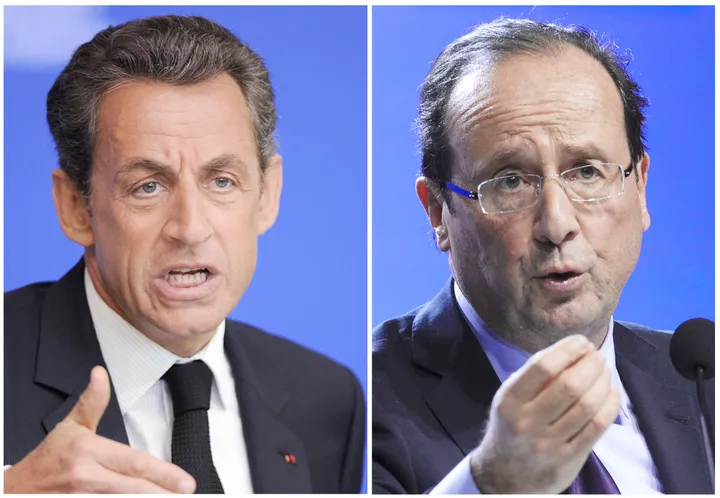
Mélenchon, currently backed by the Left Front, is feisty, full of ideas, deeply passionate (the French love impassioned pleas), and constantly on the attack. He makes his Socialist Party rival, François Hollande, look timid, plodding, and awkward. French President Nicolas Sarkozy is deeply unpopular, primarily for his personal style -- that is, appearing more focused on hanging out with the new rich and his famous wife than on engaging the average citizen and tackling the economic crisis. There are high odds against his reelection.
Many French voters are too young to remember the humiliating retreat François Mitterrand was forced to undertake in 1982. The Left Front, with Mélenchon at the helm, is having its Howard Beale moment -- "... mad as hell, [fed up] and... not going to take [it] anymore." It's unlikely that Mélenchon will get into the May 6 runoff; if he gets anything approaching 15 percent of the first round vote on April 22, Hollande will have to reach out to Mélenchon and cut a deal with him to secure sufficient support to assure his second round victory.
What could this mean for post-election France? This outcome could risk preventing France from undertaking any of the labor market and welfare reforms that Socialist politician Gerhard Schröder undertook 10 years ago. These reforms set Germany on a growth path that is leaving France behind in terms of employment, growth, credit rating, exports, and eventually the political clout that comes with superior economic performance. A France that ends up less likely to resolve its fundamental competitiveness problems means a weaker country and a less stable Europe. That would be bad for Hollande, bad for France, bad for Europe, and bad for America.
Mark R. Kennedy leads George Washington University's Graduate School of Political Management and is Chairman of the Economic Club of Minnesota. He previously served three terms in the U.S. House of Representatives and was Senior Vice President and Treasurer of Federated Department Stores (now Macy's).