More

Featuring fresh takes and real-time analysis from HuffPost's signature lineup of contributors
Martha Rosenberg

GET UPDATES FROM Martha Rosenberg
 

Are You Taking Pills You Don't Need? Ask Ghostwriters

Posted: 08/08/11 11:48 AM ET


Most people blame direct-to-consumer advertising, especially on TV, for elevating everyday anxiety to depression, depression to bipolar disorder, childhood behavior problems to psychiatric illnesses, lack of sleep to excessive sleepiness, migraines to epilepsy drug deficiencies and old age to hormone deficiency.

But ghostwriting also helps the national malaise of people suffering from and treating diseases that didn't even exist before and ballooning government and private health plans costs.

There are 200 U.S. medical education and communication companies (MECCs) who ghostwrite medical journal articles for pharma for $20,000 to $40,000 per article. Companies like Complete Healthcare Communications (CHC) whose phalanx of 50 medical writers, editors and medical directors promise a "84.5 percent acceptance rate for first-time manuscript submissions."

Ghostwriting was behind the blockbuster Vioxx, withdrawn in 2004 for doubling the risk of heart attacks. "Merck designed the trial, paid for the trial, ran the trial," Dr. Jeffrey R. Lisse told the New York Times about a Vioxx study he authored in the Annals of Internal Medicine that left out three cardiac deaths. Oops. "Merck came to me after the study was completed and said, 'We want your help to work on the paper.' The initial paper was written at Merck, and then it was sent to me for editing."

Medical journals themselves can make $450,000 off one such ghostwritten article, because pharma orders reprints which reps disseminate as sales pieces ("look, Doc -- it says right here").

In 2006, the editor-in-chief of the Journal of the American Medical Association (JAMA) Dr. Catherine DeAngelis had to apologize for a pharma-tainted article that defended the use of antidepressants during pregnancy and an article linking migraines to coronary risks in women. The doctor authors, it turned out, were getting money from antidepressant and heart medication manufacturers.

But ten months later, JAMA ran a study "designed jointly by the non-Merck investigators and Merck employees" and "supported by contracts with Merck and Co" that extolled the virtues of Fosamax, a Merck bone drug. Three Merck authors on the study disclosed they potentially owned Merck "stock and/or stock options" and the article's 11 other authors disclosed 40 research grants, consultancies and other financial relationships with drug companies including Eli Lilly, Pfizer, Roche, SmithGlaxoKline, Wyeth (now Pfizer) Novartis, Procter & Gamble and Merck. Since then, the FDA has issued several warnings about Fosamax and other bone drugs.

In 2007, the AMA itself was criticized for playing both sides of the enterprise street and making $50 million a year selling the names, office addresses and practice types of its members to data miners. The AMA's defense? Doctors could "opt out" of the privacy-invading program if they wanted to.
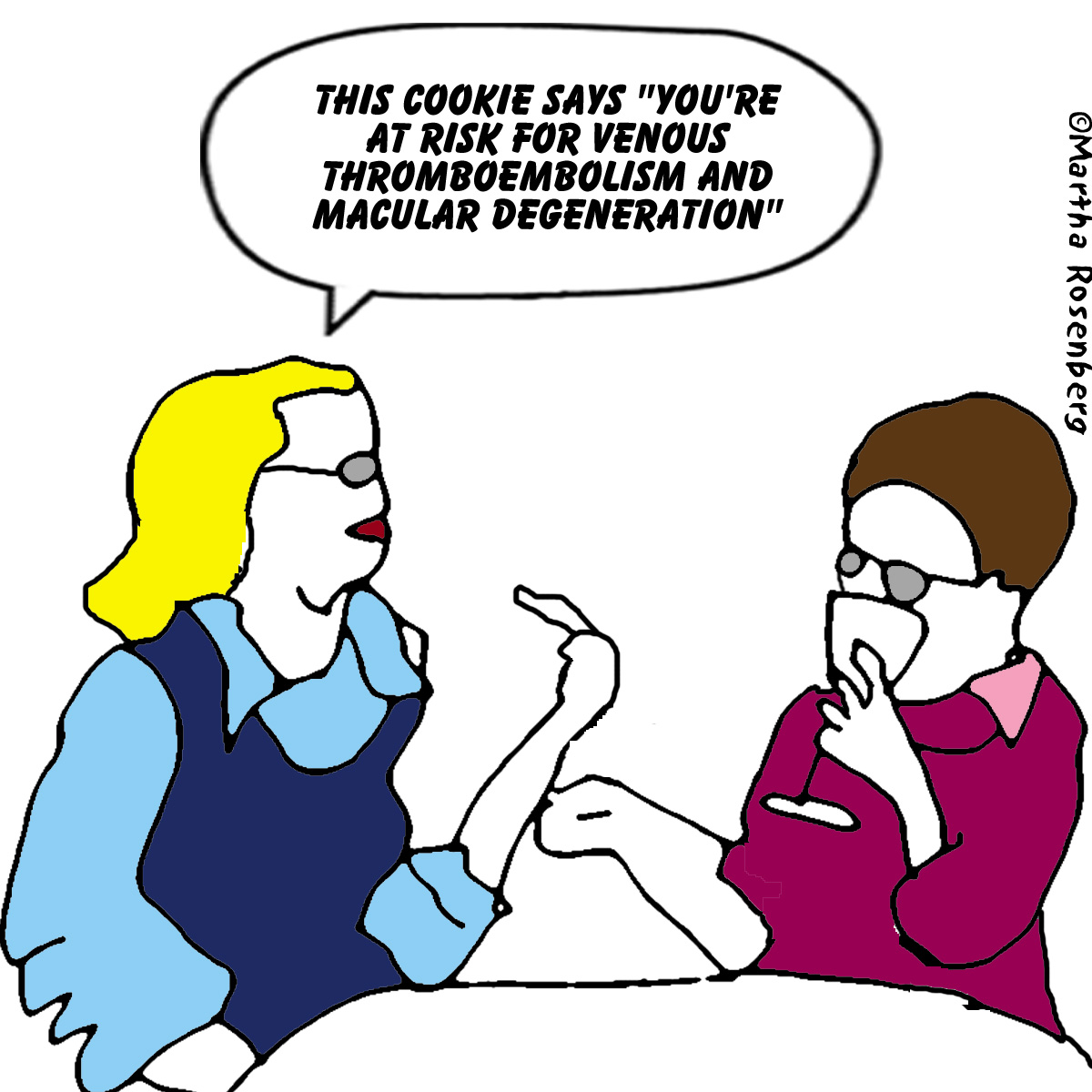
2011-08-08-fortunecookie.jpg

And then there are pharma's "unbranded" campaigns designed to look like real public health messages or communications from grassroots groups. Who can forget PR firm Cohn and Wolfe's faux grassroots group Freedom From Fear to sell Paxil, a pill now linked to birth defects? And the Wyeth (Pfizer) campaign, "The Change You Deserve," which said, whoever you are, you have depression and need Effexor? Now, a new unbranded pharma campaign, "Depression Is Real," running on radio stations, compares depression to cancer because it kills and diabetes because it doesn't go away. Kind of like pharma's huckstering.


  • Comments
  • 8
  • Pending Comments
  • 0
  • View FAQ
Comments are closed for this entry
View All
Favorites
Recency  | 
Popularity
09:54 PM on 09/07/2011
Millions of people take antidepressants to relieve depression and mood disorders, but antidepressants are also used “off-label” to treat certain types of pain, hot flashes and fibromyalgia-related fatigue. What few people realize is you can have some pretty unpleasant symptoms if you stop taking these medications abruptly. That’s why you should always taper the dose down slowly under a doctor’s care rather than stopping antidepressants suddenly. Why You Should Stop Antidepressants SlowlyUp to one out of five people who stop antidepressants experience a condition called antidepressant discontinuation syndrome. Antidepressant discontinuation syndrome is a reaction the body has to suddenly being deprived of the antidepressant medication it’s accustomed to receiving. People with this syndrome experience nausea, dizziness, difficulty sleeping, fatigue, sensory disturbances, anxiety and flu-like symptoms when they stop their antidepressants. It can occur with discontinuation of any antidepressant, but it’s more common when stopping sertraline or paroxetine. Why does antidepressant discontinuation syndrome happen? More at http://www.newsonhealthcare.com/why-you-should-stop-antidepressants-slowly/
10:33 AM on 09/03/2011
You make some very valid point but you have missed one of the most egregious stories. A Big Pharma company started and ran their own journal, but never disclosed their relationship to the readers. In this particular case, there was only one medical editor and no other staff. Numerous articles were published and there was no review by external physicians at all. Basically, the company was publishing articles touting the benefits of their drugs and then having their sales reps bring copies to physicians. The FDA eventually closed them down and issued a fine. By then, however, the damage was done. How many of us ever come off of a long term medication once it is started?
HUFFPOST SUPER USER
Walrus Man
04:37 PM on 09/02/2011
Medicine is a business. Eat balanced and moderate servings, Exercise, sleep well, drink enough water (not excessively) love and be loved, read, work and enjoy nature (flora and fauna) Take meds only when you really need them, (your doctor will tell you) when we include all the groups of food in our diets, very seldom need certain supplements.
photo
HUFFPOST SUPER USER
smusmu
10:15 PM on 08/29/2011
Yes I totally agree, even over the counter drugs such as vitamins can cause problems especially if someone has a pre-existing condition and they continue to take a certain vitamin supplements in abundance. It's important that you consult your doctor on all drugs and supplements.
I purchase drugs from http://adf.ly/2UO1G place but always consult my doctor and go for regular check ups. No matter your age, young or old, we all can be affected one way or another.
HUFFPOST SUPER USER
onionboy
Blessed are the Cheese Makers
02:43 PM on 08/23/2011
Your question and premise is a good one. I wonder, however, why you have ended the question after a discussion only of prescription pharmaceuticals. That question should be extended even further...to supplements, "daily" vitamins, shark cartilage, and so forth. Those are just as unneeded for many if not most.
02:27 PM on 08/24/2011
Most prescriptions can cause serious harm or death in very small doses. It would take a whole lot of shark cartilage or Vitamin A to even cause a tummy ache.
03:28 AM on 09/01/2011
Where did you come up with your information about MOST prescriptions causing serious harm or death in very small doses? That's patently false. Since the article is about taking pills you don't need, the shark cartilage, vitamin supplement argument is a valid one.
photo
HUFFPOST SUPER USER
Ranveig Elvebakk
Innovator, author and lecturer on weight and nutri
03:29 PM on 08/19/2011
Some 80% of all medication taken fro chronic conditions is unnecessary, much of it is harmful to our health, particularly diabetes medications. This is not because of what the guy on TV says or the ghostwriter writes, but because we don't suffer some illness that rained down from heaven onto righteous and unrighteous -- rather, we suffer chronic food poisoning from eating toxins we call food. The salesforce.TV does not make it easier to avoid those toxins or the medications we need to mask the damage they cause.And we need "modern." read: expensive ones. Do you know that aspirin is still unbeaten for anti-inflammatory effect? Until we demand - and receive - the information and motivation to rise above this ghetto of ailments and polypharmcy, we are willing victims of the enormous forces invested in keeping us there---
Ranveig Elvebakk, MD Author of "The Food Tree" and "A New Disease Model"