iPhone app iPad app Android phone app Android tablet app More

Featuring fresh takes and real-time analysis from HuffPost's signature lineup of contributors
Mary Liz Thomson

Mary Liz Thomson

Posted: June 22, 2009 12:00 PM

Planet Ocean: Riding a Green Ship to the Future We Want - Project Kaisei

What's Your Reaction:

Environmentalists have had to spend a lot of time sounding alarms over the years. So it's exciting to hear about a project that is taking on an appalling problem with practical solutions and creating commercial diesel fuel technology at the same time. I spoke recently with Doug Woodring, founder of Project Kaisei, a new group setting sail in August to research and clean up the Pacific Ocean Garbage Patch. The charismatic Woodring

2009-06-21-DougWoodring.jpg
has garnered an enthusiastic response for their efforts from around the world. His group was one of ten named global Climate Heroes by the United Nations Environment Program this year. He said, "Last week a group of Silicon Valley Investors actually stood up and clapped after our presentation". And no wonder. He and his eclectic blend of international social entrepreneurs, ocean enthusiasts, and world-renowned scientists from Scripps are going to help clean up a big mess.

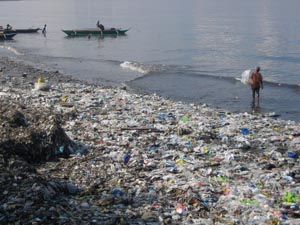
When people first hear about the Pacific Ocean Garbage Patch, most feel a deep sense of utter disgust. Hundreds of square miles of ocean, just North West of Hawaii are covered thick with floating human garbage -- discarded plastic bottles, cups, and bags from all over the world. The ocean's currents swirl this collection of garbage into a concentrated mass, creating what is also called The Plastic Vortex. More study is needed to accurately calculate its size, but some estimates put the patch at more than twice as big as Texas. It could be larger.

Clearly the Garbage Patch is a huge problem but no one is legally responsible for it.

Woodring said, "The garbage is out in international waters, the ocean's "No Man's Land". The plastic is degrading into small particles that fish eat and die from. The particles also attract a variety of toxins and PCBs."
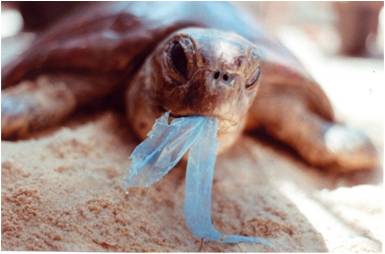
2009-06-21-TurtleEatingPlastic1.jpg
Scientists don't know exactly how badly this is contaminating our food and water supplies, but it can't be good. So who deals with this kind of thing? Until recently, there wasn't much of an organized response.

Charles Moore, the founder of the Algalita Marine Research Foundation, discovered the garbage patch while in a yachting competition. He has helped enormously to publicize the problem and is also leading an important voyage to collect more research on the Plastic in the Vortex. Project Kaisei is adding to these efforts by investing in new technology that can actually collect and recycle the plastic into diesel fuel. Their plans reflect a "new green economy" style of thinking that looks at the whole cycle of a problem.

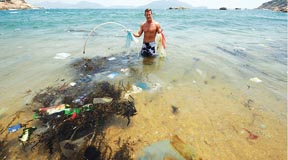
The project leader Doug Woodring is a water sports enthusiast with an MBA from Wharton. He's been working to bring new environmental technology to life for many years through global funds at Merrill Lynch and ventures in microwind and vertical green walls. Born in California, he lives in Hong Kong.
2009-06-21-S_DWoodring_in_Ocean_Pollution.jpg

Woodring was able to raise money to support a partnership with the acclaimed Scripps Institution of Oceanography at UC San Diego. I spoke with one their partners at Scripps, Principal Development Engineer, Jim Dufour, who was ecstatic about the opportunity for their crew of scientists (Professors and Grad students) to collect this new research on a voyage out to the Plastic Vortex. He said, "It's so important to be able to quantify the problem on the micro, chemical, and food chain levels". Dufour pointed out that The Plastic Vortex is such a visually compelling problem that it can be a springboard for innovation and help people understand less tangible issues such as CO2.

Project Kaisei will set sail from California to the Garbage Patch with two research ships this August, one from Scripps, The New Horizon, and one from San Francisco, a 151ft brigantine vessel, The Kaisei -- which means Ocean Planet in Japanese. The teams include scientists, plastic specialists, ocean voyagers, surfers, marine sanctuary supporters, and a National Geographic film crew. They will study clean-up methods and utilize new machinery for recycling the plastic into diesel fuels, and implement a second voyage next year as well. In the long run the goal is to employ idle fishing fleets for the full clean up and power their vessels from the garbage they collect. Project Kaisei is also aiming to put into operation new commercial technologies for recycling plastic garbage at the ground level where it originates -- before it gets to the ocean.
2009-06-21-S_SourcesofthePlasticVortex_BeachinSE_Asia_by_WallaceNichols.jpg

Jim Dufour from Scripps believes that "manufacturers of items such as plastic bags and cups bear some responsibility for their safe disposal. Society needs to start looking more closely at the whole life cycle of every product we use". There is both a private industry and common good responsibility here. Doug Woodring offers,

"Government regulations can be a positive driving force. Private companies often won't go to the next levels without them, but innovations and new patents go up with regulations". He says, "People used to think the ocean cleaned itself, but we're learning that's not the case. 95% of the world's plastics are never recycled, and a lot of it ends up in the world's oceans".


The good news is that there is value coming out of the garbage, especially before it gets to the ocean. Turning it into an innovative commercial opportunity is not out of reach.

Stay tuned for more information as the voyage sets sail in August.

Click here to find out more about Project Kaisei.


Environmentalists have had to spend a lot of time sounding alarms over the years. So it's exciting to hear about a project that is taking on an appalling problem with practical solutions and creating...
 
 
  • Comments
  • 11
  • Pending Comments
  • 0
  • View FAQ
Comments are closed for this entry
View All
Recency  | 
Popularity
04:28 PM on 06/23/2009
I hope much is learned by the project, and all the others expeditioning to the "garbage patch"

please remember, the problem isn't "out there", it's "in here" in our lives, supermarkets, refrigerators, etc

btw, the sea turtle photo i a well known fake...a stuffed dry turtle with a shred of plastic in its mouth

many real turtle-plastic photos can be found in the image library on seaturtle.org (search for plastic)

most of the photos depicting the "pacific garbage patch" are not out there but along our coast, where cleanup doesn't require an expedition or fancy technology...just some political will and personal action

coastalcleanup.org is a start

good luck out there, doug!

j
04:23 PM on 06/23/2009
(Remember that when we sink ships to build reefs, it is after they've been scoured of oil, gas, etc. Toxic chemicals have to be removed and the hulls cleaned before they can be sunk.)

I take your point, but even a small boat that sinks accidentally can quickly become a rich habitat-
and the original hull is engulfed.

I think the 2nd picture is a good example. It's hard to see, I think the guy was concentrating on getting a good shot of his pecs. But if it is like other patches I have seen, that dark matter is mostly organic, seaweed/kelp whatever. And by mass it is far larger than the debris that originally gave it it's foothold.

Again the fact that life thrives so well on these footholds, tells you that any small amount of toxins that come from slowly degrading plastic is not very harmful, Consider that aquariums usually have far more plastic by volume in them than the ocean, In fact they are often made of plastic themselves!

Do you at least take my point that there is another side to this story glaringly omitted here?

If they deserve the standing ovation they boast about, it’s for wiling Gov’t grants / donations from environmentalists etc to cruise the Hawaiian islands ‘utilizing new machinery’ to grind swaths of this ecosystem and it’s inhabitants into diesel fuel!! They are not kidding about the charisma this guy must have!
:)
09:54 AM on 06/23/2009
When people first hear about the Pacific Ocean Garbage Patch, most feel a deep sense of utter disgust

Oh how simply awful for them. For marine life on the other hand, floating debris provides a haven for an entire ecosystem inc. zooplankton which grow on it, all the way to fish that shelter under/feed and birds- seals etc.

If you clean this up, that's fine, I don't like unsightly garbage either, just realize it's for you're own sense of aesthetics. Like cleaning up a peasants vegtable patch and putting up an eco-friendly deck instead so you don't have to be 'disgusted' by his mess!
photo
CanisLatrans
Progressive/2nd Amendment Jewish Iraq war vet.
11:54 AM on 06/23/2009
Dear God, you're right! How did all those poor animals survive for countless millennia before garbage was invented?

I bet that turtle munching away on a scrap of pastic in the picture is having a vertiable smorgasboard of tasty plastics every day!

How about we feed you some pens, lighters, a couple diced-up frisbees and a plastic milk jug for dinner tonight? Mmmm, tasty, tasty! There's a "pass the A-1 moment" to be sure.
01:12 PM on 06/23/2009
They survived OK, but they only had sparse patches of floating vegetation
before that they used for the same purpose. Ice bergs are also havens for ocean life and are more numerous in warmer periods when more chunks split off.

But now the North Atlantic has also shown record plankton blooms- adding food supply right at the base of the food chain for the entire ocean, helping all kinds of species- because of more open water, plant food (Co2) and the shelter provided by debris.

I know it seems counter-intuitive, but nature does not share the same snobbish aesthetics as we do. It generally thrives on human waste. Just visit a landfill, or fishing port, or even a sewage plant! smorgasboard is right! and they probably do enjoy a little A1 sauce from time to time!
HUFFPOST SUPER USER
BannedNBoston
Is hemp legal yet?
11:02 PM on 06/22/2009
Well have noticed all the BILLIONAIRES like Virgin Boy arent putting a flottilla of barges
out to the plastic patch to chop and drain squeeze out the water and microwave it into diesel.
They just want the average slave to worry about not being green enough.
and not notice everything is imported.
photo
CanisLatrans
Progressive/2nd Amendment Jewish Iraq war vet.
11:51 AM on 06/23/2009
If you're talking about Branson, remember that he has been leading the effort to switch jet aircraft over from traditional fuels to sustainable fuels. A Virgin Atlantic jet has already flown across the ocean using algae-based biofuel. Now the US Air Firce has taken notice and is stepping up to help the research.

So "Virgin Boy" is doing his part in a different arena.
04:52 PM on 06/22/2009
Wonderful Idea!

There are two very good ways to recycles this waste, both from the ocean and before we dump it"

Biochar is the simplest method,

Fisher Tropes creates better fuel.

See my profile for links to BioChar.