
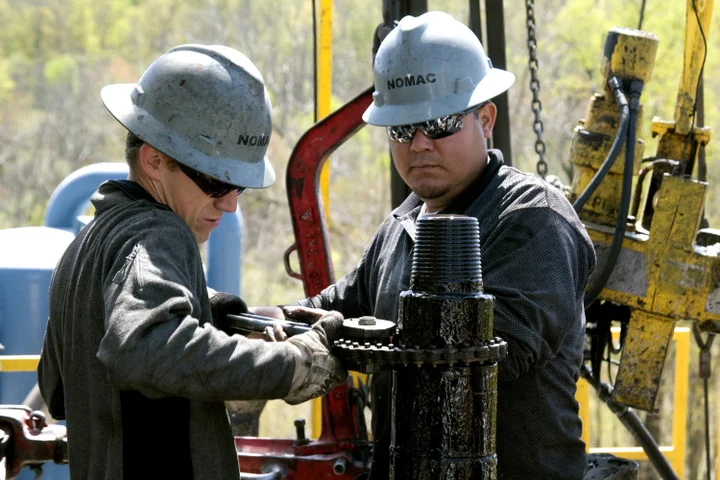
Natural gas has a reputation as the least environmentally damaging fossil fuel, but a new study from Cornell University paints a slightly different picture. Study leader Robert Howarth told the BBC that, in terms of greenhouse gas emissions, gas from shale rocks -- undergoing a boom in production in the U.S. -- is "quite likely as bad [as] or worse than coal."
Why? Methane, the main component of natural gas, is a far more powerful -- albeit shorter-lived -- greenhouse gas than carbon dioxide, and shale gas production is leaky. For each watt of energy released, the emissions from producing shale gas would cause about 20 percent more warming than the emissions from coal over a 20-year period. This is about the same amount of warming as coal over a 100-year period.
The study received criticism from a variety of groups, including the gas industry and the industry group Energy In Depth. Even The Clean Air Task Force argued it was flawed in several ways.
Meanwhile, shale gas is being hailed as a savior by many, with Time magazine proclaiming on its cover, "This rock could power the world," and President Obama talking up shale gas production in a recent energy speech, saying "the potential for natural gas is enormous."
But as the Time magazine article points out, shale gas has also won many detractors. Getting it out of the ground requires a technique known as hydrofracking -- fracturing the shale rock by pumping millions of gallons of high-pressure, chemical-laden water into each well.
Some fear this fluid is contaminating their drinking water -- either underground, or when it is stored in pools on the surface. There is little reason to think fracking is inherently unsafe, argued Michael Levi with the Council on Foreign Relations, but a new study launched by the U.S. Environmental Protection Agency could help sort out the evidence.
Regardless of the environmental impact, shale gas production could continue growing, according to a report commissioned by the U.S. Energy Information Administration. EIA estimates that there are "vast" quantities of technically recoverable shale gas in 32 countries (besides the U.S.), which amount to nearly 5,800 trillion cubic feet, or the equivalent of 1 trillion barrels of oil -- a volume roughly on par with official estimates of proven oil reserves.
Some news articles put these resources in terms of current consumption -- with Obama saying U.S. holds "perhaps a century's worth" of shale gas.
Move Over Hybrids, Electric Vehicles
Many are talking about big boosts in natural gas consumption, including oil billionaire T. Boone Pickens, who hailed natural gas as "the only resource we have in America that can replace foreign oil." Plans to replace oil for fueling fleets of trucks may get a boost from the NAT GAS Act, recently introduced in the Senate.
Chrysler this week announced it will start selling natural-gas vehicles in the U.S. by 2017. But Honda may beat them to it.
But is there enough of this resource? In areas with abundant shale gas, power plants are using it as a replacement for coal, reports the Centre Daily Times from the shale gas heartland of Pennsylvania. If these plans for increased natural gas consumption pan out, however, the remaining resources could be used up considerably faster than many estimates suggest.
A Little Competition
Meanwhile, efforts to boost domestic energy production may bring another potentially environmentally damaging practice to the United States, since a mining company has qualified for a permit to open the country's first tar sands mine in Utah.
As one of the Bush administration's parting shots in 2008, it loosened the rules on development of oil shales -- which have to be heated underground to break them down and yield oil -- but the Department of the Interior has now said it is ready to launch a new evaluation of the regulations.
Europe, on the other hand, is taking a much dimmer view of these unconventional fossil fuels, with the European Union mulling a ban on importing oil made from tar sands, and France considering banning shale gas wells.
Climate Talks Aim at Impossible Goal
The latest round of UN climate talks wrapped up in Bangkok, with no major breakthroughs. The World Wildlife Fund said there was "little to show for the weeklong session," although countries did agree to a roadmap for moving forward. Tosi Mpanu Mpanu, chair of the Africa Group, told Reuters: "Thank god we came up with an agenda. It's a pity it took so long. What does it say for the rest of the year?"
China has earned new clout in climate negotiations, IPS news reports, as a result of its new five-year plan for the country. The plan is still under development, but draft versions set out large boosts for clean energy. But even with such relatively ambitious goals, it is nearly impossible to reach the goal of limiting warming to 2 degrees Celsius above the pre-industrial temperature.
Meanwhile, the U.S. Congress hashed out deals on spending, with clean energy and efficiency research relatively unscathed. However, a proposal was killed that would have added the Climate Service at the National Oceanic and Atmospheric Administration.
Like a Fish Needs a Llama
In other news, a few headlines made it hard to sort fact from fiction this week. One (apparently true) news story reported that, in the U.K., fish were transported by llama to new locales, to help them cope with climate change. And the Associated Press reported that energy giant General Electric decided to return its $3.2 billion tax refund to the U.S. Treasury. (That was a hoax, it turned out, perpetrated by the activist group The Yes Men.)
The Climate Post offers a rundown of the week in climate and energy news. It is produced each Thursday by Duke University's Nicholas Institute for Environmental Policy Solutions.