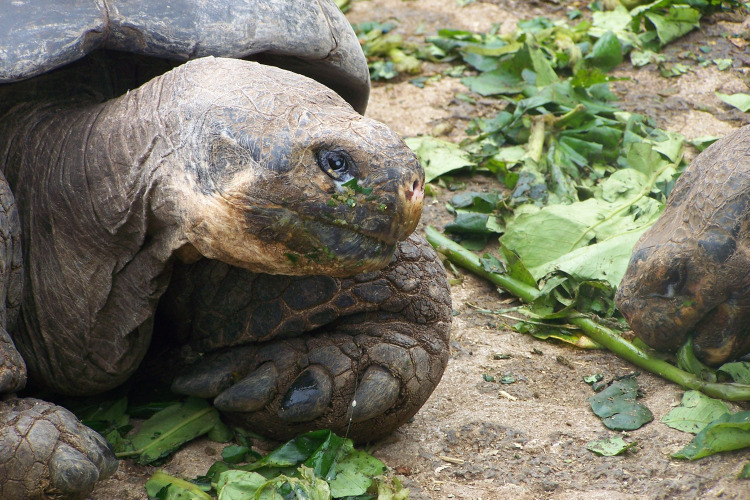
Last year I actually won a sweepstakes (one of those that no one ever wins) for a trip to the Galapagos Islands. Beyond Darwin, I knew nothing of the archipelago and went only because it was free. However, my week touring this eco-wonder changed my life and perception of ecotourism forever.
The staff and crew of the Lindblad/National Geographic ship Endeavour quickly stepped in to fill the massive knowledge deficiencies I had regarding the Galapagos. Before arriving the only thing I knew was to expect very large turtles and to never, ever touch anything lest it become extinct and bring about the end of the world. Almost immediately though, the biologists onboard began an immersion course into all things Galapagian and we even took a nature hike that first afternoon.
Over the course of several days, my ability to be completely overwhelmed by nature was surpassed by every new experience. Everyone knows that the wildlife on the islands have no fear of humans, but to experience this unique phenomenon in person is quite another thing. To be able to stand inches away from blue-footed booby hatchlings and listen to them cry for their parents etched a sensory memory that can never be erased. This endemic trait does have its drawbacks, more than once an angry pelican tried to take a nip and seeing spitting iguanas crossing the path ahead is certainly an eye opening experience.
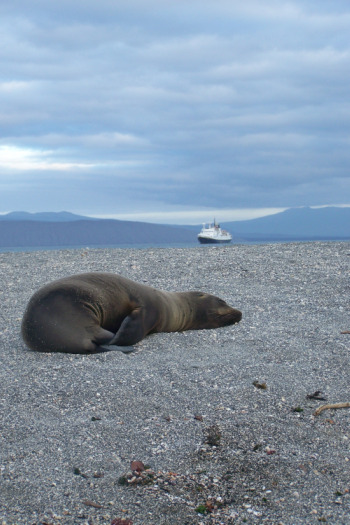
At the end of the week, we said our teary eyed goodbyes and took with us memories and experiences to last a lifetime. As I watched the group of islands disappear from the airplane window, I began to think about our responsibility to preserve such natural wonders.
The ability to keep areas such as the Galapagos pristine is a delicate balance between much-needed tourist dollars and limited access. I began to wonder if our presence there is really a benefit or not. Fifty years ago, the Galapagos was an all but forgotten island chain with just a handful of inhabitants. Today more than 20,000 people call this tiny place home and many more visit each year. Following in the wake is the expected pollution and general ecological maelstrom in one of the last untouched biospheres on the planet.
However the presence of these scientists and visitors has also accomplished the impossible. The Charles Darwin Foundation and other notable organizations have brought back several species from the brink of extinction, including the giant tortoise, ensuring their presence for centuries to come. Their research has also allowed biologists to better understand these endemic creatures, which in turn adds to our collective scientific knowledge and abilities.
Ecotourism and sustainable travel are oft used and very trendy travel buzz words, but most of the experiences do little to protect the designated areas. As with all things, there are both good and bad actors. I have encountered organizations, companies and properties that truly "get it" and do offer a sustainable experience. However, I fear that there are many more bad actors who are ruining the utility of the terms for everyone else. These terms are being used everywhere as a way to describe travel to important and delicate natural areas. Unfortunately though these are areas which, because of that very tourism, may very well cease to exist past another generation or two.
What do you think? Does ecotourism really preserve the habitat, or are many of the operators destroying that which they profess to protect?