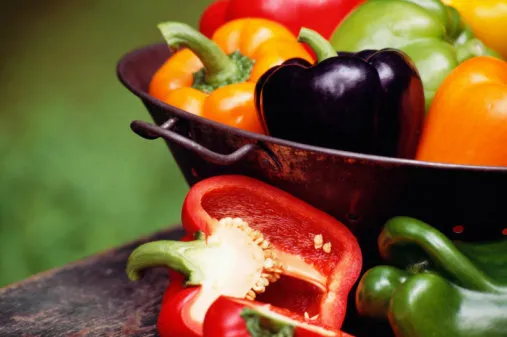
As many of my readers know, I've been following an anti-cancer diet [1] -- a diet based on whole grains, vegetables and beans -- for about 12 years now, after being diagnosed with advanced breast cancer and going through conventional treatment. After being told the cancer would likely return within a year, I adopted an exceptionally healthy way of eating to try to increase my chances of long-term survival.
I took a chance on a plant-based way of eating 12 years ago, basically because I was out of other answers. I have since educated myself and believe it is the best way of eating to guard against conditions such as cancer, diabetes, heart disease and obesity [2]. I was most convinced by the evidence put forth in "The China Study," written by T. Colin Campbell, Ph.D., [3] a nutritional biochemist at Cornell. Dr. Campbell's 40 years of research reconfirmed what I learned through personal experience, and as a result, I keep my recipes high in fiber and low in fat (they contain no animal protein), salt and sugar.
For those of you who don't know, a healthy plant-based diet is centered on -- you guessed it -- plants! There is usually a whole grain like brown rice or quinoa. My family and I plan the rest of the meal around the grain, rather than around meat as most Americans do. Then we add beans (or a bean product such as tofu or tempeh) and vegetables. I typically enjoy three vegetables with each meal.
A question I'm frequently asked is, "Can you eat this way and still socialize?" My answer is: "You bet!"
Our recent family vacation to Cape Cod shows how easy it is to blend our plant-based way of eating with our extended family's standard American fare. When my husband's mom Alice invited us over for a family dinner, she said, "I'm cooking pork, but I'm also cooking some brown rice and vegetables ... if you want to bring something."
I thought I'd round out the meal by bringing a bean dish, and everybody typically likes them. I usually make my beans from scratch, meaning I soak them overnight and then cook them. But lately, I've been focusing on ways to make healthy eating easier and faster -- especially for people who are just getting started on trying to eat better. So, my aim has been to create deliciously healthy, plant-based meals that only take 30 minutes (or less!) to prepare.
I had brought along two small bags (about four cups) of dried, Maine pesticide-free red kidney beans. With local dried beans, you can soak for just a couple of hours, cook an hour and still wind up with soft-creamy and well-cooked beans that are easy to digest. (I've included instructions here for using both dry and canned beans -- both are deliciously healthy.)
When we arrived for dinner that evening, we brought along our beans plus a combination of plump whole sugar snap peas (minus the hard top stems) and carrots thinly sliced on a diagonal. These vegetables were quickly blanched (thrown into boiling water for one to two minutes max), drained, plunged into cold water for another couple of minutes to prevent further cooking, drained again, tossed with small amount of balsamic vinegar and placed in a serving dish.
Our beautiful vegetables and beans graced the table along with my mother-in-law's short-grain brown rice, a green salad, her homemade applesauce and her pork dish. There was something for everyone at this colorful and bountiful table.
CAPE COD KIDNEY BEANS
4 cups of dried red kidney beans
1 whole onion, peeled (don't cut)
3 apples, diced (don't peel!)
1/8 teaspoon sea salt per cup of beans (1/2 teaspoon)
1 tablespoon stone-ground grain mustard
Soak fresh dried beans for 2 to 3 hours. Drain beans and add fresh spring or filtered tap water to cover by 1 inch. Add peeled onion and chopped apples. Bring to a boil on high flame, turn to low, cover and simmer 50-60 minutes.
Test beans for doneness by taking one bean from the pot with a spoon and blowing gently on it. Some of the thin skin should now peel back from the body of the bean. I also taste mine by carefully biting the bean between my teeth (it's hot so proceed with care!). It should be soft and some of it should dissolve between your tongue and the top of your mouth. Fresh beans usually are tender after an hour. If not, cover beans and continue to cook another 15 minutes, then repeat procedure. When done to your liking, add sea salt. Stir, cover again and cook another 5 to 7 minutes. Serve with brown rice and your favorite selection of vegetables. Serves 8-10.
And here's the really quick version:
QUICK CAPE COD KIDNEY BEANS
Three 15-ounce cans red kidney beans (don't drain); I look for low-sodium beans -- Whole Foods 365 Organic brand has only 85 mg sodium per ½ cup.)
1 onion, chopped finely
3 apples, diced into small pieces (don't peel), or 3 Tablespoons apple butter
1 Tablespoon stone-ground grain mustard
Put all ingredients in a pot, bring to a boil, turn to low, cover and simmer about 15 minutes. Serve on brown minute rice (according to package instructions) with warmed choice of frozen vegetables (frozen corn is tasty).
For more information on healthy plant-based eating, visit Meg's website (www.megwolff.com) or her blog (www.becomingwhole2.com).
References:
[1] World Cancer Research Fund report, 1997. A deliberation of 16 distinguished scientists representing 10 countries, who met extensively and concluded with 15 recommendations in a 670-page report -- the first being, "Consume a plant-based diet."
[2] Ongoing research from the Physicians Committee for Responsible Medicine. The "Foods for Cancer Prevention" fact sheet at its website outlines the PCRM position and contains numerous references to substantiating research.
[3] Campbell, T. Colin, Ph.D., Cornell University professor emeritus in nutritional biochemistry. Dr. Campbell has been at the forefront of nutrition research for more than 40 years and has more than 70 grant-years of peer-reviewed research funding. He has authored more than 300 research papers and co-authored "The China Study: Startling Implications for Diet, Weight Loss and Long-term Health" (2005), which includes more than 700 peer-reviewed studies, funded by the federal government. The findings? "People who ate the most animal-based foods got the most chronic disease ... People who ate the most plant-based foods were the healthiest and tended to avoid chronic disease. These results could not be ignored," said Dr. Campbell. The China Study details the connection between nutrition and heart disease, diabetes, and cancer, and also its ability to reduce or reverse the risk or effects of these deadly illnesses.
Follow Meg Wolff on Twitter: www.twitter.com/MegWolff
Meathead: Meathead To Go Meatless: Call Me Potatohead
Jeffrey L. Sturchio and Doug Ulman: The Global Burden of Cancer
Dr. Joseph Mercola: The Cholesterol Myth That Could Be Harming Your Health
Nutrition to Help You Fight Cancer
Cancer Diet and Nutrition Manual: What to eat for cancer?
ACS Guidelines on Nutrition & Physical Activity for Cancer Prevention
Cancer : Diet and Disease : Food and Nutrition Information Center
I'm not a vegetarian, but I eat very little red meat and when I do it's almost a condiment. We also buy grass fed beef from a local farmer. Anyway, about 18 months ago he finally had his checkup, and found his cholesterol and triglycerides were through the roof.
He decided to do things my way--as my numbers are very, very healthy. At his last checkup 3 months ago, his cholesterol was excellent, and his triglycerides were 160. His bp is dropping and his resting heart rate was in the 50's.
It took me a long time to find that man, and I intend to keep him alive as long as possible!
Oh, and we do vitamin D supplements too
I agree about the vitamin D for northern climates especially if you aren't outside in the winter. There is enough evidence to convince me of that. Since Vitamin D is fat soluble, your blood levels need to be monitored (which you may already know, but I thought worth mentioning).
I also have a doctor friend who lowered his cholesterol levels dramatically by a plant-based diet.
From everything I read, it's raw vegetables and fruit. No red meat. Fish good. Beef bad. Chicken ok. Pork no. Get rid of ANYTHING remotely akin to processed food.
There are SO many things out there - NO idea if they're true or not, but here's the one I'm looking at now:
http://cancerdefeated.com/
For the caregiver in your family member's life, I CANNOT say enough good things about the following book. It is EXCELLENT. The health and welfare of the caregiver is as important as the health of the patient. Buy this book for them if you love them:
http://www.amazon.com/Passages-Caregiving-Turning-Chaos-Confidence/dp/0061661201
The giving up beef part seems to be the difficult hurdle. I've suggested that beef is to be given up but she remains hard headed. She's not eating as much of it but she still eats it. She eats lots of fruits and lots of vegetables but the red meat in foods bothers me. I will get this book. Thanks again!
It's all a variations on the same theme...Lean animal protein is a condiment, not a main course. You don't need to go vegan to prevent cancer, but red meat doesn't exactly help either.
"Speed Vegan" by Alan Roettinger
Fast & healthy?! I'll have to check that one out on Amazon. I'm also developing some quick, easy & healthy recipes myself. Please visit my blog: www.becomingwhole2.com. Sign up for my newsletter-August issue is out today- as I also include some quick, easy & healthy vegan recipes on it! (Sign-up is on www.megwolff.com) Because I'm an above-knee-amputee (for 20 years) with some mobility issues, lately I've had to keep it REALLY simple. Thanks for your book suggestion, Angie.
Also, google "May I Be Frank movie". A documentary about how eating raw transformed a man's life. He lost over 100 pounds, got off of all medication including anti depressants, medication for Hepatitis C, which miraculously went away, and diabetes medications. I met him personally at a screening of the film and he is truly an inspirational figure.
There could be a different interpretation. For instance, those who eat wild game or organic, grass-fed meat may be just as healthy as those who eat a mostly plant-based diet. Considering the fact that most meat consumed by Americans (and likely several other countries) is loaded with hormones, pesticides, antibiotics, harmful preservatives, etc. - that could be what's causing the chronic illnesses, not the meat itself. Something to consider.
I believe in preventing cancer through a multi-pronged approach (not only diet), but diet is a big piece of that approach for me and many others. Thanks for your comment.
Whole spice seeds are high in fiber, protein, essential oils and amino acids and many have naturopathic benefits
Regarding a plant-based diet and cancer, Nathan Pritikin, the father of low fat plant based diets, was probably the earliest in this experiment to learn that it did not deal with his leukemia.
The author of this article seems to be enamored of Colin Campbell's work. Well, a few years ago, Campbell himself warned of the cancer-promoting effects of the fats naturally found in plant foods. See:
http://blog.cholesterol-and-health.com/2010/08/dr-campbell-warns-vegetarians-about.html
Regarding "The China Study," the conclusions he reached regarding animal foods are in no way supported by his research. What Campbell showed, if anything, is that people of Asian descent are allergic to casein, a cow milk protein, a fact well known before the study. I do not advocate anybody eating dairy foods. For an exhaustive analysis and critique of his study and his unsupported and inconsistent conclusions, see:
http://rawfoodsos.com/the-china-study/
I would like to add that breast cancer may be associated with iodine deficiency, and recent studies suggest that the majority of women in the US are likely to be iodine deficient.
A discussion and references on the above subjects can be found in "The Wellness Project".
Roy Mankovitz, Director
http://www.MontecitoWellness.com
A recent response from The Campbell Foundation:
"Dr. Campbell Responds to Recent Negative Critique:
The recent commotion caused by a 23 yr old English major who promotes the use of raw foods, including raw meat, has sparked a lively conversation online, much of it negative criticism of The China Study and Dr. Campbell's work. This is unfortunate, as her use of statistics is inappropriate, she ignores what most of the book is about and she makes unfounded claims appear rational to people unschooled in statistical analysis or biology.
Dr. Campbell has taken time to create a response to this critique since it has garnered so much attention, especially because of all the people whose first introduction to The China Project is this negative critique's misleading statistical approach. We would like to invite you to read and comment on her website, as well as other sites (see lists below) after reading both her critique, and Dr. Campbell's response. Dr. Campbell's response begins as below.
It is both interesting and gratifying that there has been such a huge response, both on her blog and on those of others. This is a welcome development because it gives this topic an airing that has long been hidden in the halls and annals of science. It is time that this discussion begin to reach a much larger audience, including both supporters and skeptics...
Link to read the full response: http://www.tcolincampbell.org/
The link I provided already has posted on it Campbell's responses (there have been two) to the critique by the " 23 yr old English major," whose name is Denise Minger.
I am no stranger to statistical analysis, having authored several NASA publications in the design of planetary landers and deep space probes. The characterization of Ms. Minger implies that she has no business criticizing Campbell because of her age and college major. I disagree. I can tell you that smart people who are so called "experts in their field" can and do make very large mistakes. A big ego and a lack of intellectual honesty often interfere with their ability to admit errors. Instead, they attack the credentials of those with the impertinence to criticize them. Just imagine if they took aim at your credentials.
I have no vested interest in taking sides regarding the China Study, and do not suggest that anyone change their eating plan if it is working for them. I firmly believe there are folks with a genetic heritage such that they can eat nothing but Twinkies and Coke, smoke two packs a day, live in a toxic environment, and make it to 110 years old in good health. The question, of course, is whether each of us has chosen an eating plan that is in alignment with our heritage. I choose to follow the eating plan designed by nature for our species.
I am also a breast cancer survivor, and although I am not vegan, most of my meals are vegetarian. I read the book "The China Study" and have been deeply influenced by it.
I completely agree that healthy, plant based food is essential for good health.
Best you you.
http://graciouslivingdaybyday.com/