iPhone app iPad app Android phone app Android tablet app More

Featuring fresh takes and real-time analysis from HuffPost's signature lineup of contributors
Meredith Ely

GET UPDATES FROM Meredith Ely

iPad 2 Could Level Playing Field For Learning

Posted: 03/02/11 10:00 PM ET

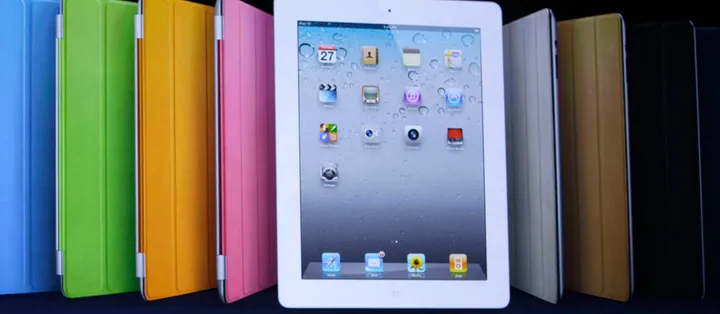
With over 15 million iPads sold to date, we might see its ubiquity as a matter of time. With the launch of the iPad 2, Apple will continue its push to democratize technology through anticipated lower costs, proven utility, and product "stickiness". Tablets have generated a lot of buzz in the last year for their educational potential, but the iPad 2 has the capacity to disrupt education in even more drastic ways. Lower cost, mobility, and intuitive design mean schools will be interested in the new iPad, but what is more significant is use among a more "overlooked" or "underestimated" constituency in education -- families.

As education technology advocates, my colleague Rafael Corrales and I brainstormed ways in which the iPad 2 might have a unique impact on education.

Democratization of technology

I have to be careful here because I do not wish to say that the iPad 2 will be in the hands of every person in the coming years, nor do I think that is necessary for student achievement. What I do foresee, however, is Apple's emphasis on user adoption and retention continuing to be extremely successful. The iPad was a hit for those daring and wealthy enough to leap into the world of the tablet. The iPad 2 will undoubtedly expand adoption with lower prices and additional features. Like the iPod, eventual price reduction will launch the iPad into more homes across all socioeconomic lines. With added features, it will become more than a toy for wealthier consumers, and with comprehensive networking features, it may supplant traditionally more expensive computer systems for lower-income families. Thus, while I don't think iPads will become the salient learning tool in all schools -- affluent private to urban and rural -- the second edition does show promise in delivering great technology to a much greater population.

Always Wired

Somewhere between the smart phone and the laptop lives the iPad (or tablet generally). With built-in wireless functionality, students, parents, and teachers can interact in real-time -- whenever and wherever. Learning games have already proven to be viable and valuable apps for the iPad, marrying children's love of competitive digital games and academic objectives; learning games are increasingly becoming feasible instructional tools as teachers embrace and utilize the iPad platform. Additionally, with emerging online learning management systems, parents and students can see grades online and forge stronger communication between home and school. Furthermore, with networked devices, suites like Google Apps for Education are in the hands of students 24/7, enabling collaborative learning to be more personal and student-driven.

Extended Learning Opportunities

As with Google Apps for Education, the mobility and diverse utility of the iPad 2 brings about new paradigms for group learning and social networking. As it stands now, children have several options when it comes to working together after school hours: meet in person, (video) chat online, work on shared text documents or talk on the phone. Obviously these methods are valuable, but the real-time applications made possible with the iPad 2 will likely enhance these experiences. The new tablet will have a front- and back-facing camera for FaceTime and other video chat apps like Skype. With the enormous number of applications feeding into the iPad platform, learning experiences that call on students to engage in new, creative ways could be extended beyond the time that students spend in a classroom. The ease of use, mobility and interactive nature of the iPad lends the device to extending the classroom experience meaningfully beyond what it is limited to currently.

Disruption of traditional ed market

Again, I want to note the idea of "democratization" when I discuss disruption of the education market. Education, a very top-down industry, has been dominated by legacy providers that have been able to make it through administrative bottlenecks to teachers and students. Putting the iPad 2 into the hands of families is an incredibly powerful tool in shifting the education market to a more bottom-up industry. The iPad is inherently demanding in nature; it calls on developers to create games and apps to meet the demands of families, but it also gives these developers an incredibly convenient distribution mechanism. This means that educational apps (highly demanded) are delivered right to the hands of eager families at low cost. The ultimate significance: Traditional academic publishers, student information system providers and educational toy/game companies that have been making enormous profits by selling to school districts since the beginning of time will have to compete with innovative, agile competitors who enter the space via the cloud -- and are accessible on devices like the iPad 2.

We will have to wait to see how or if the iPad 2 can truly revolutionize the education system. I do believe that we are seeing the expansion of an incredible tool with potential to disrupt education from the ground up.


Follow Meredith Ely on Twitter: www.twitter.com/@LearnBoost

With over 15 million iPads sold to date, we might see its ubiquity as a matter of time. With the launch of the iPad 2, Apple will continue its push to democratize technology through anticipated lower ...
 
 
  • Comments
  • 140
  • Pending Comments
  • 0
  • View FAQ
Comments are closed for this entry
View All
Favorites
Bloggers
Recency  | 
Popularity
Page: 1 2 3 4 5  Next ›  Last »  (5 total)
11:56 AM on 03/11/2011
The iPad empowers parents to have a creative and stimulating engagement with their children. Early learning, under the age of 5, has been proven to be critical success factor in children's academic success. What was expensive and required several books or CDs are available small apps on a single portable device. Reading to your children when they are young is an amazing way to build their confidence and increase their intellectual curiosity. Modern research proves that parents who read to children are giving them a huge advantage even before they start schooling.

Take a look at the new interactive series for kids on the Apple App Store called "An Amazing Day At The Zoo". It combines reading with a fun virtual zoo experience.

It has full narration and videos. Its a virtual trip to the zoo every day.

http://itunes.apple.com/us/app/an-amazing-day-at-the-zoo/id420420133?mt=8

More information available at http://LearningInfinity.com/
09:33 PM on 03/04/2011
I remember as a kid watching star trek and other scifi flicks where I saw things like this...and then I got to school in the morning, learned penmanship, wrote on lined paper, and then maybe, if I was lucky, I would be able to play Oregon Trail on the floppy. And now I can buy an iPad with apps that can supplement my college classes. How effing cool :)
10:02 AM on 03/05/2011
now you can play Oregon Trail ON that iPad - it's available as a Facebook game - even more "effing cool"
photo
HUFFPOST SUPER USER
NoboyukiMasaki
happy-happy, joy-joy
04:03 PM on 03/04/2011
Another victim of Apple's "Reality Distortion Field:"

http://www.wikipedia.org/wiki/Reality_distortion_field
01:44 PM on 03/04/2011
If you want to level the playing field isn't $100 much more likely to do it?

The Craig 7" Android tablet is at CVS Pharmacies for $100. Undoubtedly the $500 iPad 2 has features the Craig does not but aren't 5 kids with FIVE $100 tablets better than 1 kid with ONE $500 tablet if a level playing field is what you want?

http://forums.macresource.com/read.php?1,1104809.
This user has chosen to opt out of the Badges program
photo
GlennWatson
Two million fans
08:55 AM on 03/04/2011
I am a teacher and I bought my own Ipad a few months ago. They are great and I see a bright futire for them in edcuation.

Imagine a world where kids are noty burdened by thirty pound backpacks. All the textbooks are in the Ipad. These textbooks would be virtually free.
04:42 AM on 03/07/2011
I wouldn't mention that to Texas if I were you.
Chauncey1186
EMAILGATE!!!
11:32 PM on 03/03/2011
I would like to know how many school districts that now require their teachers to pay for things like pencils and paper will be able and willing to fork over the $$$ for these new gadgets.

Seriously, my daughter now spends thousands of dollars of her own money buying the "basics". So now she is expected to cough up $500/unit to equip her kids?
05:52 PM on 03/04/2011
And when iPad3 comes out the schools will have to buy them all over again...
10:27 PM on 03/03/2011
You know what I want to see? This is more of a higher education thing, but I'm hoping that there will be high-quality digital photographs of manuscripts and rare books scanned in and accessible to students and scholars. Can you imagine every kid being able to look at rare Chaucer manuscripts, hundreds of years old? It would also help scholars who just can't travel to collections.

It will take a long time for this to be truly open, but as soon as I saw the first iPad, I thought I saw the future coming. In a good way.
09:59 PM on 03/03/2011
Increasing student access to technological resources such as online tutors, educational videos, and research sources is a good idea. Teaching students how to use technology (video, PowerPoint, etc.) as a way to present their class projects is also important and relevant.

I also like the idea of providing students (perhaps middle school and above) with either an iPad or an ebook reader with their textbooks installed, so we can get rid of the heavy, expensive and easily damaged stacks of textbooks.

But the idea that cold technology will provide a reasonable replacement for a highly trained, warm-bodied teacher is naive at best.
09:52 PM on 03/03/2011
I have been considering the changes technology is bringing to education for a long time. I am not obsessed by the Ipad by any means. However, I would agree that inexpensive Kindles, Ipads, Kinects, Laptops, Bamboo Pads - etc. are going to be a game changer in education.

But the last thing that I think is necessary is for schools to have to buy all these things for their students. Yes, please spend some more taxpayer money buying children technology they already have. As you are handing that big wad of cash over to these vendors you can hear them chuckling because they know what miserable care the students give the equipment (that they don't own) they are using. They know you'll be coming back to buy many more down the road.

Actually, I think it is possible that this technology will soon make public education disappear. Who needs this humongous system when a student, a parent, and an educational consultant can put together a well tailored educational plan for a student without this enormous overhead? I'm quite sure that for the amount the public education system is currently spending on students - you could get them a most excellent online education with online tutors. All that is left is a babysitter or a grandparent.

Look up Sugata Mitra's TED.com presentation. http://www.ted.com/speakers/sugata_mitra.html
Good stuff I say...
HUFFPOST SUPER USER
lecloche
08:43 PM on 03/03/2011
If it depends on proprietary hardware and software it can't be a boon to democracy.
This user has chosen to opt out of the Badges program
photo
02:37 AM on 03/04/2011
Apple has already democratized digital filmaking, wireless communications, podcasting, and desktop publishing among other technologies with proprietary hardware. Although MS Windows runs on almost everything it has been a major headache for many users because it has behaved unpredictably and unreliably in many of its past variants. Google will run into the same issues with Android as it strives to become the dominant OS. Apple will always be more predictable and more reliable because of their control.

In the old days, anybody that used a computer also knew how to fix it. Students should not need to do that (unless they are studying IT) The iPad is not a computer, it is an information appliance.
photo
HUFFPOST SUPER USER
booksnmoreforyou
Progressive educator, activist for good government
01:38 PM on 04/10/2011
A closed, walled, proprietary information appliance.

"It is indeed a strange world when educators need to be convinced that sharing information, as opposed to concealing information, is a good thing. The advances in all of the arts and sciences, indeed the sum total of human knowledge, is the result of the open sharing of ideas, theories, studies and research. Yet throughout many school systems, the software in use on computers is closed and locked, making educators partners in the censorship of the foundational information of this new age. This software not only seeks to obscure how it works, but it also entraps the users' data within closed, proprietary formats which change on the whim of the vendor and which are protected by the bludgeon of the End User License Agreement. This entrapment of data is a strong, punitive incentive to purchase the latest version of the software, regardless of whether it suits the educational purposes better, thereby siphoning more of the school's limited resources away from the school's primary purpose. The use of such closed software in education may be justified only where no suitable open source solution exists."

Source: http://edge-op.org/grouch/schools.html
08:41 PM on 03/03/2011
From what I've learned, it still doesn't run Flash. Why?
This user has chosen to opt out of the Badges program
photo
02:07 AM on 03/04/2011
Flash runs hot and eats batteries like there's no tomorrow. It's nice, but extremely processor intensive and it would drain the charge from an iPad in a couple of hours. There are some other reasons as well that Jobs banned it, including some security and stability concerns. .
photo
maninal2
Without knowledge action is useless
08:29 PM on 03/03/2011
Technology is not a replacement for a teacher.
09:40 PM on 03/03/2011
Ummm, technology can do quite a bit of number and skills crunching and tracking that a teacher can't.

I would say that technology will provide a great deal to the learning process that students weren't getting before. Technology will also provide an incredible amount of variety to what students can concentrate on.

Also, since technology can do this so well, I think that we will finally start allowing kids to focus on learning what they learn best so that they can actually enjoy learning. As it is we force them to learn all the subjects the teachers teach (so they can continue to get paid well for teaching many students things they will never use - thank you unions - well done!) under the guise of being "well rounded".

Actually, the reason humans need each other is because we have shortcomings that those who live in community with us make up for. It is not necessary for us to daily remind students who struggle mightily with a subject just how miserably deficient their brain is in that subject, they realize it already.

But, as you said, we will still need teachers for consultation, when necessary...
Chauncey1186
EMAILGATE!!!
11:33 PM on 03/03/2011
Who is going to pay for this technology when districts won't pay for simple tools like pencils?
HUFFPOST SUPER USER
Alexander DeWolf
07:05 PM on 03/03/2011
It's parents not technology that educates children. This will not help children to learn about relationships any better, and that is what children need these days not information shoved down their throats.
photo
HUFFPOST SUPER USER
Ganapati Edu
From negative to positive.
06:03 PM on 03/03/2011
I don't really see how it is actually cheaper than the original ipad
photo
HUFFPOST SUPER USER
Erewhon7
Join atheists, our non-prophet organization
07:40 PM on 03/03/2011
It is not.
It is just that marketing people cannot help themselves. Altering reality to benefit the client is a habit difficult to break.
05:18 AM on 03/04/2011
If Apple keeps producing the original iPad (with the current $100 price reduction) along side of the iPad 2...then it would definitely allow people to purchase a "base model" for a much lower price point...still more expensive than a run-of-the-mill netbook (or feature content of a lower priced laptop). Apple's running feud with Adobe over Flash, in some ways, makes the adoption of netbooks, cheap laptops and Android or RIM based tablets more attractive to some consumers.

Personally, I like my iPad as a companion to my PowerBook when I travel...
photo
HUFFPOST SUPER USER
Ganapati Edu
From negative to positive.
10:13 AM on 03/05/2011
If you look at the website they don't even offer the original anymore. Perhaps you can purchase it as a referb. I have the original ipad and thinks it's neat, but not as an educational tool. It doesn't work very well with a projector, and there arean't actually many educational tools that are very good. I've looked, and can't find much out there. I think the potential is limitless, but that's all there is now, potential. The flash issue is very annoying since most good educational web applications use flash. Apple needs to actually ask educators what they think instead of just speculating about how great it is for education.
04:50 PM on 03/03/2011
The cost of outfitting all of one grade at my local school would be from $56,000 to $88,000, depending on the cost of the units, without figuring in the cost of the apps, i.e., more than the cost of adding another teacher and reducing class sizes for that grade. I'd vote for more concentrated attention from a human teacher, rather than a fancy breakable computer.