iPhone app iPad app Android phone app Android tablet app More

Featuring fresh takes and real-time analysis from HuffPost's signature lineup of contributors
Michael F. Jacobson

Michael F. Jacobson

Posted: February 16, 2011 12:11 PM

Caramel Coloring in Soda: What You Should Know About This Innocent-Sounding Ingredient


Food marketers have long had a special knack for euphemism. (If you didn't believe me I'd offer you a Rocky Mountain oyster.) But even as someone who has watched the food industry closely for 40 years, sometimes even I can get taken by surprise.

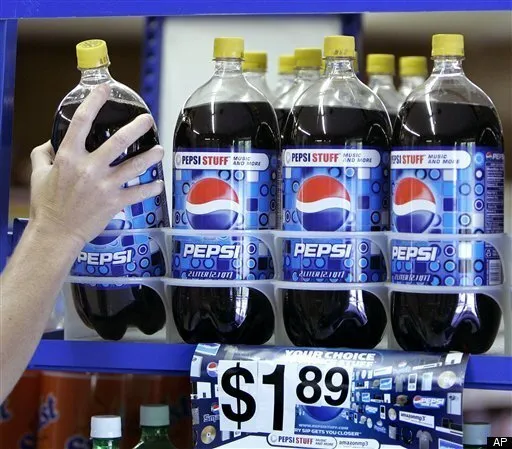
One such case is an innocent-sounding ingredient that appears on Coca-Cola, Pepsi, and other soft drinks: "caramel coloring." Now, I've long urged Americans to drink less soda. It's a nutritionally worthless beverage that provides nothing of benefit to the diet, but whose sugars promote weight gain, obesity, diabetes, and other health problems. Another typical soda ingredient, phosphoric acid, rots teeth. Caffeine is a mildly addictive stimulant drug.

One ingredient in a can of Coke or Pepsi I've never been concerned about is "caramel coloring." After all, wouldn't that just mean the drink was colored with the kind of caramel you could make at home, by melting and browning sugar in a pan?

The truth is more complicated. It turns out that federal regulations describe four types of caramel coloring. And at least three of them are quite different from the confection with the similar name. All of them do start out with some form of sugar. One is called plain caramel. A second involves reacting the sugar with sulfites. A third is made be reacting sugars with ammonium compounds. And in the fourth variety of caramel coloring--the kind used in Coke and Pepsi--sugars are reacted with both ammonium and sulfite compounds. Both the regulations and some manufacturers' Web sites call this form of caramel coloring Caramel IV, or less appetizingly, ammonia-sulfite process caramel.

Reacting sugars with ammonia results in the formation of numerous chemical byproducts. Two of them, 2-methylimidazole and 4-methylimidazole, have been shown in government studies to promote lung, liver, and thyroid tumors in laboratory rats and mice.

California public health officials recently placed 4-methylimidazole on the state's list of known carcinogens. Scientists at the University of California at Davis recently found significant levels of 4 methylimidazole in colas that far exceeds what the state considers to be safe. This sets the stage for warning labels on diet and regular Coke and Pepsi and many other soft drinks unless the companies shift to safer colorings. Going one step further, the Center for Science in the Public Interest is today asking the Food and Drug Administration to bar the use of ammonia- and ammonia-sulfite process caramel colorings.

Considering that the purpose of this contaminated caramel coloring is purely cosmetic, we hope the FDA quickly acts to protect Americans from an unnecessary cancer risk.

Because 2- and 4-methylimidazole do not appear to be highly potent carcinogens, the 10 teaspoons of obesity-promoting high-fructose corn syrup in a can of cola should still be considered a much greater health risk. But if you were waiting for one more reason to give up your cola habit, you now certainly have one.

 
Food marketers have long had a special knack for euphemism. (If you didn't believe me I'd offer you a Rocky Mountain oyster.) But even as someone who has watched the food industry closely for 40 yea...
 
 
  • Comments
  • 108
  • Pending Comments
  • 0
  • View FAQ
Comments are closed for this entry
View All
Favorites
Bloggers
Recency  | 
Popularity
Page: 1 2 3  Next ›  Last »  (3 total)
11:29 PM on 03/25/2011
Food cops are at it again, Looks like they want to ban everything but Bread and Water. We have had many of these things like Caramel and food dyes for centuries.

I do not need the Center for Science in the Public Interest telling me what to eat or what not to eat.
photo
HUFFPOST SUPER USER
sensimilla
Lead with your heart, and your mind will follow...
03:56 PM on 02/22/2011
isnt it time the American people boycotted these cancer, diabetes, obesity-causing soft drinks and went back to water, juice, beer and wine?
photo
HUFFPOST COMMUNITY MODERATOR
General Public
Microbiologists have found my microbio contagious.
01:52 AM on 02/21/2011
What about caramel color found in many other foods besides soda? For instance soy sauce and many other sauces (teriyaki sauce, steak sauce, Worcestershire sauce, etc.) have caramel color in them. Many foods have this in them. I like to cook with sauces and often they are ones that have caramel color as an ingredient. I certainly do not consume soda anymore, and only dark-colored sodas such as colas and root beers and Dr. Pepper have caramel color; light-colored or colorful sodas such as 7-up, Mountain Dew, etc. do not have this in them. Still, I gave up soda-drinking a year or two ago, and I would certainly not drink an energy drink. I do sometimes have decaf or herbal tea or decaf coffee and I also enjoy a Gatorade/Powerade type sports drink now and then, one that does not have any carbonation or caffeine. I really try to avoid caffeine as much as possible due to panic attacks it triggers, and I don't particularly like carbonation as it leads to both burping and having gas. But I have not had any problems with sugars or even the high fructose corn syrup that people rail on about so much, other than the weight gain. And I do have high cholesterol but that is from eating fats, not carbohydrates, as far as I know how these things work. And generally most of these problems can be solved through having more exercise, which I should do.
02:46 PM on 02/22/2011
Caramel coloring contains gluten, so anything with caramel coloring, like G.P. named above should be avoided if you are gluten-sensitive. Look for gluten-free soy sauce and Lea & Perrins Worcestershire sauce (gluten-free).
photo
HUFFPOST SUPER USER
RoughCollie
Destination: A new way of seeing things.
08:13 PM on 02/20/2011
For the commentators who think a little caramel coloring wouldn't hurt anyone in such small doses..let's put in this in another perspective. It's about the cumulative effect of more than 1 suspected carcinogen in the soda. Personally, I'd be more worried about the BPA used in the cans (especially if I was a guy since this is an estrogen producing type of chemical). "The anti-BPA legislation won’t pass without a fight, though. The Washington Post recently uncovered internal memos from food-container lobbyists and Coca-Cola that outline a public relations campaign that would try to sway consumers into thinking the chemical is safe, even though mounting scientific evidence paints a very different picture." courtesy Rodale online.
HUFFPOST SUPER USER
Jon Polm
@jonpolm
05:05 PM on 02/20/2011
BREAKING NEWS: Everything Causes Cancer!
photo
HUFFPOST COMMUNITY MODERATOR
General Public
Microbiologists have found my microbio contagious.
02:12 AM on 02/21/2011
Cancer can only occur in living tissue. Something that causes cells to no longer be alive actually can be used to fight cancer and be used on cancer cells and cancer tissue (just as it can also be used to destroy anything else that is alive). Many diseases that people get, such as bacteria, can actually flourish in dead tissue, but cancer can only survive in living tissue. Therefore, dead people don't have cancer, and if you die your cancer dies too, whereas dead people get much worse bacterial infections than living people, and if you die any bacterial infection will flourish even better than before, unless the bacteria require your body to be warm or something like that.
HUFFPOST SUPER USER
Jon Polm
@jonpolm
10:12 PM on 02/21/2011
Interesting. I just mean there are so many more known and unknown things in our environment that cause cancer than caramel coloring. So many things, that going out of your way to avoid all carcinogens is futile in my opinion. But power to those who try. I have celiac and GERD, so chances are, I'll get it anyways.
05:43 PM on 02/28/2011
In people who are genetically suseptible to cancer....
photo
kapalabhati
Lokah Samasta Sukhino Bhavantu
02:42 PM on 02/20/2011
Oh, good god. It's the red dye #2 alert.
10:59 AM on 02/20/2011
I have always been wary of cancer studies performed in lab animals and making the leap of faith that results are applicable to humans. Given that the doses given to lab animals are enormous in comparison to what people might actually consume, it is illogical to conclude that what happens to animals will necessarily happen to humans....last I checked, we are also different species with markedly different genetics.

At best, one could say that it is biologically plausible that these substance could potentially, maybe, possibly be associated with cancer in humans. To reach that conclusion, these compounds would need to be looked at in humans (heavy consumers vs non consumers, with other factors being controlled in both group.....smoking, alcohol, etc). Instead it is just easier and less expensive to put it in a registry.....but not scientific.

If one looks back at the cyclomate controversy when artificial sweetners were first being introduced, these compounds were taken off of the market due to an extraordinary incidence of tumors in lab animals. The only problem with the science, was that in order to consume the equivalent dose that the mouse received, a human would have to consume a BARREL of the compound.

There are many good reasons to be moderate or avoid soda ingestion completely.....but at the moment, this isn't the best one.
HUFFPOST SUPER USER
Richard Pearce
Atheistic-agnostic Canadian polymath
11:53 AM on 02/20/2011
Of course, the differences in the biological processing of materials in mice and humans are minor compared to the differences in the processing of fuel in a fuel injected and carburated engine, yet knowing that adding something to the fuel of one has a bad effect on the engines performance is seen as a pretty good sign that adding that same something to the fuel of the other will have a similar bad effect.
 
Mice and humans share almost identical mechanisms for absorbing ingested material into the bloodstream.
Mice and humans share almost identical mechanisms for cells to absorb material from the bloodstream, and to excrete them back out after using them.
Mice cells and human cells process these materials in almost identical ways.
Mice and humans share almost identical mechanisms for regulating cell division.
Mice and humans share almost identical mechanisms for excreting waste materials from the bloodstream.
 
While there are a few things that may fall into the small cracks between these almost identical processes, most people are smart enough to know that just about everything that is harmful to those processes in mice are also harmful to the same processes in humans. 
04:36 PM on 02/20/2011
To equal the 40 mg/kg of body weight the lab rats were fed, humans would need to consumes over 12,000 bottles of cola... in just 72 hours. This stuff gets metabolized like anything else you eat, so the trace amount you do ingest is gone within 72 hours. How many colas can you chug in 72 hours? I don't think I could drink more than 36... 12,000 short of what I would need to drink. Interesting that Michael Jacobson publishes the sizzle and not the steak. He gives the scare, but not the actual numbers, because that would destroy his argument. His attempt at explaining the research was intellectually dishonest at best, and a deliberate effort to deceive consumers at worst.
04:55 PM on 02/20/2011
Richard

I respect your comments and don't entirely disagree, but "almost" is not the equivalent of being "the same". New drug studies are always initiated in lab animals, but the FDA does not approve new drugs based on results of animal studies alone, they must be assessed in humans before getting final approval. "Almost" is fine if you are dealing with horse shoes or hand grenades, but is a poor substitute for medical evidence.

But to your point, if "almost" is really close enough to "truth", we still have the issue of janitor in the drum doses being administered to mice and not having it accurately correlate with what a human ingests during an equivalent time frame. As I suspect you are aware, toxicity is a result of many factors in humans including but not limited to the dose and duration of exposure. To my way of thinking, that is the crux of the issue.
This user has chosen to opt out of the Badges program
photo
08:48 PM on 02/19/2011
"significant levels of 4 methylimidazole in colas that far exceeds what the state considers to be safe"

Some poor rats in a lab got 10 lifetime doses of this stuff and got cancer.... Moderation is the word with anything..
photo
HazelPethigFan
I don't know until I know
01:45 PM on 02/19/2011
I am always amazed at food politics on HPost. Carmel coloring is not just used in soda. It's also used in beer, rum, whiskey and many other things as well.

The food purists always scream the sky is falling when it comes to politically incorrect nonfoods like soda. But why not mention the other nonfoods as well? It's just leftie food correctness to only pick on soda.

So let's see, using HPost logic beer now has eevil caramel coloring and that eevil ethanol (oh yes it does..don't argue with me).

Why is HPost anti-Beer? ;-)
photo
PDinCA
Clarity has reared its ugly head again
06:15 AM on 02/20/2011
Buy better beer.
HUFFPOST SUPER USER
Jon Polm
@jonpolm
05:08 PM on 02/20/2011
Or Weed.
This user has chosen to opt out of the Badges program
photo
10:23 AM on 02/22/2011
Oh look it IS naturally occuring, forms during cooking.

The State of California has decided to include 4-MeI—formed naturally in most cooking, broiling, roasting and grilling—on its Proposition 65 list of possible carcinogens...
4-MEI is formed naturally in the process of cooking, roasting, broiling or grilling food of every sort: chicken, beef, vegetables, other meats, and even coffee. It is found in hundreds of home-cooked or store-bought foods that people have been consuming for generations. It is not an additive.

http://www.foodproductdesign.com/news/2011/02/dd-williamson-responds-to-cspi-caramel-color-clai.aspx
09:59 AM on 02/19/2011
Cannot remember the last time I had pop.
09:23 AM on 02/19/2011
The other dimension to this story that rarely gets any attention it the fact that agencies like the FDA and others mandate the testing of such foreign substances like caramel coloring on lab animals. And rats and mice are not the only victims of testing food additives for their toxicity. Former shelter cats and dogs, rabbits, pigs and primates are also exploited for this purpose and then euthanized after testing. And even when ample data already exists from past studies. Human simulation methods of testing are replacing animal testing in many labs that have been exposed for the horrors subjected on test animals. So by avoiding such processed foods for our own health, we also get the added benefit of sparing some animal a life of suffering and premature death.
photo
HUFFPOST SUPER USER
onwisconsin
Trust women; protect choice.
12:13 AM on 02/19/2011
Caramel coloring may come from a corn source as well. If you have an allergy to corn, you can't even drink a diet soda with it safely.

It may also have a wheat source, I'm told. My mother has Celiac Sprue and will react to some caramel coloring.

Best to avoid it entirely.
photo
HazelPethigFan
I don't know until I know
01:33 PM on 02/19/2011
well then....Is it corn or wheat?

you give us advice to avoid something because of health reasons but you have no clue where it comes from. Either look it up before giving us advice or don't comment at all.
photo
HUFFPOST SUPER USER
onwisconsin
Trust women; protect choice.
02:31 PM on 02/19/2011
My point is that it comes from both sources and you can't be sure.

Don't comment if you're going to be rude.
photo
TitaniumAvatar
Sinister yet Dexterous
06:00 PM on 02/18/2011
Saliva may cause cancer, but only when swallowed in small amounts over a long period of time.
HUFFPOST SUPER USER
Richard Pearce
Atheistic-agnostic Canadian polymath
11:56 AM on 02/20/2011
I get the feeling you think facts and logic are carcinogens, and do everything you can to avoid accidently ingesting them.
11:41 PM on 03/25/2011
I believe the point is that all these groups are screaming that everything under the sun causes cancer that one gets the feeling that the only foods approved by the Center for Science in the Public Interest and other so-called "food cop" groups are bread and water, and thats my opinion.
photo
HUFFPOST BLOGGER
Dr. John Salerno
11:36 AM on 02/18/2011
Here's a blinding glimpse of the obvious. Stay away from sodas. Period. If the evidence isn't enough for you, just think of the cost. Plain old H20 is still the best drink.
This user has chosen to opt out of the Badges program
05:57 PM on 02/20/2011
Unless your tap water is contaminated, too.
photo
HUFFPOST COMMUNITY MODERATOR
General Public
Microbiologists have found my microbio contagious.
02:15 AM on 02/21/2011
Which will be true soon where I live, unless New York State bans hydrofracking (short for "hydraulic fracturing"), a type of natural gas drilling that leads to contaminated water supplies.
photo
HUFFPOST SUPER USER
cabinetmaniac
Think for yourself. Question authority.
11:30 AM on 02/18/2011
I'm pretty sure it's OK as long as you add rum.

HUFFPOST SUPER USER
Jon Polm
@jonpolm
05:11 PM on 02/20/2011
LOL...fanned.
photo
HUFFPOST COMMUNITY MODERATOR
General Public
Microbiologists have found my microbio contagious.
02:16 AM on 02/21/2011
Rum also has caramel color... LOL
photo
HUFFPOST SUPER USER
cabinetmaniac
Think for yourself. Question authority.
07:33 AM on 02/21/2011
Yikes!

I'm working on a new theory.

photo
HUFFPOST SUPER USER
Ramenra
11:30 PM on 02/23/2011
Not all rum.