

For centuries the inner-cohesion and tribal balance of the Pashtuns, Afghanistan's ethnic majority, has been maintained by an ancient tribal code of honor called Pashtunwali, or "way of the Pashtuns". This value system has been decimated after three decades of war, corruption, dislocation and religious fundamentalism -- the offspring of incessant foreign meddling, both direct and via proxy.
Today, the Afghan government and the Taliban have made a conscious effort to devitalize Pashtunwali in their respective quests to control the population. Although it's been dramatically weakened over the years, the tribal code still represents the prevailing norms that regulate Pashtun behavior, at both the individual and societal levels, and is still the tribe's "center of gravity".
The core tenets of Pashtunwali are based on self-respect, justice, hospitality, love, forgiveness, tolerance, loyalty, equality and independence. Pashtuns value honor (izzat), above all, which cannot be overemphasized. Without honor he or she is no longer considered a Pashtun, and is not afforded the rights, protection or support of the community.
Because of the repressive form of Islamic radicalism that has dominated the Afghan narrative, most Westerners would find it shocking that Pashtuns are fiercely independent and value individual liberty. A Pashtun sees himself as a free man and accepts no other as his ruler, as a tribesman told a visiting British official in 1809: "We are content with discord, we are content with alarms, we are content with blood...we will never be content with a master."
Afghan tribalism produced its own unique form of democracy, as formal and informal power structures were relatively distributed, vertically-structured, rarely abused and egalitarian in nature, in which nearly all decisions were made based on consensus-building as opposed to orders handed down from a hierarchical command structure.
For example, in principle, no adult male Pashtun can give orders to another -- he must obtain consensus. When justice is served, a tribal meeting called a jirga is assembled where any punishments exacted must first be agreed upon by all.
Tribal elders became leaders because they earned the respect of the people, deriving their power from moral authority as opposed to today's strongmen who derive theirs from the barrel of a gun.
Afghan expert Selig Harrison believes the coexistence and interaction of Pashtunwali with Islam is critical for understanding Pashtun culture:
On the one hand, it explains the inevitable and ritualistic religiosity of a Pashtun, and on the other hand it explains the futility of efforts to inject religious fundamentalism in Pashtun social and political culture as it stands in contradiction to Pashtunwali. In fact, the Islamic identity of the Pashtuns is only one thousand years old whereas Pashtunwali is reportedly five thousand years old.
Prior to hostile European invasions, Pashtunwali was a guide for a peaceful and hospitable Afghanistan that was known to accommodate Jews and Christians, considering them both to be religions of "the book".
Contrast these characteristics with the rigid fascism of the Taliban's perverted Deobandi-Wahhabist Islam which was exported from Pakistan. Wahabbism was relatively unknown in Afghanistan until the Soviets invaded in 1979 when the Pashtun code took a major blow.
Afghan individuality did not lend itself well to military command structures with one exception: when Pashtuns perceived an external threat they temporarily submitted to authority, typically charismatic religious leaders. This was usually followed by a return to normalcy. After the Soviet invasion radical Muslims from around the world flocked to Afghanistan to fight the godless infidels, and the Pashtuns had no problem subordinating to religious leaders to defend the homeland.
Unfortunately, once the Soviets were expelled, the mujahideen, controlled by Pakistan and U.S. intelligence, remained along with their non-indigenous radical ideology. The military might and warlordism of mujahideen commanders undermined the traditional structure of Pashtun society and its concept of equality.
Because of the Afghans' lineal adoration and near-religious belief in the royal bloodline, the lack of a unifying leader, such as a king, provided requisite space and chaos for the mujahideen to secure a foothold.
The acephalous tribal society soon fissured and cracked -- as warlord factions engaged in civil war, paving the way for the Taliban. Although the Taliban's fundamentalist beliefs were an affront to Pashtun sensibilities, they were the only ones capable of bringing order to the madness.
Thomas Rutting of the Afghanistan Analysts Network described this lack of options: "In today's violent atmosphere, between the anvil of the Karzai government and the hammer of the Taliban, there are no viable political alternatives for Pashtuns."
According to a white paper by the New World Strategies Coalition (NWSC), tribal conventions were weakened during the Taliban reign as they tried to replace tribal-centered villages with madrassa-centered structures. The Taliban have continued to uproot the tribal foundation, evidenced by their assassination campaign against tribal elders.
Earlier it was illustrated how much Pashtuns despise being ruled, but the Karzai administration has been so inept it's enabled the Taliban to fill the void with brute force. As Brigadier Justin Kelly once said: "Unless you are confident in the ability of your government to enforce its peace, then the man with a gun at your door at midnight is your master."
It's easy to see how the traits of the U.S.-installed Afghan government are anathema to Pashtuns, considering the Karzai regime embodies everything Pashtuns would consider dishonorable, such as its uber-centralization of justice and services, nationalization of defense forces, predatory nature, unprecedented consolidation of wealth, abuse of power, extreme hierarchical structure, fraud, graft, peculation and the fact it's beholden to foreign powers.
Kabul has fought against restoring the tribal balance and inter-tribal solidarity, even ignoring the decisions of local jirgas. The Karzai clique is threatened by tribalism, seeing it as much too egalitarian, instead preferring an exclusive patronage network that has benefited a few societal elites, mafia figures and other maligned actors.
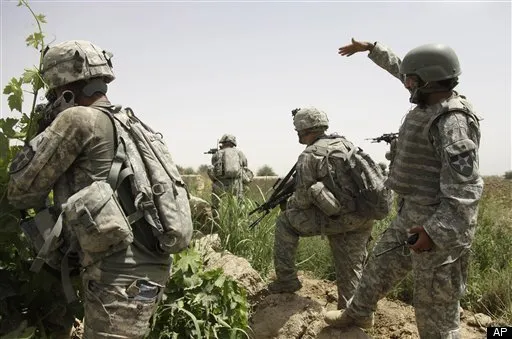
NATO forces must learn more about the Pashtun code according to U.S. Major John Cathell, such as the importance of revenge in protecting an Afghan's honor, because they might better understand the impact that civilian causalities have on the collective psyche of the Afghan people. According to Cathell:
This is important to remember when conducting operations in Pashtun areas. If soldiers force entry into a Pashtun's home, he is dishonored. If they enter the home's female quarter, his women are dishonored. If he is detained and forcibly removed in front of his neighbors, he is disgraced. He must take revenge to restore his honor.
The Afghan people are caught in a violent nexus between the Taliban's Islamic extremism, Western neocolonialism and the Afghan government's rampant corruption, making it clear why a power-sharing arrangement between Karzai and the Taliban is a formula for disaster. This unholy alliance will further degrade tribal institutions such as the Pashtun moral code, guaranteeing that Afghanistan remains a shell of the nation it once was, before the global elite decided to use it as a geopolitical chessboard.