
The day before the election I attended our local Chamber of Commerce's annual Veterans' breakfast. One of our students who has received a new scholarship for vets was kind enough to attend with our Wesleyan University contingent. We heard an inspired speech from retired General Gordon Sullivan about the sacrifices our men and women in uniform have made to safeguard our right to vote, and we paid tribute to the contributions of our veterans, of our active duty military, and of their families. It was a powerful reminder of the importance of defending our ability to participate in the political process that was about to reach a climax.
In the euphoria the Election night victory, I watched our Wesleyan students celebrating the victory of a man whom they had embraced and in whom they had invested their hopes. Although all were aware of the polls predicting a victory, I don't think many of them quite believed it would happen. They waved an American flag, chanted "O-bam-a, O-bam-a," and felt a powerful sense of hope in our collective future. When somebody played "Signed, Sealed, Delivered" over the speakers, these young men and women danced with enthusiasm at a song they no longer associated with their parents but with our new president-elect.
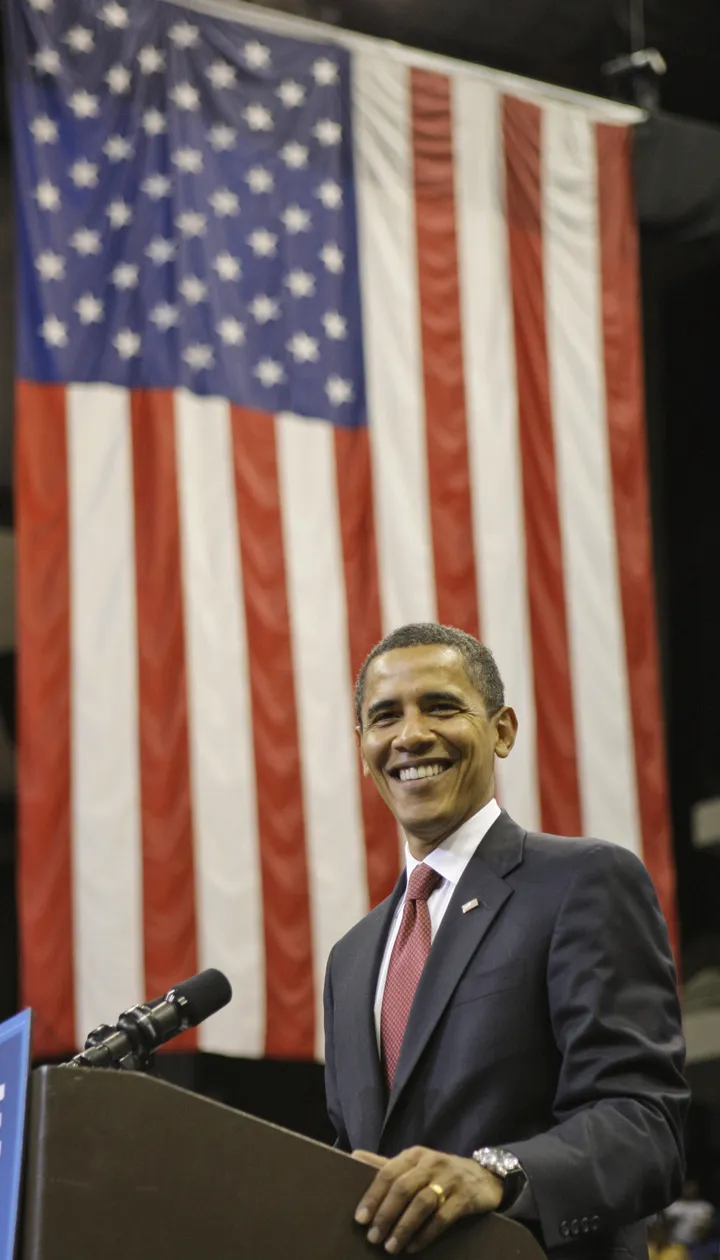
For many of our students, Barack Obama is linked to alma mater because of his Commencement Address at Wesleyan in May 2008. In that speech he talked about how many young people assume that there are "two stories at work in their lives:"
The first is the story of our everyday cares and concerns - the responsibilities
we have to our jobs and our families - the bustle and busyness of what happens
in our lives. And the second is the story of what happens in the life of our
country - of what happens in the wider world. It's the story you see when you
catch a glimpse of the day's headlines or turn on the news at night - a story of big
challenges like war and recession; hunger and climate change; injustice and inequality.
It's a story that sometimes can seem separate and distant from our own - a destiny to
be shaped by forces beyond our control.
--Barack Obama, Wesleyan University Commencement Address, 2008
President-elect Obama went on to try to dispel the separateness of these narratives. He talked about how in his own life he woke up to the possibility that his everyday cares and concerns could be linked to the struggle to make progress on some of the deep challenges facing our country. He urged the students to take confidence from our history's examples of people who refused to accept the status quo, and who used their personal ingenuity, courage and sacrifice to make great social change. Whether in teaching or in military service, in protecting our environment or defending our right to a decent wage, our history is replete with tales of people who connected their personal lives with the great needs of their communities and country.
I thought of our President-elect's Commencement Address and of the Veterans breakfast as I watched our students celebrating this stage in their political education and in the complex narrative of Barack Obama. It was a raucous party, and the celebrations took place in a context of political and social stability unburdened by fear. This is nothing to take for granted, as I was reminded at the Vet breakfast. We could express our joy and excitement while also inviting those who supported the Republican ticket to join in what was turning into a party for our political process. One of our students approached me to say that patriotism isn't a sentiment you feel only when your candidate wins. He is right, and I trust that in the months and years ahead we will remember our strong feelings of solidarity on Election night even as we disagree about policies and governmental tactics.
On the night after Election Day, the two stories President-elect Obama talked about in his Wesleyan Address became interwoven. May they continue to do so as we work together to address the substantial challenges that will define our future.