As the Arab Spring enters a tense autumn chill, Tahrir Square remains a fiery political battleground, where struggles between the people and the state constantly churn and redefinine themselves. When police officers went on strike in October, they raised hard questions about the position of the public sector in the struggle against counterrevolution.
Thousands of Egypt's police, though tarnished by the shameful violence deployed by security forces during the January 25 uprising, are now staging their own revolt. Meanwhile, the military brass, initially lauded in the early days of the revolution when it refrained from crushing demonstrators on behalf of Mubarak's dictatorship, have become the target of public vitriol. The chaos -- part of a continual wave of strikes, demonstrations and crackdowns -- illustrates the people’s growing bitterness at the hijacking of their revolution by a reactionary junta.
So are the cops defecting to join the rabble? The momentum comes from struggling rank-and-file officers who actively distance themselves from the corrupt interim regime and notoriously cruel Interior Ministry. Alongside basic bread-and-butter grievances about wages and working conditions—the crux of all the strikes that have rocked the country this year—there are calls for an internal overhaul to restore the integrity and credibility of the institution.
According to one news report:
Police said they would hold an open ended sit-in until their demands were met, as around 12,000 went on strike. Egypt has 350,000 police altogether.
Some of the officers at the protest waved banners reading “Good treatment equals better service.”
Another banner called for “Purging the ministry of the mafia and the remnants of el-Adly,” a reference to former Interior Minister Habib el-Adly, who is on trial for deadly police attacks on unarmed protesters during the uprising that toppled President Hosni Mubarak.
Although the opposition was initially galvanized by the images of security forces cracking down on peaceful protesters, the new face of dictatorship seems to be the military, which has led arrests and prosecutions of civilian activists. The situation has grown more tense in the wake of sectarian clashes that many accuse the military of using as a pretext to consolidate power and target enemies.
The actions of the police strikers touches on a key question in any labor conflict involving public safety agencies: which side are they on? Cops are broadly defined as public servants, but when the state is attacking the citizenry, including its own employees, which “public” is represented in popular struggles for civil rights, a living wage, or accountable government?
In Wisconsin last February, amid massive protests against Gov. Scott Walker’s attack on public workers’ collective bargaining rights, many police officers allied with the demonstrators. The surprising show of solidarity defied lawmakers’ attempts to split the public workforce by shielding safety officers and firefighters from the harshest provisions of the anti-union legislation.
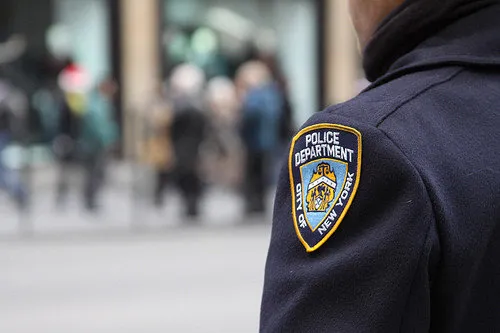
In the Occupy Wall Street movements, the position of the police has again been called into question: are they tools of a tyrannical state or ordinary folks trying to make a living? Their position as public-sector workers contrasts with the the cruelty and corruption they’ve come to represent, but is the people-vs.-cops binary too simplistic for a movement that aims for maximum inclusiveness?
Filmmaker Michael Moore has aired a video (apparently popular on right-wing websites) urging local police to join the Occupy movements. Ironically, Moore drew a parallel with the non-intervening Egyptian military forces (an image that clearly no longer applies today, except for the handful of activist officers who’ve risked severe punishment to defy their superiors.)
Meanwhile in the U.S. demonstrations, veterans of occupations of a different sort have found common cause with the anti-capitalist protesters. But the tragic case of Scott Olsen shows that service members are as vulnerable as any citizen to the ruthless hostility of the government’s foot soldiers.
Following mass arrests on the Brooklyn Bridge, an Occupy activist argued in Liberation that the authoritarian nature of the profession commits police to enforcing the structures of oppression:
...while cops as individuals are not part of the ruling class, they cannot be considered part of the oppressed classes either. … They are an arm of the ruling class, whose function in society is to maintain the rule of the rich over all of us...
Rank-and-file soldiers in the military, who typically serve only for a few years, have at several key historical moments defected, torn off their uniforms, and switched back to the workers’ side in large numbers. Professional police officers, who have chosen to join that institution of repression as their life’s work, almost never do...
In city after city, occupations are being confronted by police violence and harassment. In some places, the police have already shut them down. We have to learn from these experiences. If cops want to be considered part of the 99%, there is only one way: by quitting their jobs as the enforcers of the 1%.
But now shift the lens to post-revolutionary Egypt, where police are not as comfortably ensconced in hierarchies of social privilege, and massive unrest has afflicted all sectors of society as the “new” authorities brazenly betray the spirit of January 25. The counterrevolution has permeated not only government but civil society as well, as even some union leaders are reportedly siding with military authorities by restraining strike activity.
Have Egypt’s rank-and-file police chosen, as public servants, to defend the people over the corrupt elite? How deep does their solidarity run, especially if the state continues to monopolize armed violence? The striking police could just be cynical political operators, or a symptom of a general collapse of Egypt’s social edifice. But their action nonetheless challenges activists everywhere to rethink the meaning of “public security” in times of revolution.