iPhone app iPad app Android phone app Android tablet app More

Featuring fresh takes and real-time analysis from HuffPost's signature lineup of contributors
Mickey McManus

GET UPDATES FROM Mickey McManus
 

Innovate: Education -- The Next Literacy

Posted: 06/07/11 10:14 AM ET

What if there were a basic literacy beyond reading, writing, and arithmetic that we missed, or that wasn't necessary until this moment in our history?

What if that new literacy were the organizing principle between STEM (Science, Technology, Engineering, and Math) and SEL (social, emotional learning)?

What if it could help the least among us leapfrog over the mainstream? What if it could help build collaborative, resilient, creative, & critical thinkers in an age of exponential change?

In this newly posted TEDtalk I begin to outline our thinking about this new literacy and share a few early experiments.


For more information check out LUMA Institute.

Post Script -- On a personal note, luck versus literacy.

In compiling this TEDTalk on how to innovate education I wandered down pathways in my memory that I had erased from my map of childhood, or just didn't want to revisit very often. I was trying to think about what helped me when I was young. I was thinking about how I could relate to the challenges the least among us face as they try to strive and learn in an education system that has stumbled badly.

I'll preface this by saying the next few paragraphs are a bit graphic. They are however nothing like what some kids face today. They are only small bits of an otherwise wondrous childhood growing up in an inner city neighborhood, attending a public school, in the 1970's.
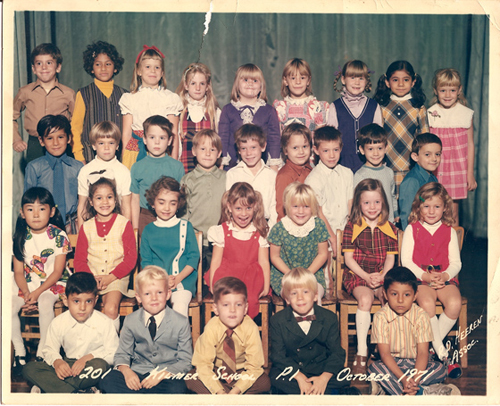
2011-06-07-495.jpg


While I'm not smiling in this picture (I wasn't happy with my haircut), I was lucky beyond measure.

In third grade there were 970 murders in my city.

By seventh, one of my classmates walks through a gangway a few blocks from my house (close to my school) and is shot dead for flashing the wrong gang sign in a senseless act that will be repeated countless times in alleys and streets in hallways and in homes across the country.

We had metal detectors at all the doors of our high school and city police officers at every entrance; fully loaded guns on their belts.

My next door neighbor's son (a friend I remember teaching to ride a unicycle to during sweltering summer days gone by) is stabbed through the back on the corner of our block by a drug addled maniac who roams the neighborhood one cold winter day, putting people in the hospital in a path of destruction only lately pieced together by family members sitting in lonely emergency room waiting areas.

My friend lives and winces and groans as we try to make him smile when he returns with stitches down his back and up his chest. His attitude positive, but changed forever.

A girl is raped in the community garden at the end of our street.

I am beaten occasionally by roaming bands of gargantuan teens (methinks at times they are the damned holier than thou parochial kids and their misaligned days off, looking for public school trash). Thankfully enough, most times they just knock the wind out of my sails and slow me down a bit as I run/limp/gasp homeward. I would see them later at Sunday service, halos firmly floating over their heads.

I don't want to paint some dark scene of inner city despair. These were isolated incidences spread across my youth. They were dark punctuations in a bright childhood.
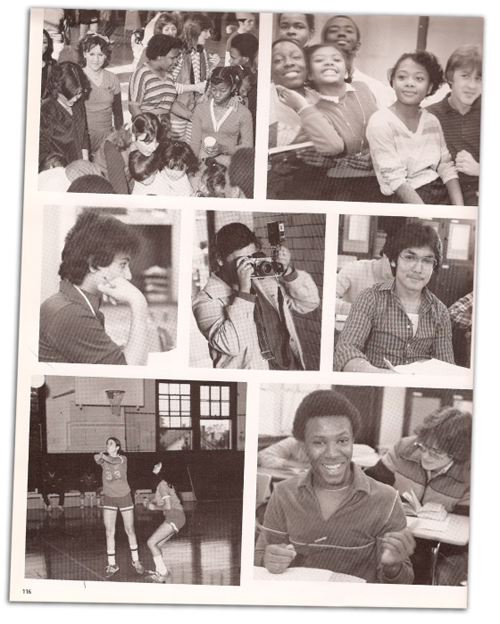
2011-06-07-492.jpg


We were living the American Dream. We laughed and played and were none the wiser. We didn't know any better and assumed that this was just the way the world worked.

I was lucky though, beyond my wildest imagination. Other classmates faced far more challenging times than I through the years. Some overdosing, others falling into selling drugs, others picking up the pieces of their family as they went through crushing divorces, others tending newborns as they took their SATs.

I was lucky, maybe Warren Buffett would quip that I won the "Ovarian Lottery." My mom was a scientist and school teacher, my dad a mechanic and maker and tinkerer of things great and small, the alleys were filled with raw materials just begging to be placed in my basement laboratory.
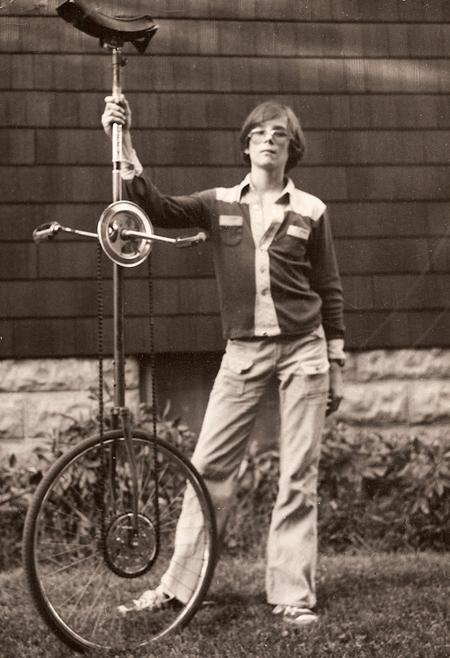
2011-06-07-496.jpg

Sometimes those scraps from the alley became dangerous prototypes and I ended up with broken limbs, but I had teachers who encouraged me to unmake, remake, invent, and dream big dreams.

I was surrounded by amazing friends who watched out for me. Who protected me from my awkward stumbles. Who picked me up and poked fun when I had something or another blow up in my face. Who helped me figure out how to be literate in what I would find fluency in, later in life.
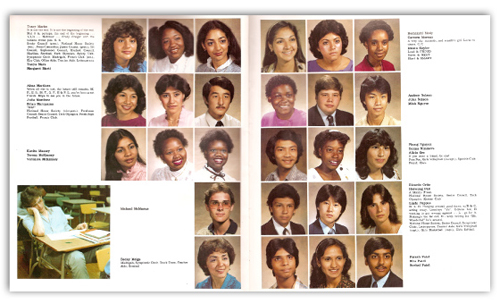
2011-06-07-493.jpg


None of them--my family, my teachers, my friends--had the words, but what they helped me find was something called "Design."

I learned that rather than being a passive observer consuming all that was dished out, I could make. I could take that thing and fix it, take it apart and make it better. I could change things. Making, particularly making things to fix other people's challenges, to fix the way the world worked at least in some small way, to experiment and fail and try again, became my ticket out of the inner city.

Herb Simon, the Nobel winning Economist, once noted that design was "the systematic attempt to change the future." So in reflection I decided to frame my talk from that perspective. I (we at MAYA and LUMA Institute) think we can radically innovate education in a way that helps our least supported members of society leapfrog over the mainstream. Using a new literacy of human-centered design that is just as important in this century as reading, writing, and arithmetic was in the last century.

I want to note that the single most important thing we can do for education reform is find, grow, and reward great teachers. My sister now teaches math and science to a classroom packed with 45 kids in the same school system that I grew up in. The stories I hear break my heart but also make it sing. Make no mistakes, finding, growing, and rewarding great teachers has to be our first priority.

But.

Beyond teachers, we need to examine the basics that we are teaching and consider the requirements of the exponentially changing world our children will inherit. We need to help our teachers understand and embrace what will be, what business and society needs from our children moving forward.
2011-06-07-497.jpg


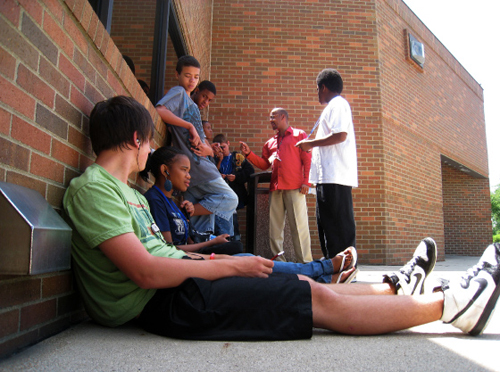
I'm not sure these kids can all count on being as lucky as I was. I am sure they have incredible potential. But luck isn't a strategy to help them find it.

This post originally appeared at MAYA Design.


  • Comments
  • 18
  • Pending Comments
  • 0
  • View FAQ
Comments are closed for this entry
View All
Favorites
Recency  | 
Popularity
12:53 PM on 06/08/2011
While I did not understand the entire article, as a mother I do understand that our present system of schooling is inadequate and rooted in a long gone world. And this applies across the globe... Some of the earlier comments mention the need to teach accounts, social skills etc. I would add history,psychology, social studies, arts need to be emphasized more, to develop working knowledge of self and the world as we know it today. Math needs to be what's relevant for day to day life, with in depth study for those who truly enjoy it. Same for the sciences. Ideally school should teach one enough life skills to manage one's basic life that are learnt thru trial & error and/or painful experiences. How & why to budget,vote,buy a house/car,live healthy and more. I have yet to apply algebra in my daily life but appreciate the power of compounding interest ! Colleges are for studying subjects in depth.
10:47 PM on 06/07/2011
I don't see any problem with innovation or lack therefore. I have done 3 startups. One of which succeeded. I see lots of startups trying all sorts of things, many of which seem screwy to me. But if enough people buy in, so be it. One of the major reasons people go into engineering and the applied sciences is to build and design things and solve new problems (or solve old problems new ways).

I would like to point out that the fundamentals we build upon change very slowly and radical change in the education process does not appear to be justified - it worked well in the past and is still doing so. Talking to a co-worker who is just graduating with his BS in Computer Engineering (so I have almost 40 years on him), I checked about some of his courses. They are essentially the same as the ones I took when I did my BS. The tools are better now, and new specialties have developed, but the underlying science and mathematics is unchanged. So I know what my daughter will be taking in 2 or 3 years as she starts her engineering education.It appears that my advice and guidance is still relevant (to a point).

Incremental improvement is clearly indicated. But the case for radical change seems to me to be much weaker.
09:46 PM on 06/09/2011
I think it's hard to do more than incremental change, but having the conversation is important, and like most paradigm shifts, an orthodoxy seems exactly right, until suddenly it flips completely. Buggy whip manufacturers told themselves that if they just did better buggy whips they could ignore the Model T, until they couldn't.

I think more importantly you need to consider that you may not be the norm in the inner city and your life might not have been the same as someone in Harlem right now, where frankly they count the number of children born to figure out the prison cells to build in 20 years, thereby encouraging a conveyor belt from birth to prison. That is a phenomena Geoffrey Canada has documented and now, though they said change was hard, he has built a conveyor belt to college for 10,000 Harlem kids. And they are out-doing state testing averages. Read the book "Whatever it Takes" for a taste of his failures and successes during the first five years.

You doing three startups was based on a foundation of 200 years investment in culture, arts, etc. (which have all been pulled out from under most kids today...) and inertia will help us for a while but foundations being pulled out will at some point lead us all out to be a country that looks like Wile E. Coyote running in place off a cliff.
09:48 PM on 06/09/2011
Last point. Your startups may also have been based maybe on your brains, your learning, your luck (ovarian lottery, etc.) and many other factors. You may be an edge case.

Having worked with cutting edge universities teaching computer science I can confirm they are teaching things from 20 years ago. The problem is that 20 years ago was a different time. They should be teaching biomimicry for computing, since Nature has been doing information and computing for 3 billion years and at a scale we are now reaching (trillions, like our body which has trillions of computing devices in the form of cells and neurons, etc.) and that 20 year old engineering (where computing was expensive and rare, memory and networking were expensive and rare, etc.) may not fit. In Nature computing, memory, networking, all cost effectively nothing.

Just to stir things up a bit more, here is my deeper dive into Nature and computing to fill out what I mean.

http://www.huffingtonpost.com/mickey-mcmanus/post_1985_b_854734.html

I guess I just want everyone to remember that there are more things in heaven and earth than what is dreamt of in their philosophy... as old William once said.

All that being said, thank you for commenting, it forces me to think deeper about what we can and should do!
photo
HUFFPOST SUPER USER
becky bradshaw
"In a time of universal deceit, telling the truth
10:27 PM on 06/07/2011
To be fair, the presentation needs a very strong disclaimer. The premise is fundamentally flawed. Literacy in STEM (Science, Technology, Engineering, and Math) and/or SEL (social, emotional learning), will not better prepare a person for future. It certainly did not help the last generation.
10:56 PM on 06/07/2011
I disagree. I graduated as a physicist ~ 40 years ago and have ridden the changing currents and economic trends across specialties for the past 4 decades. With any luck, I will last another decade before I retire, having put my 4th child through college.The first two have graduated from college, are working, married, and self supporting. #3 is heading rapidly for a challenging engineering career, and # 4 is heading into middle school as a solid (if somewhat lazy) student.

My peers in the sciences and engineering seem to have led interesting and reasonable successful lives and my nieces and nephews seem to be doing OK even now, even in these difficult times.
05:55 PM on 06/07/2011
Fascinating presentation, yet, still a persistent problem is convincing a host of possible detractors, like educators, parents, orthodox religion and the government that this ‘new’ innovative learning is creditable.
03:57 PM on 06/07/2011
Do we need to design more netbooks? Aren't there too any already?

How many consumers understand the meaning of the specifications?

But do the educators think that EVERYBODY should know how to do accounting on those netbooks. Double-entry accounting is 700 years old. The trouble is now people think marketing is everything and then they market junk and the economists ignore the depreciation of all of the junk.

http://www.bsu.edu/news/article/0,1370,-1019-11714,00.html

I have never heard of ACCOUNTING literacy. Not even for economists..
09:50 PM on 06/09/2011
Honestly I have no idea what you're talking about and or how it relates to this article. Maybe you could help me understand where you're going with this?
03:39 PM on 06/07/2011
Great article with a great idea - regardless of my ability to determine it's effect.

But the saddest part of this article - 6 comments in 6+ hours. Perhaps one of the biggest issues our children face is whether the general public is even interested in improving education much less how to go about it. Certainly isn't being conveyed by the number of comments on this article. . .
12:16 PM on 06/07/2011
There absolutely IS a new "literacy" and it particularly impacts those in low socio-economic, high diversrity environments and that's social skills education. Repeated studies show that 85% of our personal and professional success depends on our social skills. Yet, today, too many of our young children enter the school system inadquately prepared with the social skills and character development they need to be successful first, in school, and later in life. Today, employer's #1 complaint about the young people coming out of school is that they lack the "soft skills" they need to be successful in the job market.


Sadly, this is one area that is not getting enough attention in the realm of "educational issues," yet it is the biggest factor in why our schools are failing. It results in everything from plain old "disruptive" classrooms to issues of ethics, cheating, integrity...all the way to bullying and other school violence.

If we want our children to truly be "literate" in the full sense of the word, we have to address this issue and place as much priority on it as 'Reading, 'Riting, and 'Rithmetic. Respect, Responsiblity, Reliability, Resourcefulness and Resilience are other 'Rs that are not being taught, and it impacts everything else.

For more on this, I invite you to visit: http://socialsmarts.wordpress.com/2011/05/09/education-finger-pointing-and-blame-placing-is-not-a-solution/

- Corinne Gregory
www.corinnegregory.com
photo
HUFFPOST SUPER USER
skiddie76
Living long enough to be a burden to my children.
02:27 PM on 06/07/2011
Schools are failing at this? How about we have the teachers pick the newborns right at the hospital and cut out the middleman. Schools educate them, feed them, give them health care, counseling, physical therapy, occupational therapy, help them with homework, and give them the supplies they need. And teachers and staff pay school taxes, too. No, what's wrong with education today is the absence of parents in the equation. Parents need to teach those other R's.
03:43 PM on 06/07/2011
Skiddie, "Parents not doing their jobs" is an oversimplification. Yes, it happens that parents aren't teaching their kids what they need to know for social skills, but it's not always that they don't try. Having studied this problem for over 10 years, I can tell you that there are very FEW parents who genuinely want to mess up their kids' futures. In many cases, parents themselves weren't taught what's important. If you are poor and are working 3 jobs just to keep a roof over your head, being the discipline police isn't a high priority, sadly. If you are new to this country, you may be doing what is culturally correct where you came from, but it may not work for you -- or your child -- in this culture. So those kids are at a disadvantage.

Worst of all, schools will HAVE to teach it because they suffer the most from it. And, frankly, when much of the schools' attitudes to unruly kids is "well, they're just being kids," they have a responsibility to keep order and discipline, too. And it's not being done very well -- but there are two parts of the problem and we're not addressing that at all.
09:54 PM on 06/09/2011
Nice, and I completely agree. I think along with those elements I'd include perseverance. The question is, how do you teach it in a project based way so it "fits" and gains relevancy with students. I think design helps as a "game mechanic" in this regard. Not a solution in it's own right. Diversity of thought, understanding how we think, and building an inventory of experiences (after all invention and inventory share the same root) are all incredibly important for our next generation.
While I could get depressed, I'm bullish. Frankly we've learned from over 100 years of experiments about how things work. It's more about the political, social, cultural will to open our eyes.
photo
ChrisTT
foodie, greenie, social democrat, entrepreneur
11:54 AM on 06/07/2011
@ Mickey

Where do I sign up for your bootcamp?
photo
ChrisTT
foodie, greenie, social democrat, entrepreneur
11:06 AM on 06/07/2011
The world would be a different place with this style of education. Hunkering down in our ideologically cemented realities would be seen for the prisons that they are.